Ukrainians' trust in EU reaches record high, corruption seen as top obstacle to membership, survey finds
 on Google
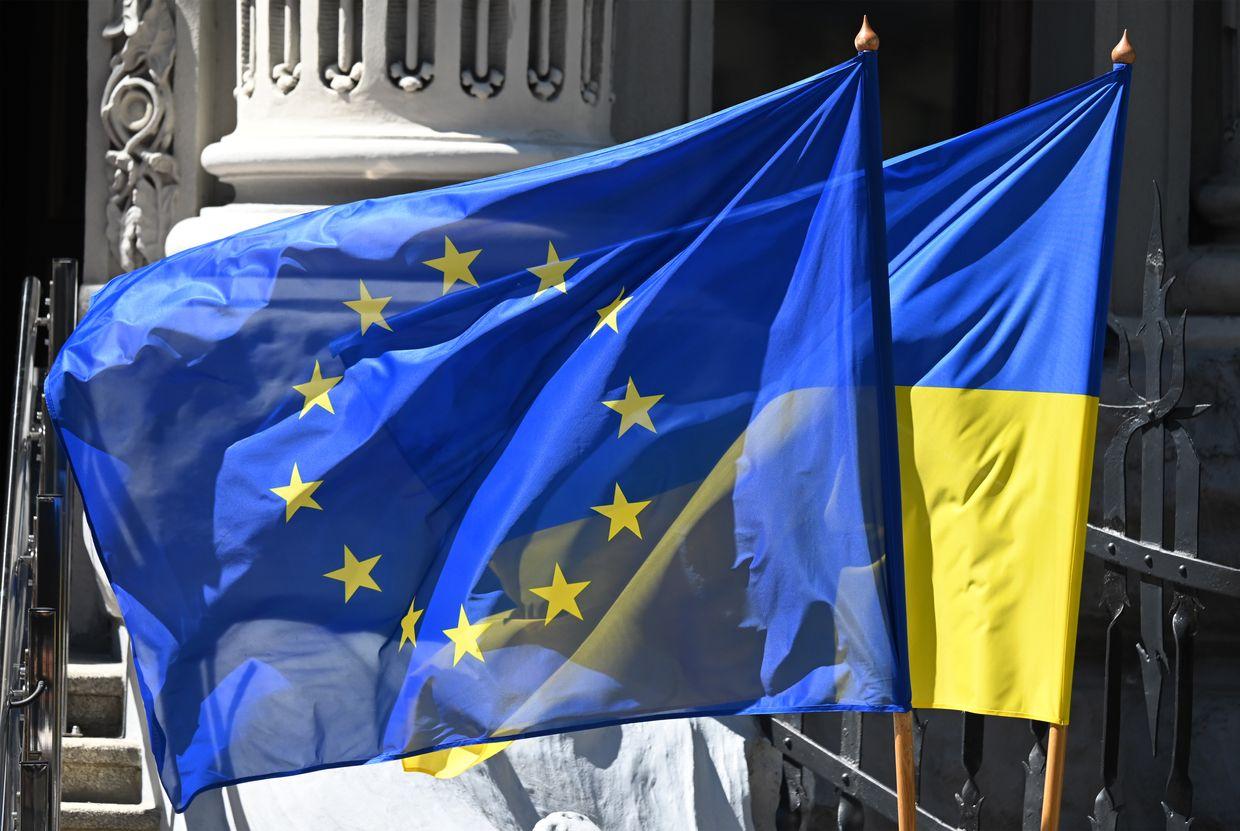
Around 65% of Ukrainians support the country's accession to the EU, while trust in the bloc has reached a record high, according to a survey published on June 18 by the EU Neighbors East program.
The survey, conducted among 1,042 randomly selected respondents across Ukraine in late winter, found that support for EU membership remains strong, although the share of Ukrainians expressing the highest level of enthusiasm has declined.
The proportion of strong supporters fell from 31% to 18% compared with the previous year.
The drop follows a period during which Ukraine's accession process was repeatedly blocked by former Hungarian Prime Minister Viktor Orban, whose government used its veto power to delay progress before he was voted out of office in May 2026.
Trust in the EU reached an all-time high, with 82% of respondents saying they tend to trust the bloc. The figure surpassed trust in any other major international partner or institution.
The survey still showed concerns about corruption, which many Ukrainians view as a key obstacle to membership. Some 70% of respondents identified corruption as the main obstacle, while 81% described it as one of the country's most pressing domestic challenges.
More respondents cited corruption as a major issue than the war itself, with 73% identifying it.
Second place in the trusted institutions and countries was the U.K. at 78%. The U.S. only scored 43% on trust, lower than both the World Bank (57%) and the International Monetary Fund (63%).
Even though President Volodymyr Zelensky had previously floated Ukraine joining the EU as soon as 2027, the Ukrainian public is more modest in its expectations.
While 19% think Kyiv could join the bloc within five years, 41% think it will take five to 15 years, in line with an earlier estimate made by Hungary's new Prime Minister, Peter Magyar.
Other obstacles mentioned included the country's economic situation (42%), territorial disputes (38%), and opposition and influence from third countries such as Russia (37%).
While an acceding country should not have ongoing territorial disputes, previous rounds of EU enlargement have already shown that the issue can be overcome.
Spain joined the bloc in 1986, even though it had an unresolved dispute with the U.K. over the territory of Gibraltar. Cyprus was able to join in 2004, even though a third of its territory is under the control of a Turkish-backed entity.
One significant challenge to overcome ahead of Ukraine's potential future entry to the EU remains the public's lack of information about the bloc.
Only 1% of respondents said they consider themselves very well informed about the EU. By contrast, 66% described themselves as somewhat informed, while 19% said they were not informed at all.