New Russian drone launch pads near Ukraine put NATO countries in range, Telegraph reports
 on Google

Russia has set up 10 bases with new launch pads for jet-powered drones along its borders with Ukraine and Belarus, bringing NATO countries within their potential range, The Telegraph revealed in an investigation published Aug. 16.
The news comes as Russia has sharply ramped up its use of jet-powered weapons against Ukraine, which are harder to intercept than propeller-powered Shahed-type unmanned aerial vehicles (UAVs), with Ukraine's Air Force telling the Kyiv Independent that their use increased fivefold in July compared with June.
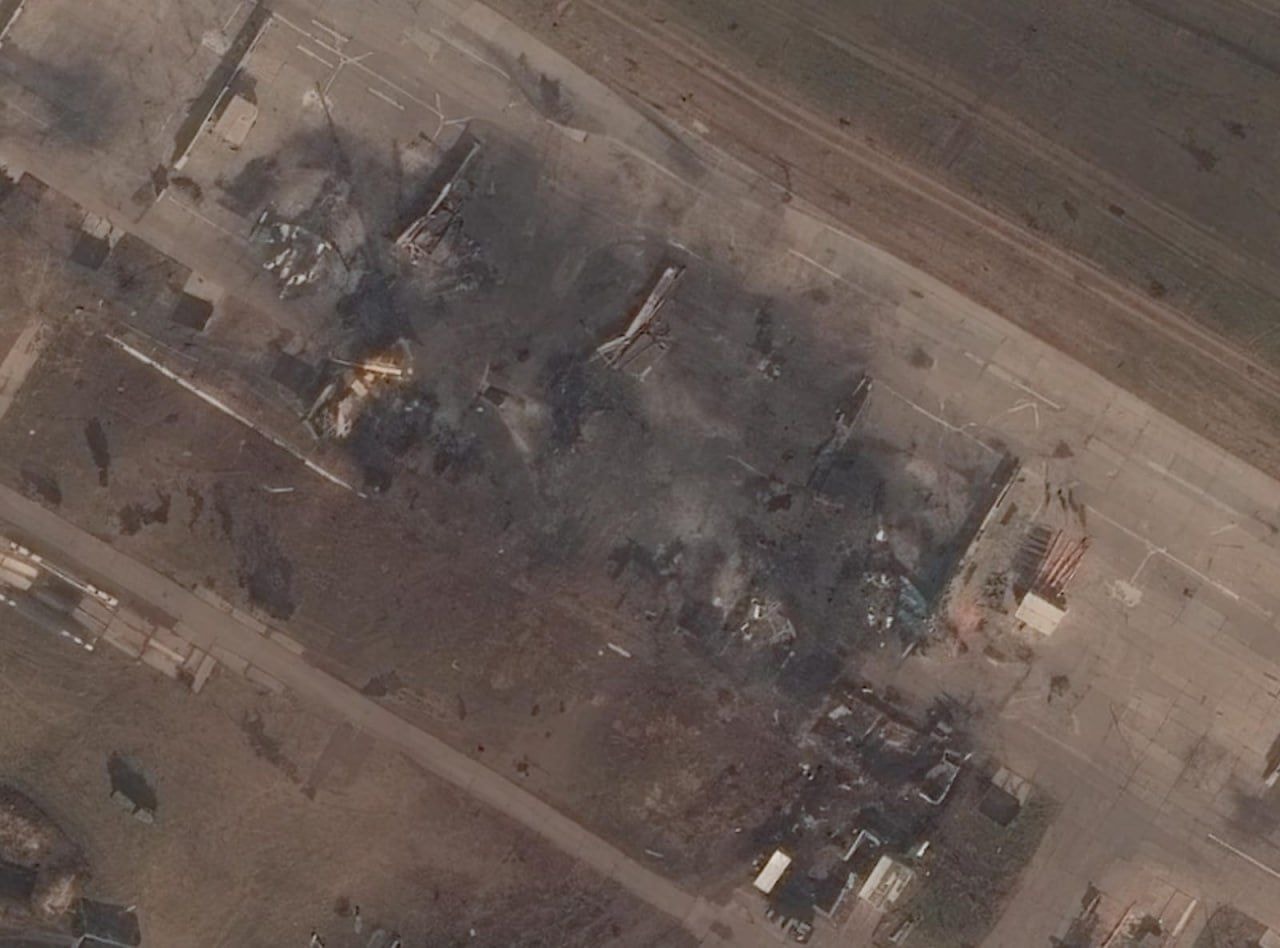
Using satellite imagery and leaked documents, the publication identified at least 59 newly constructed "launch rails" spread across 10 locations, some repurposed from old military bases and civilian airports, while others were created in the countryside.
Some of the new facilities are positioned so that UAVs launched from them could potentially reach NATO territory, including Poland, Turkey, Estonia, Lithuania, Latvia, and Romania, The Telegraph reported, citing an analysis of satellite imagery by drone intelligence firm DroneSec.
One base alone has storage capacity for more than 1,000 long-range drones at a time, while construction of additional launch rails is underway at several key sites, the investigation read.
The bases are reportedly being built to launch Russia's next-generation long-range strike drones, including variants designated Geran-4 and Geran-5, capable of flying almost 1,000 kilometers (620 miles) and carrying a 90-kilogram payload, according to The Telegraph.
Open-source tracking data showed seven of the 10 identified bases were used in Russia's recent attacks on Kyiv, whose air defenses have been increasingly strained by a critical shortage of Patriot interceptor missiles.
read also
The shortage has already had deadly consequences for Kyiv. In July, Russia repeatedly targeted the capital with a large number of ballistic and hypersonic missiles that Ukrainian air defenses struggled to intercept.
A July 2 Russian attack killed at least 31 people in Kyiv and injured more than 100 others. Four days later, another mass attack killed at least 26 people and injured dozens, including seven children.
Russia has already repeatedly tested the risks of its war spilling beyond Ukraine's borders. A Russian Shahed-type drone struck a residential building in Romania in May, injuring two people, while another Russian drone crossed into Moldova during a July attack on Ukraine.
Russia has also jammed and redirected Ukrainian drones toward NATO countries, creating an additional security challenge for European countries.
NATO officials have also not ruled out the possibility of a conventional Russian assault in coming years. German army chief Christian Freuding said it is "NATO-agreed intelligence" that Moscow will be ready to invade a member state as early as 2029.
In an interview with the Kyiv Independent, Admiral Giuseppe Cavo Dragone, the chair of the NATO Military Committee, said NATO is ready to answer to any hostile moves by Russia.
"(Russia) would lose a lot, much more than what they could gain just by touching Poland or the Baltic states," the NATO military chief said.