'We have nothing to use' — Kyiv currently defenseless against Russia's ballistic missiles
 on Google
Supplies of Patriot PAC-3 interceptors have dried up, leaving Ukrainian air defense units powerless to defend Kyiv against Russia's fastest and most deadly munitions.
"We simply don’t have the missiles. We have nothing to use against ballistic missiles," Serhii "Flash" Beskrestnov, a military expert and adviser to Defense Minister Mykhailo Fedorov, told Radio NV on July 6.
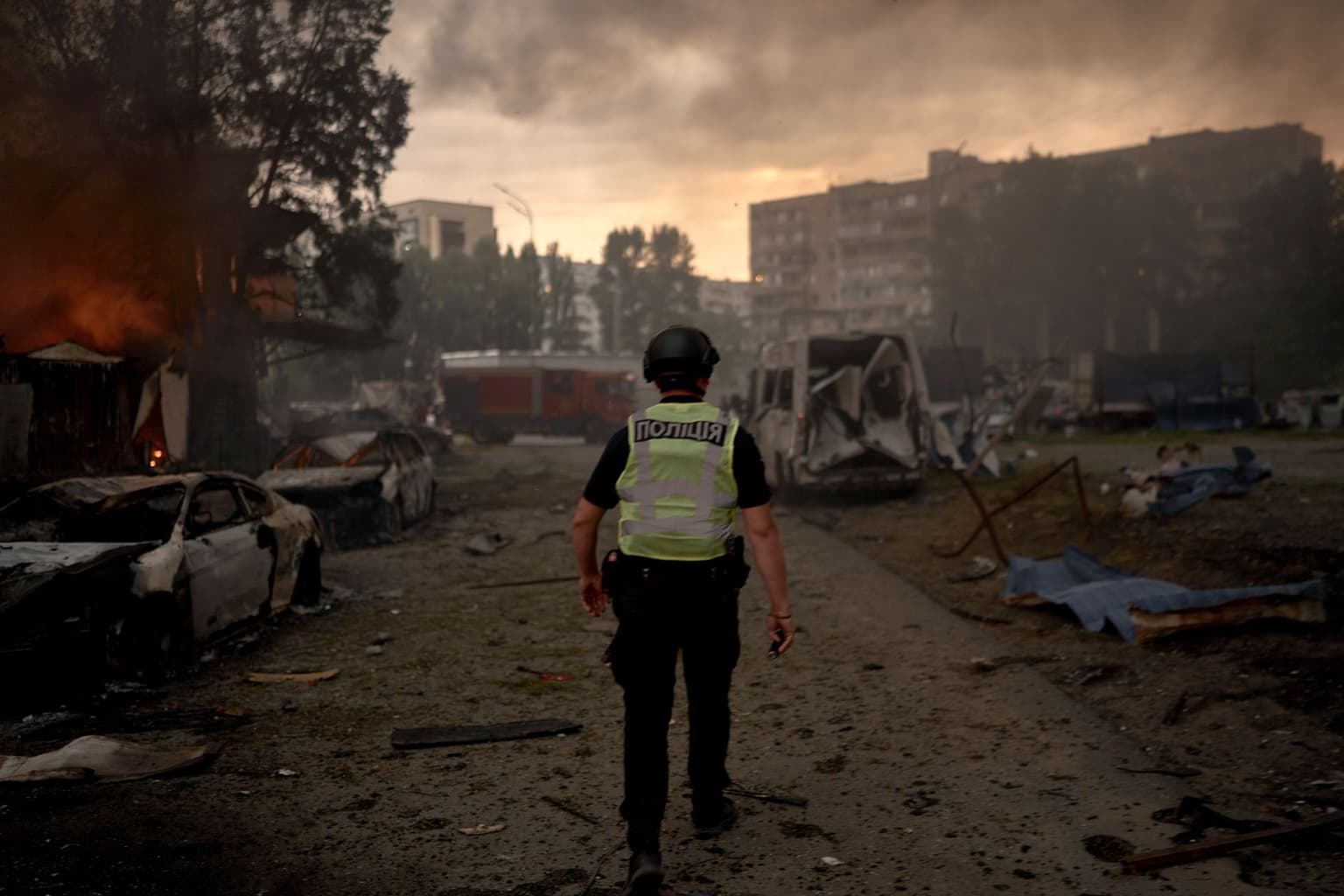
The shortage of interceptors was starkly demonstrated a few hours earlier when Russia launched the second massive attack on Ukraine in four days, once again focusing on the capital, Kyiv, killing at least 26 and injuring dozens of Ukrainian civilians.
"Almost all the ballistic missiles hit their targets. If this continues, Russia will destroy all of Ukraine’s critical infrastructure," Beskrestnov said.
Ukraine's Air Force said the latest Russian attack consisted of 23 ballistic missiles, six 3M22 Zircon "hypersonic" anti-ship missiles, 39 conventional cruise missiles, and 351 attack drones.
With no PAC-3 interceptors in reserve, all Ukrainian air defense crews could do was watch as all 23 ballistic missiles and all six 3M22 Zircon missiles slammed into the city and surrounding oblast.
Ukraine's air defenses did much better against the other, slower munitions Russia launched as part of its massive barrage, shooting down 37 cruise missiles and shooting down or suppressing 326 attack drones.
But ballistic missiles — incredibly difficult to intercept due to their sheer speed — remain the toughest challenge.
"Our warriors performed well today in intercepting drones and cruise missiles, but unfortunately not Russian ballistic missiles. And the reason lies in the insufficient supply of interceptor missiles," President Volodymyr Zelensky said in a statement posted on social media hours after the latest attack.
Ukraine relies on U.S.-made Patriot air defense systems launching PAC-3 MSE interceptors to shoot down ballistic missiles. The highly sophisticated and expensive PAC-3 missile intercepts incoming ballistic missiles by physically ramming them in mid-air.
The war in the Persian Gulf has stretched supplies of the highly sought-after missiles thin, and has seen supplies previously earmarked for Ukraine diverted to the U.S. military and U.S. allies in the Gulf.

Patriot is one of the handful systems in the world that can effectively engage incoming ballistic and hypersonic missiles. Other systems provided to Ukraine by Western partners, such as the Franco-Italian SAMP/T, are unable to engage ballistic missiles, Colonel Yurii Ihnat, head of the Communications Department of the Ukrainian Air Force, told the Kyiv Independent.
"SAMP/T systems have been in Ukraine for a long time and have even shot down Russian aircraft. But we must hope for the modification that will be able to protect us from ballistic missiles today," Ihnat said.
Ukraine is also attempting to build its own indigenous anti-ballistic missile air defense system. Fire Point, the Ukrainian defense concern behind the highly effective FP-1 and FP-2 strike drones and the "Flamingo" cruise missiles, has been developing the "Freya" air defense system, specifically designed to engage incoming ballistic missiles.
Despite Fire Point announcing an apparently successful test on June 3, even the most opportunistic estimates assess the system is still many months away from obtaining initial operating capability.
read also
This leaves Ukraine incredibly vulnerable to Russian ballistic and hypersonic missiles, an advantage the Kremlin increasingly seeks to press as Ukraine continues to frustrate Russian ambitions on the battlefield and Kyiv mounts its own extremely successful long-range drone campaign against the Russian oil industry.
"You need to have something to shoot down ballistics. There are enough systems, a constant supply of missiles is needed. The Russians are using the factor that in Ukraine, and in the world, there is a serious shortage of PAC-2 and PAC-3 interceptor missiles, so they are focusing more on ballistic strikes," Yurii Ignat said in an interview on Ukraine's national television.
As that supply continues to elude Ukraine, residents of Kyiv continue to pay the price; at least 26 people were killed and dozens more injured in the capital and the surrounding region.
The previous strike on July 2 killed 31 and injured over 100. One Russian missile demolished a civilian apartment building in the Darnytskyi district of the city, wiping out entire families in an instant.
"While Patriot missiles remain in allies' warehouses, it only encourages Russia to keep 'defeating' residential buildings," Zelensky said in a statement posted to social media, imploring Ukraine's Western allies to demonstrate strength in the face of Russian aggression.
"The United States and Europe have enough strength to stop this terror."