Netherlands confirms it will host Nuremberg-style tribunal for Russia
 on Google
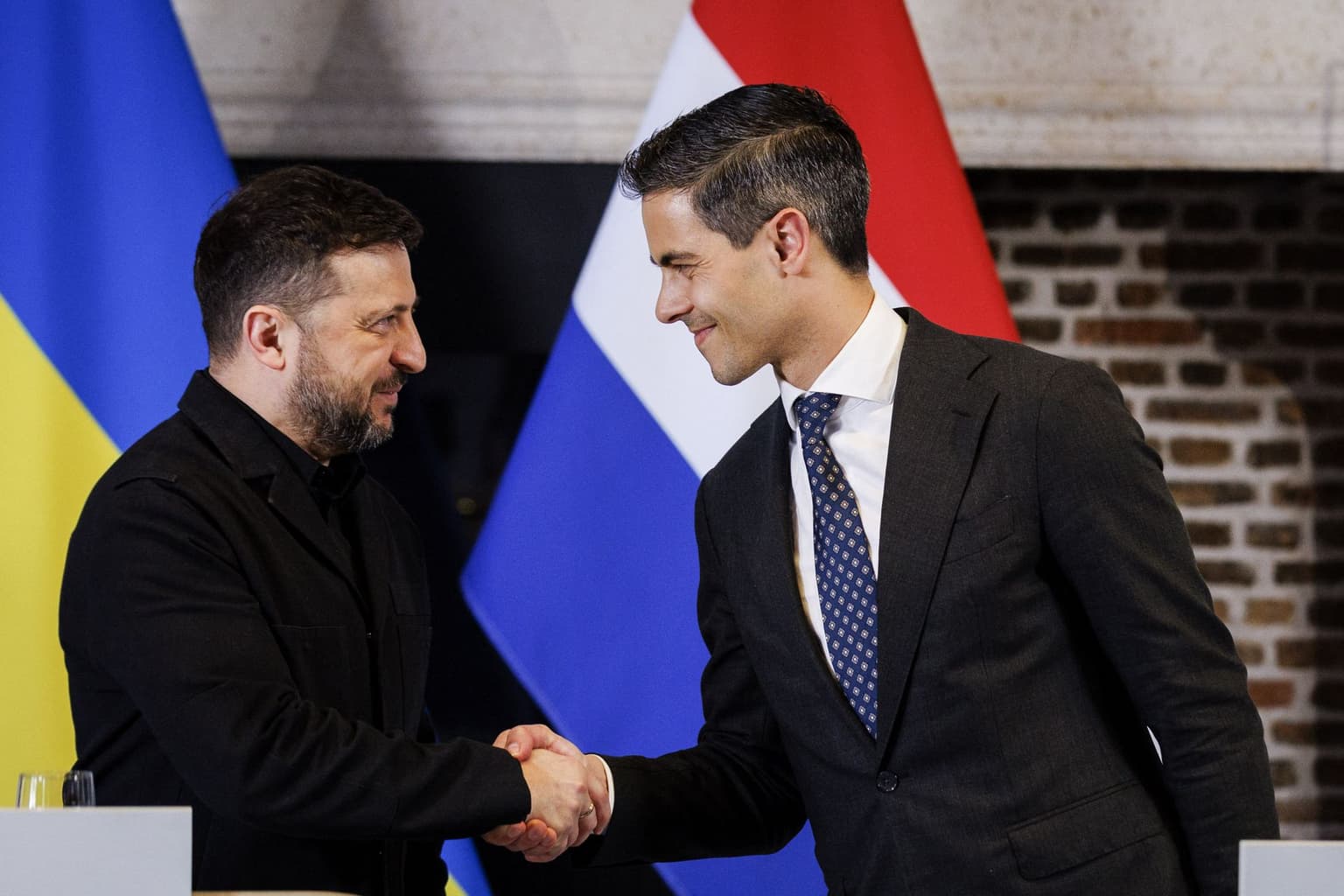
BRUSSELS, Belgium — The Dutch government will host a special tribunal to prosecute Russia's leadership for the international crime of launching a war of aggression, the country's Prime Minister Rob Jetten confirmed in a call with President Volodymyr Zelensky on July 3.
While most of Russia's war crimes can be prosecuted in other courts, there is no legal entity authorized to rule on the crime of aggression — first coined to prosecute the Nazis for World War II — which means a dedicated tribunal needed to be established.
"The Russian aggression against Ukraine cannot go unpunished. That is why we need to establish a special tribunal," Jetten tweeted.
He confirmed that the Netherlands would serve as the host country, after having formally offered to do so in October 2025.
"The decision will make it possible to hold Russia's senior political and military leadership to account specifically for the crime of aggression, not merely for its consequences," Zelensky wrote in a Telegram post thanking the Dutch for the decision.
The Netherlands was the only country to offer to host the court, and it was presumed to be the correct place in which to hold proceedings, given The Hague also hosts the International Criminal Court and the International Court of Justice.
In January 2026, the EU began funding a team to do preparatory work for when the special tribunal is up and running. They are working from The Hague too, where a centralized Register of Damage caused by Russia is being maintained, and which is serving as the basis for any future Ukrainian compensation claims.
Jetten's announcement mentioned that the Netherlands would be the host "subject to certain conditions," outlined further in the Dutch government's decision.
Specifically, the document notes concerns that the Netherlands could take on a disproportionate share of the start-up costs while the precise division of responsibility is being agreed upon, and of later costs if not enough countries participate.
In practice, these risks are already being mitigated.
The EU decision to fund preparatory work in January already removes some of the start-up costs from the calculation.
And 36 countries, plus the EU, formally adopted the agreement on the special tribunal at the May 15 Council of Europe summit in Moldova. Being a signatory entails taking on a share of the costs.
The Ukrainian government expects that the special tribunal will be fully operational in 2027.