A predetermined vote in an increasingly unpredictable Russia
Drone strikes, economic strains, and growing public unease are complicating the Kremlin's efforts to stage another show of political stability.
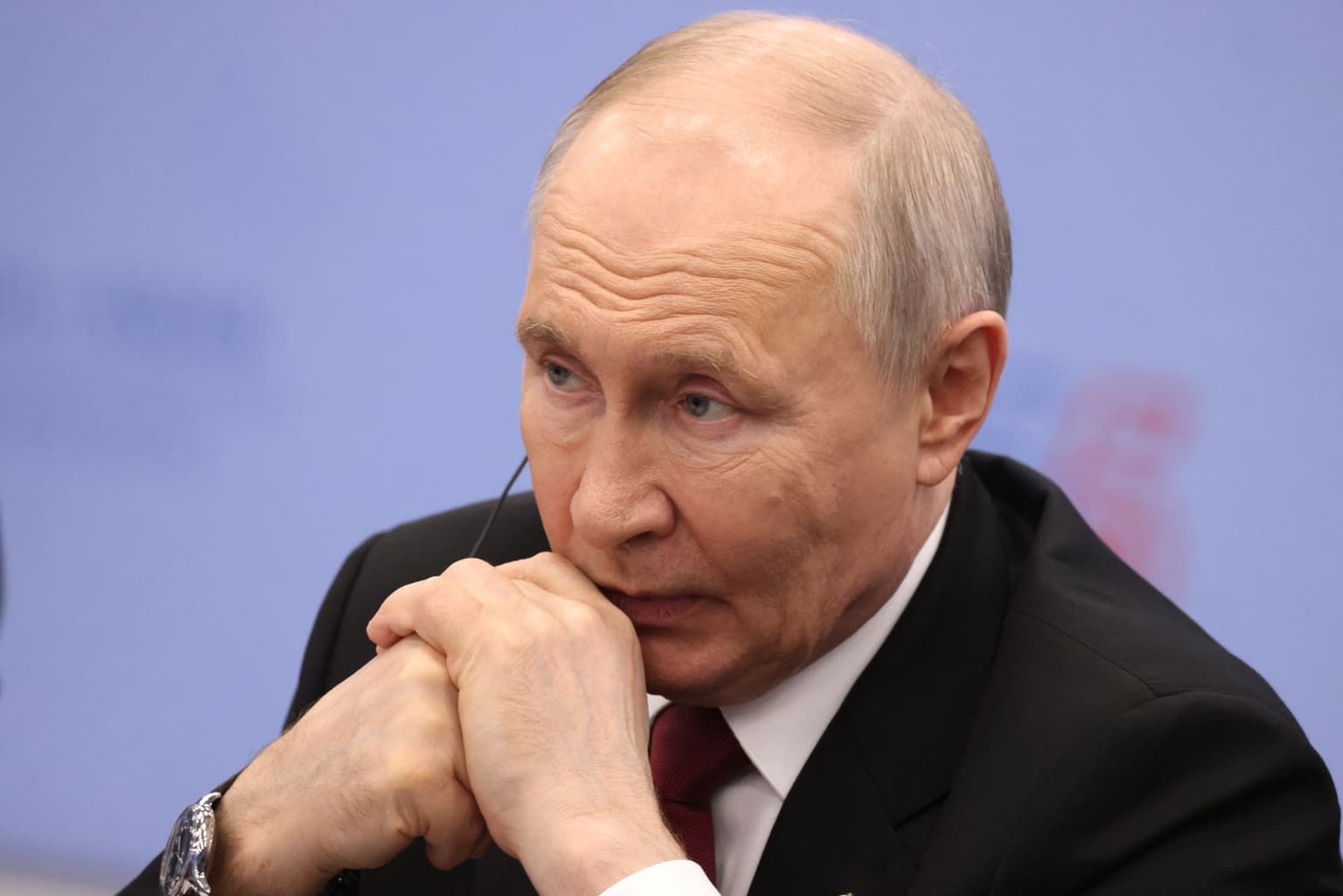
Russian President Vladimir Putin, during the Russia-ASEAN Summit in Kazan, Russia, on June 18, 2026. (Contributor / Getty Images)
 on Google
In Russia, where elections offer little real uncertainty, the Kremlin still stages the ritual of competition — a carefully managed exercise designed not to choose leaders but to reinforce President Vladimir Putin's claim to legitimacy.
With the upcoming parliamentary elections set for Sept. 20, the first since the start of the all-out war against Ukraine, the Kremlin's political wing is tasked with a risky endeavour — mustering up high numbers for Putin's United Russia party in a country stuck with decreasing living standards, extensive internet shutdowns, fuel shortages, and a war that is finally hitting close to home.
What will be different this time is that stability, which was always the cornerstone of Putin's electoral offer to Russians, is eroding fast in the face of increasing Ukrainian attacks, said Regina Smyth, a researcher focusing on Russian state-society relations at Uppsala University.
Drone strikes at all locations
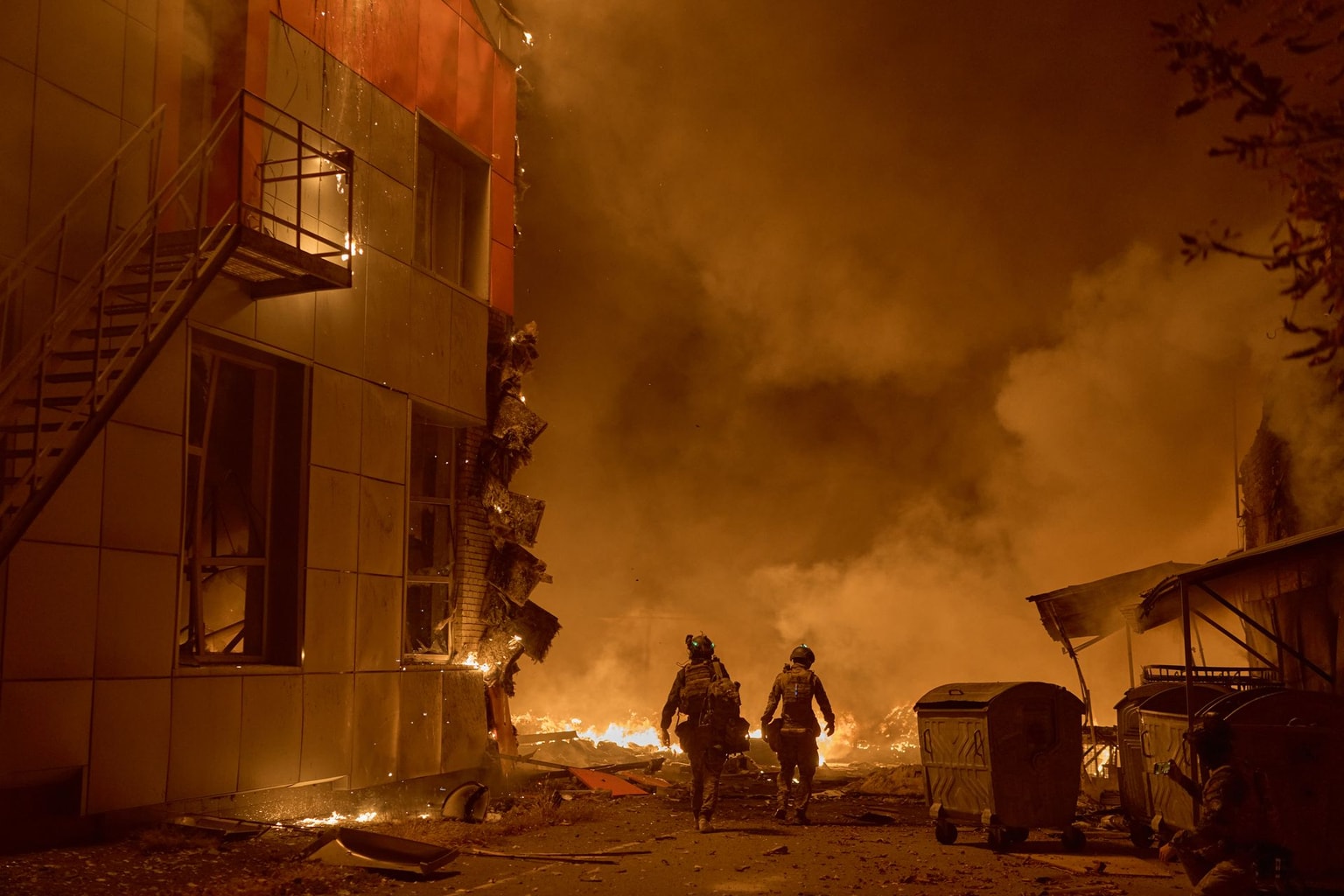
Since the start of 2026, Russia has lived through increasingly frequent Ukrainian drone strikes, often reaching well inside Russian territory.
On June 18, Ukrainian forces conducted an attack on the Moscow Oil refinery in Kapotnya district, located just 15 kilometers away from the Kremlin. Other industrial facilities near Moscow were also damaged in the attack.
Before that, Ukraine conducted dozens of attacks on Russian territory since the start of this year, mostly targeting Russian oil refineries.

"This latest strike, and the one on refineries in St. Petersburg during the economic forum, will definitely create reputational damage ahead of the vote," said Margarita Zavadskaya, who specializes in the role of elections in authoritarian states at the Finnish Institute of International Affairs. "Against this backdrop, the Kremlin will try to maintain an image of normality."
In parallel to Ukrainian strikes, mobile internet is regularly shut down across Russia. Access to Telegram, WhatsApp, and other popular messaging platforms is restricted haphazardly, in an effort to force Russians to download the state-controlled Max super app.
This makes running elections especially difficult, as a lack of internet means Russia's previous online voting experiments are less likely to succeed.
"This year, many fewer Russian regions asked for this online vote to be allowed," Zavadskaya explained. "This is a bit surprising, as voting online was always a convenient black box, because it leaves no witnesses of falsifications."
"There are strong signals that the tide of support for the war has turned."
More broadly, the war is making the electoral campaign much more difficult than usual for the Kremlin. This showed especially in Vladimir Putin's approval ratings, which have been consistently dropping, even in surveys conducted by Kremlin-friendly pollsters, since the start of 2026.
"While these statistics in Russia can never be fully reliable, in general, there are strong signals that the tide of support for the war has turned," said Regina Smyth, a researcher focusing on Russian state-society relations at Uppsala University.
This apparent change in mindsets is one of the key reasons that the Kremlin has not yet come up with a strategy for the parliamentary elections, said Andrey Pertsev, a politics reporter at exiled Russian outlet Meduza.

"There is a lot of uncertainty due to the war and the state of the Russian economy. So, if they choose a strategy now, it could just become irrelevant by September," Pertsev said.
The war itself is not the only point of discord: another key element is the role of war veterans in society, experts who spoke to the Kyiv Independent said.
"If you look at polling, one of the things Russians are most scared about is the return of these people from Ukraine," Smyth explained.
Despite this, the Kremlin will still try to place military figures on electoral lists, also because Putin "simply likes discussing this topic of war," Pertsev argued in turn. "And Russian civil servants (responsible for organizing elections) cannot not care about Putin's opinions on this."
Why elections are still important in authoritarian Russia
Throughout most of Putin's rule, before major elections, the Kremlin would send out detailed instructions to regional officials, explaining what voting results needed to be "achieved" and what measures needed to be rolled out to obtain those desirable results, Pertsev explained.
From that point of view, these elections will be no different. But even if the outcome is known in advance, voting still matters to the Kremlin, and personally to Putin. "He likes these official demonstrations of numbers, electoral results," Pertsev said.
In 2021, the United Russia party was handed 324 seats in the 450-member parliament, a majority allowing the party to change the country’s constitution at will.
Four more parties, all pro-government, were allowed to sit in the parliament — the far-left Communist Party, the right-wing populist Liberal Democratic Party (LDPR), the nationalist Just Russia, and a New People political project, the first new parliamentary entry since 2003, created as a response to a desire to see "new faces" in the stagnant institution.
"This election is not going to bring the Russian state down."
These figures do not really mean anything, though, Zavadskaya explained in turn. "It is impossible for Russian authorities to know if people voted for Putin's party, United Russia, because they are scared, genuinely loyal, or simply don't care."
"This election is more about the capacity of the system to yield the results (that authorities want)," the researcher said.
Smyth points out, however, that the "stability" that was the main selling point for officials on the spot is eroding more quickly than the state's ability to draw a new offer.
Business as usual?
All in all, however, the upcoming parliamentary elections will probably take place as usual, experts who spoke to the Kyiv Independent predicted, despite Putin's falling approval ratings.
"United Russia has never been popular among voters, and Putin has always tried to draw a division between himself and this party," Zavadskaya said. "Still, with the recent situation with internet shutdowns, economic problems, and other issues, United Russia will probably have an even lower electoral result than usual."


While estimates vary, experts agreed that despite everything, the party is unlikely to receive less than 50% of the vote, either thanks to political campaigning efforts or through outright vote fraud and manipulation.
"As usual, this will be about employing the administrative apparatus, so the whole propaganda machine, bureaucrats, municipal workers, the Central Election Commission, and all their subordinates," Zavadskaya said.
At the end of the day, the goal for the Kremlin in the upcoming elections is to "make them as boring as possible," the researcher argued. This means elections where real issues that are important to Russians are not necessarily discussed, but the elections are still carried out and the results the Kremlin needs are produced.
"I try to give a balanced or a nuanced version of this: yes, this is a dangerous time for the Kremlin, but that absolutely does not mean that there will be mass protests or anything in response to the election, and in response to likely voting fraud," Smyth concluded.
"This election is not going to bring the Russian state down. There is just a much higher level of uncertainty now than in previous votes."