EU officially extends sanctions against Russia — at cost of delisting 2 oligarchs in Putin's inner circle
 on Google
Key developments:
- The European Union agreed to extend 3,000 sanctions against Russian individuals and entities for another 36 months after reaching a deal on Sept. 22.
- The agreement calls to lift sanctions against two Russian oligarchs with Kremlin ties: Mikhail Fridman and Alisher Usmanov.
- The deal came after Latvia agreed to allow the delisting of Usmanov and Fridman in order to prevent the sanctions regime from lapsing altogther.
- The push to delist Usmanov and Fridman was driven by France and Slovakia, with France's motive reportedly connected to a prisoner release deal with Azerbaijan.
- Latvia will pursue its own national sanctions against Usmanov and Fridman, while Ukraine has called on other EU states to follow suit.
BRUSSELS, Belgium — The European Union on Sept. 22 finalized a deal to extend its package of sanctions against Russia for another 36 months, saving the measures from lapsing before the midnight deadline.
In exchange for extending the 3,000 sanctions, two Russian oligarchs closely associated with Russian President Vladimir Putin have been removed from the list.
The news comes just hours after three diplomats told the Kyiv Independent that Latvia had agreed to stop opposing a plan by Slovakia and France to remove Alisher Usmanov and Mikhail Fridman from the EU sanctions.
"The Council decided today to prolong the restrictive measures targeting those responsible for undermining or threatening the territorial integrity, sovereignty, and independence of Ukraine for another 36 months, until 22 September 2029," the Council of the European Union said in a press release announcing the agreement.
The sanctions regime includes travel restrictions, asset freezes, and economic limitations against 3,000 individuals and entities, most of them Russian.
"In the context of the sanctions' review, the Council also decided not to renew the listings of three individuals and one entity, as well as to remove three deceased persons from the list."
Usmanov and Fridman are among the three individuals removed from the list. The other person is Andrey Pavlovich Falaleev, a Ukrainian national and former rector at Crimea Federal University.
Falaleev was added to the sanctions list in 2023 for signing a letter supporting Russia's war against Ukraine. The EU did not provide a reason for his delisting.
Latvia holds out as long as it can
The Franco-Slovak push to delist Usmanov and Fridman led to a weeks-long delay in renewing the European bloc's 3,000 sanctions on Russia.
"In maintaining the (sanctions) regime we have reached a difficult compromise," said a spokesperson for the European Council Presidency.
In exchange for the delisting, EU ambassadors agreed to extend the sanctions for three years rather than the originally planned 12 months, the compromise that appeared to have been reached the previous day.
Latvia was the last member state to accept the compromise.
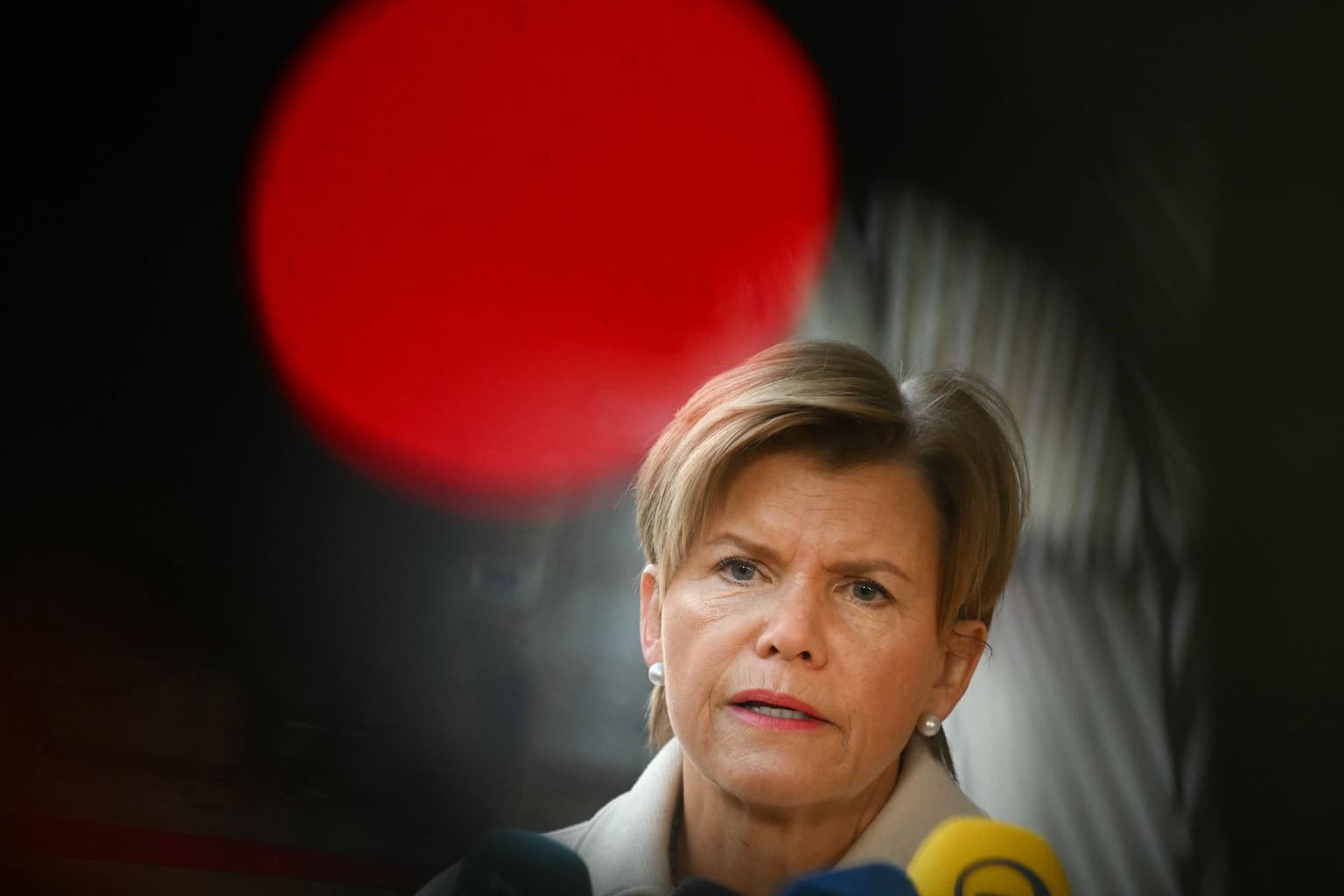
"Removing two Russian oligarchs from the European Union’s sanctions list for political reasons and without legal grounds is dangerous and sends completely the wrong signal at a time when Russia's behavior is becoming more aggressive," Latvian Foreign Minister Baiba Braze said in a statement on Sept. 22.
"Latvia opposed it until the very end and was the last EU member state to block it. Our position was the right one on moral and strategic grounds."
Braze called the decision to delist Usmanov and Fridman "unprecedented."
"Nobody is happy with this outcome," she added.
All EU votes on sanctions policy require unanimity, which gave France and Slovakia leverage in securing the deal.
Initially, Latvia went public on the night of Sept. 21 to oppose the Franco-Slovak plan, with Braze writing on social media: "The Latvian government's stance has been unwavering. EU sanctions against Russia must be strengthened, not weakened."
That strong stance garnered the support of President Volodymyr Zelensky, who praised Latvia just two hours before Riga backed down.
In the final deal, Riga abstained from the vote rather than opposing the compromise, allowing the agreement to go ahead but without Latvia's blessing.
"This was not a choice between a good and a bad solution, but between a bad and a much worse one," Latvia's Prime Minister Andris Kulbergs said.
Three national diplomats said that they understand Belgium and Lithuania also committed to abstaining because they do not support the move, but equally cannot allow 3,000 listings to evaporate.
Riga will also impose national sanctions against Usmanov and Fridman, according to Braze and a Latvian government press release. Ukrainian Foreign Minister Andrii Sybiha has called on other EU member states to do the same.
"Moscow is celebrating because it got what it wanted: a sense of impunity, the humiliation of the EU, and division among Europeans," Sybiha said in response to the compromise.
A press statement from the Estonian government confirmed that Tallinn also abstained on the vote, and that it would likewise re-sanction the two men nationally.
"Estonia did not support lifting sanctions on these two prominent Russian businessmen, as they continue to support the aggressor and contribute to its aggression," said Foreign Minister Margus Tsahkna.
Earlier on Sept. 22, Latvia had demanded to postpone the decision for two weeks, so that the vote would be taken after an upcoming parliamentary election in the country, where delisting the two men would be a politically toxic move.
"Choosing to stand up for further sanctioning of these persons, we achieved a result that is more beneficial for Latvia, Ukraine, and Europe in the long term," Kulbergs said.
The Latvian government press release goes on to mention a series of new commitments from France to Latvia, including the start of negotiations to join France's nuclear deterrence initiative, and to bolster France's military presence in the country, "especially in the field of air defense."
read also
The oligarchs France advocated for
The two sanctioned individuals, Fridman and Usmanov, are both considered members of Russian leader Vladimir Putin's inner circle.
Fridman is a co-founder of the Russian conglomerate Alfa-Group, whose subsidiary provided insurance for vehicles used by Russian forces in Ukraine, and reportedly serviced the Main Office of Special Programs, which is responsible for guarding Putin.
The Ukrainian-born tycoon was also the owner of Sense Bank — formerly known as Alfa-Bank, one of Ukraine's largest banks — before its nationalization in 2023.
Usmanov made his fortune in metal and mining operations following the collapse of the Soviet Union. He was referred to as "one of Putin's favorite oligarchs" in the EU's original 2022 sanctions decision.
Both men have repeatedly disputed the claim that they have close ties to the Kremlin.
Slovakia, has repeatedly requested the delisting of Fridman and Usmanov, but had always been unsuccessful, until France joined the push to delist Usmanov.
The Financial Times first reported that Paris wanted to delist Usmanov because Azerbaijan made it a condition for releasing two prisoners with French nationality.
Reuters reported that an Azeri diplomat confirmed they want Usmanov to be delisted, but denied trying to influence decision-making.
And national diplomats from six different countries confirmed the FT's claim to the Kyiv Independent.
Why Azerbaijan is trying to negotiate a prisoner swap with France to delist an Uzbek-Russian oligarch over any of its own sanctioned citizens or companies has not been publicly explained.
Reuters reported only that its Azeri diplomatic contact described Usmanov as a "renowned philanthropist and public figure."
With the agreement to rollover the other sanctions complete, they are expected to remain in force until at least Sept. 22, 2029.
While the compromise preserved the bulk of the sanctions for three more years, the concession to France and Slovakia met with outrage from Ukraine.
"What signal does this send? Frankly, astonishing and embarrassing," Ukraine's sanctions chief Vladyslav Vlasiuk said on social media in response.