Russia 'increasingly obstructing' return of Ukrainian children from occupied territories
 on Google
Russia has introduced additional restrictions on Ukrainian children trying to leave occupied territories, a charity that helps facilitate their return told the Kyiv Independent.
"Russia has been increasingly obstructing the departure of minors by imposing additional bureaucratic requirements," Oleksandra Dvoretska, head of policy of Bring Kids Back UA, said.
Since the beginning of 2026, Russia has required minors to have biometric documents, and children under 14 who do not yet have a passport must obtain a Russian foreign passport to leave. Previously, other documents, including birth certificates, could be used.
"The Russians are colonizers who seize territory, taking children with them," Dvoretska said.
Despite the increasing challenges, Ukraine brought back 103 children and young people from the Russian-occupied territories in August, up from 50 in July.
While the number of children increased, the process of returning them "hasn't become easier," Dvoretska said.
More young people leaving
The increase in the number of returned children partly reflects Ukraine's growing capacity to facilitate their return, Dvoretska said.
In addition, more young people have been trying to leave the Russian-occupied territories — particularly those who are at risk of being forcibly conscripted into the Russian army.
Bring Kids Back UA said on Aug. 28 that among the rescued children and young adults was Viktor, 21, whose home was regularly raided by armed Russian soldiers who accused him of spying. He was forced to obtain a Russian passport, after which he was referred to a medical board for later service in the Russian army.
Another young man, Mykola, 21, experienced the systematic militarization of education while studying, as students were forced to attend meetings with Russian military personnel and were taught how to operate drones. After graduating from university, Mykola received a draft notice, but he managed to leave the Russian-occupied territories.
Dvoretska said that Russia has also significantly restricted access to higher education in the occupied territories.
"(The Russians) want to shorten the path a child takes from school to the (Russian) army," Dvoretska said.
As of September 2026, Ukraine's Justice Ministry has officially confirmed 20,610 cases of deportation and forced transfer of Ukrainian children to Russia.
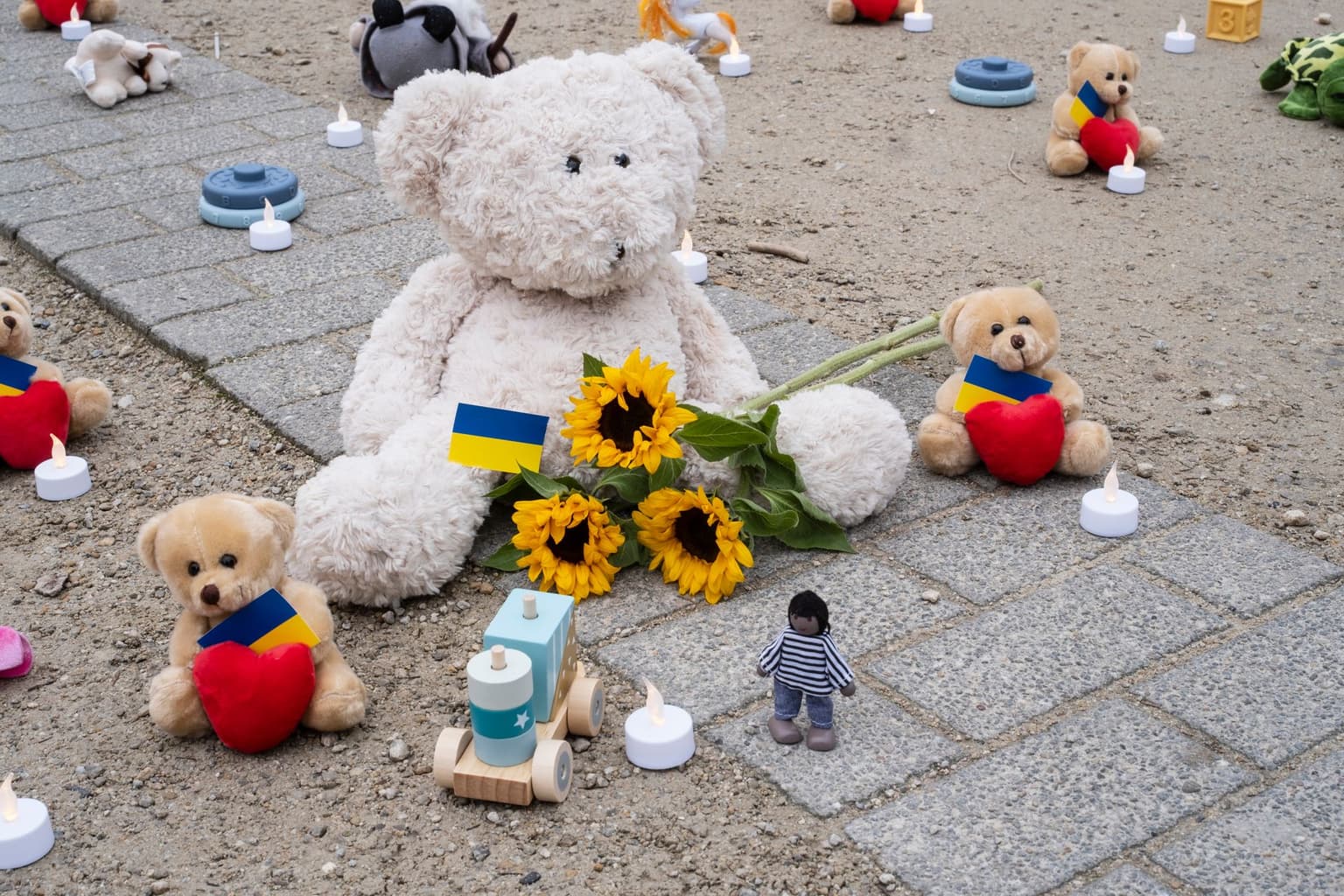
Ukrainian human rights groups estimate that hundreds of thousands of Ukrainian children are under Russian control, including those who have been deported or forcibly transferred and those who remain in occupied territories and are at risk of deportation.
Ukrainian officials estimate the real figure of abducted children could be far higher. Ombudsman Dmytro Lubinets puts the number at up to 150,000, while Presidential Commissioner for Children's Rights Daria Herasymchuk has given a range of 200,000–300,000.
In 2023, the International Criminal Court issued arrest warrants for Russian President Vladimir Putin and Russia's Commissioner for Children's Rights Maria Lvova-Belova for their role in state-sanctioned child abductions.