'A nightmare' — Russians in Tuapse in disbelief after Ukrainian drones bring the war home
 on Google

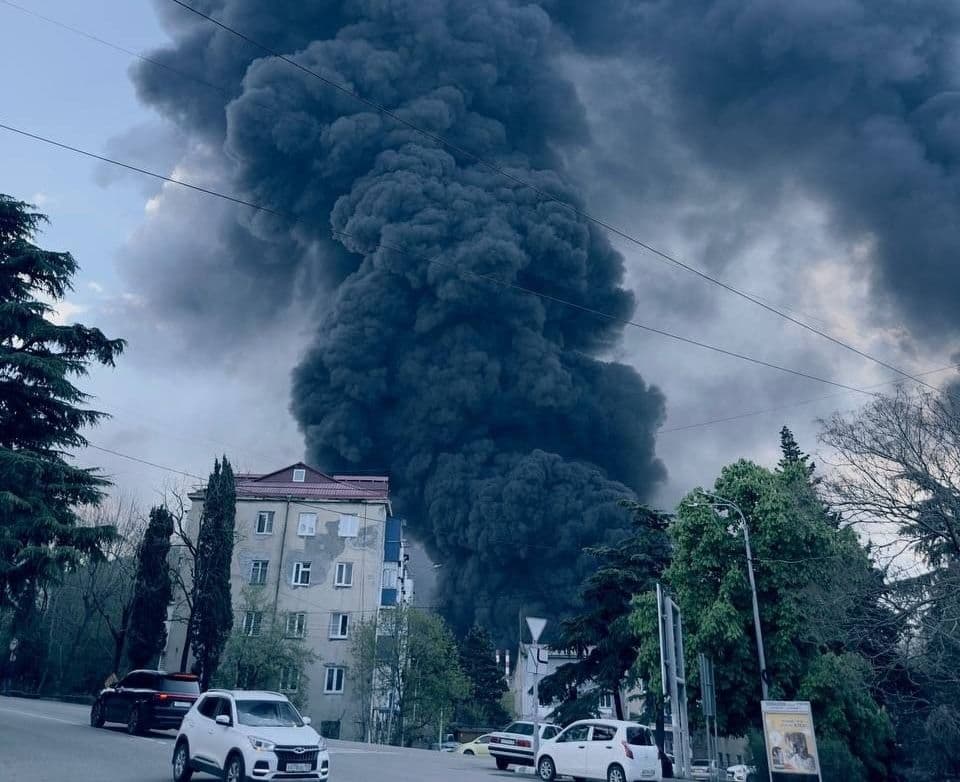
Air quality in the Russian city of Tuapse has deteriorated significantly following a major fire at a local oil refinery struck by Ukrainian drones on April 20, with residents expressing fear for their safety as conditions in the city continue to worsen.
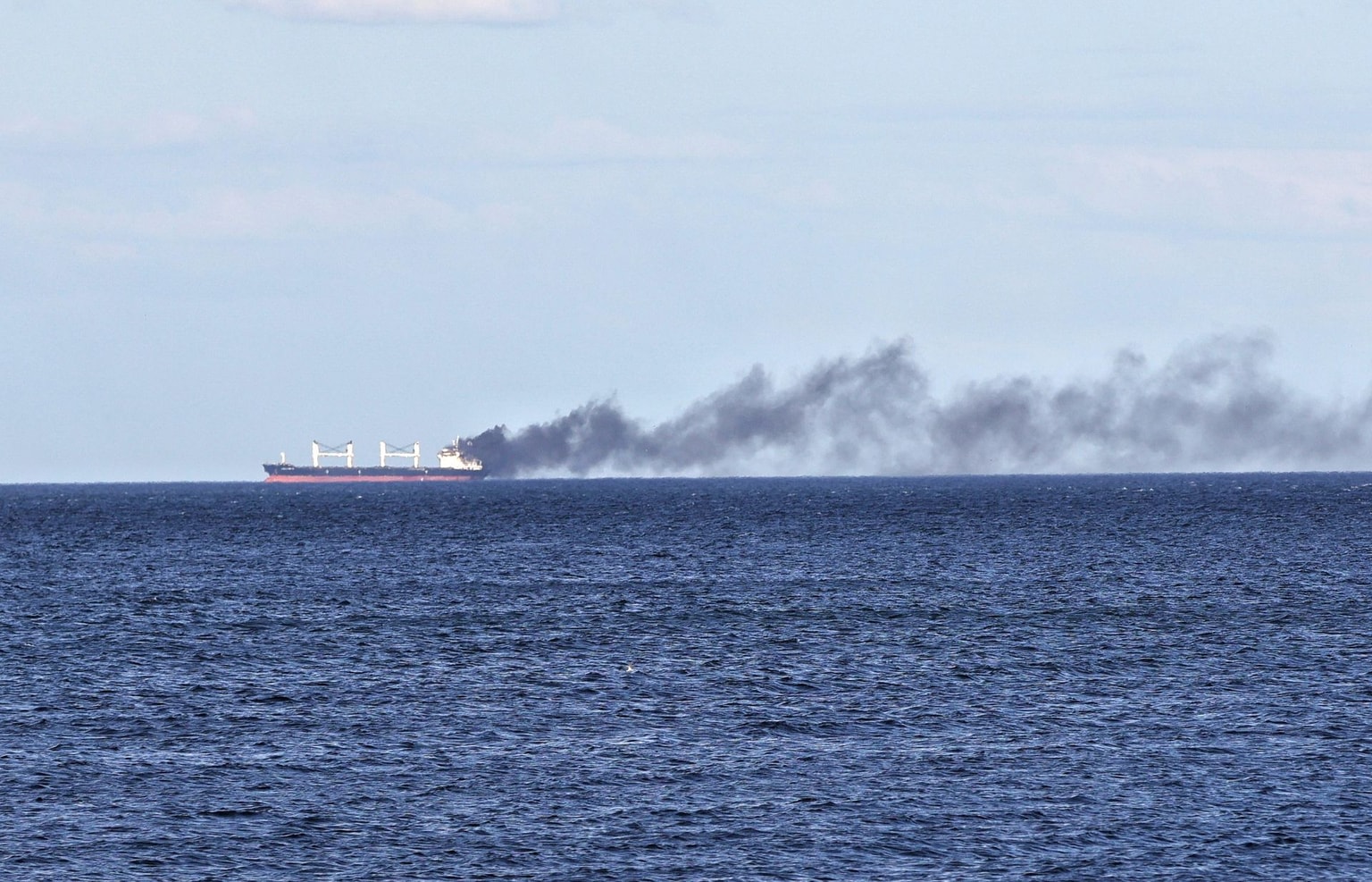
A fire broke out at the oil facility immediately after the attack, with local residents sharing photos and videos on social media showing thick smoke rising above the refinery. Residents also posted images of pollution in the Black Sea, as well as soot from the smoke found on streets and in private yards.
The fire had still not been contained as of April 23, with smoke continuing to rise from the site for a third consecutive day.
As environmental conditions in the region worsened following the fire, more residents took to social media to post videos and messages, complaining, among other things, that in the city of Tuapse "there was nothing to breathe."


"This is honestly some kind of environmental disaster. What am I supposed to do? I do not want to stay here anymore. I need to leave today," a resident of Tuapse said in a video posted on the ButusovPlus Telegram channel while trying to wash off the black residue covering the city.
"Why is this happening? It will not wash off at all. This is just a nightmare," she added.
Another woman posted a video of herself driving along a road where smoke could be seen rising from the oil refinery, saying that at some point her trust in the Russian government had "collapsed" in light of recent events.
"Mr. President (Vladimir Putin), we went to the polls, we voted for you, we believed in you. And for a while, we really were protected, everything was fine. But at some point, it all collapsed."
"But I do not know what will happen next. I do not know whether to believe you, to believe the government, who to believe, what to think, when you see all this horror, when residents of my beloved city are suffering."
At the same time, pro-Russian Telegram channels and media outlets are comparing the situation in the city to the worst nuclear disasters in history, including Hiroshima in Japan, where the U.S. dropped an atomic bomb in 1945.
Yet, no nuclear power facilities were damaged in the city or the wider region. Ukraine also does not possess nuclear weapons, having relinquished them under the 1994 disarmament agreement.
"The consequences of the bombardment of Tuapse are simply monstrous," pro-Russian Telegram channel RIA Katyusha said. "What is happening there (in Tuapse) now is Hiroshima, only without radiation."
Pavel Kukhmirov, known by the call sign "Shakespeare" and a member of Russian proxy forces in the Donbas region, said on his Telegram channel that the city of Tuapse "no longer exists" and compared the situation to the 1986 Chernobyl disaster, one of the worst nuclear accidents in history.
"The soil is poisoned, the water is poisoned, the air is poisoned. Right now black rain is falling there, like in Hiroshima — water mixed with oil soot," Kukhmirov wrote.
"Since 2022, (Russian authorities) have kept saying to us, very pompously, 'Do you want Chernobyl in Kyiv?' Well, now Chernobyl is in Tuapse."
Local authorities did not issue an official statement on significant air quality issues until the third day of the intense fire.
According to the Krasnodar Krai Emergency Response Headquarters' statement, combustion byproducts were released into the atmosphere and fell with rain on April 22, leaving a black coating on surfaces.
Concentrations of benzene, xylene, and soot in the air are two to three times higher than normal in several districts of the city as of April 21, the Krasnodar Krai Emergency Response Headquarters said. Yet, due to rain, no air quality measurements were taken on April 22.
Local residents have been advised to limit time outdoors, wear masks when outside, clean their homes more frequently using wet methods, and seek medical attention if they experience symptoms of acute illness or feel unwell.
The emergency response headquarters said the situation would return to normal "as soon as the fire is put out."
Meanwhile, local residents continue posting videos on social media showing streets covered in black puddles after rainfall, with some surfaces speckled with oil droplets
The Tuapse Oil Refinery, a Rosneft facility, is one of the 10 largest oil refineries in Russia. The refinery is capable of refining approximately 12 million tons of crude oil per year.
Tuapse is located around 75 kilometers (47 miles) northwest of the major city of Sochi, has served as a regular target of Russian attacks.
Ukrainian forces struck the oil facility in Tuapse with drones twice in one week. The first attack occurred on April 16, after which firefighters spent nearly three and a half days battling the blaze. Shortly after the fire was put out, Ukrainian drones struck the refinery again on April 20.
Risksat, a Russian environmental monitoring firm, published a satellite image on April 19 showing an oil slick in the Black Sea near Tuapse. The slick spans about seven square kilometers (almost three square miles) and is being pushed by winds toward the coastline rather than out to open water, according to the company.
Ukraine has increased strikes on Russian oil infrastructure in recent months, as it aims to reduce the Kremlin's most important revenue source — given a boost by the skyrocketing oil prices that have followed the war in Iran.