69% of Russian soldiers on Zaporizhzhia front line have criminal records, Ukrainian military says
 on Google
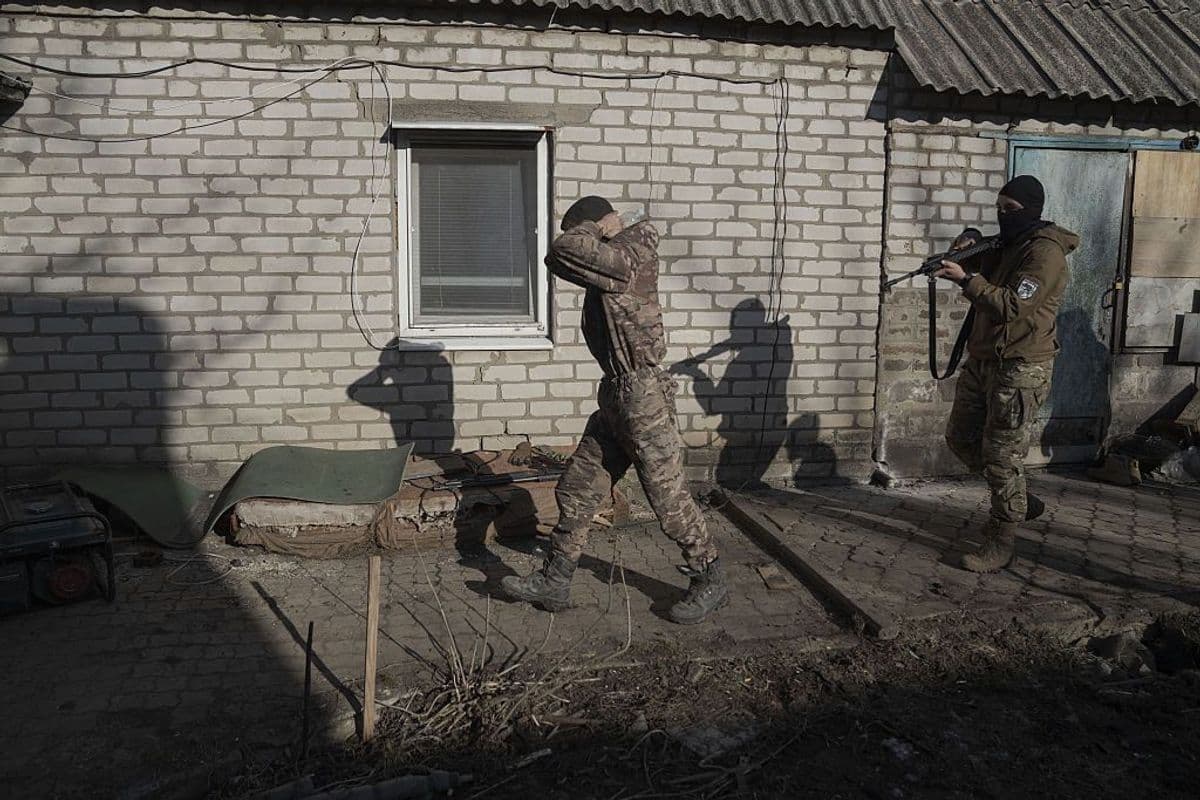
Of the Russian force fighting near the Ukrainian city of Zaporizhzhia, 69% of servicemen have criminal records, Anastasiia Shevchenko, a spokesperson for Operational Task Force South, said on Sept. 21.
The figure likely reflects both the overrepresentation of those from poor and disadvantaged parts of Russian society among voluntary recruits, and the widely reported practice of offering men contracts to avoid prison time, often under coercive circumstances.
According to internal analysis conducted by the Ukrainian military, 31% of the overall Russian force had signed up to avoid criminal charges, and 24% were in the military to improve their financial situation, Shevchenko said in comments to Ukrinform.
Since holding an unpopular "partial mobilization" in fall 2022 — conducted in response to a successfull Ukrainian offensive — Moscow has deliberately avoided a forced draft and has instead mostly relied on luring in volunteer recruits with substantial sign-up bonuses.
These voluntary incentives work best in the most economically and socially depressed regions of Russia, where military service is often perceived as a quick pathway to financial stability for entire families, or as a way out of crippling debt.
This recruitment is complemented by foreign fighters from countries primarily in the Global South, as well as by prisoners, who were first recruited en masse by the Wagner mercenary group in 2022.
While Russia still fields special units in its regiments and brigades made up of those taken straight from the penal system with promises of amnesty, many of the regular recruits have also had some form of criminal past.
Although Kyiv has said recruitment rates remain stable, the current inflow of new Russian soldiers — often used in one-way infiltration assaults across the front line — has not been enough to produce major Russian battlefield gains in 2026.
Having concluded a three-day parliamentary election choreographed to reaffirm the wartime legitimacy of Russian President Vladimir Putin and his "party of power," the Kremlin is preparing to conduct a new round of forced mobilization to boost the military's stagnant offensive efforts, Kyiv has warned.
According to Ukrainian President Volodymyr Zelensky, Russia plans to mobilize 300,000 troops to complement existing inflows of recruits into the Russian army, and to either boost Moscow's main offensive effort on the "fortress belt" cities of Donetsk Oblast, or to create new threats in other areas, including Ukraine's northern border.