Campaign for Putin, be a star in Washington?
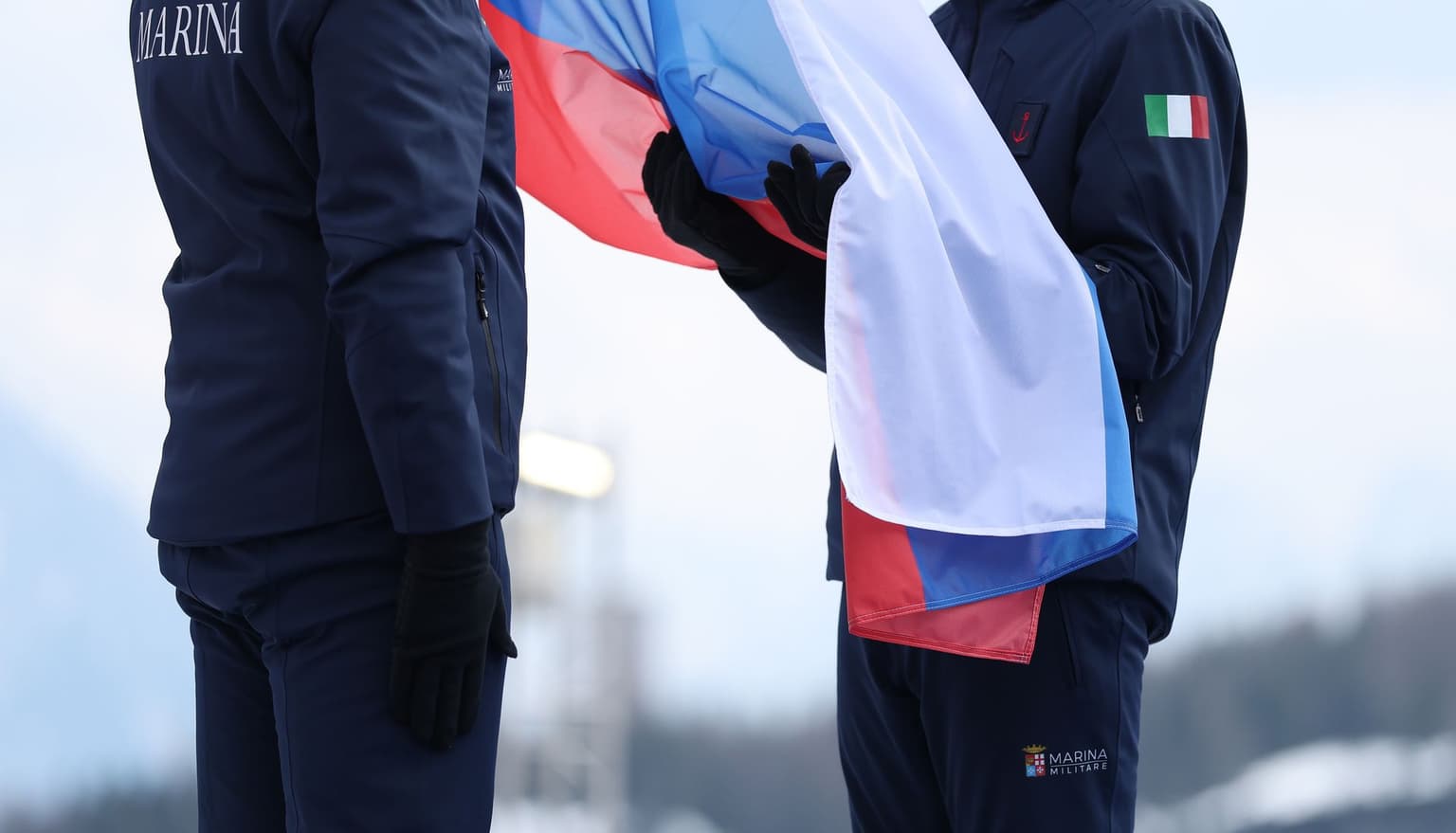
Russian flag is unfolded as it is prepared to be raised during the medal ceremony for the Women's Para Alpine Skiing Super-G Standing event on day three of the Milano Cortina 2026 Winter Paralympic Games at the Tofane Alpine Skiing Centre in Cortina d'Ampezzo, Italy, on March 9, 2026. (Linnea Rheborg/Getty Images for IPC)
 on Google
Vladyslav Heraskevych
Skeleton athlete
Last week, offices across Washington were actively discussing the signing of the Lindsey Graham sanctions bill, which would significantly increase pressure on Russia. And, a bit unexpectedly, sports have once again become part of that conversation.
Usually, when we say "sports," we think of competitions, athletes, or another record being broken. Yet this time in Washington, the talks were centered on a very particular topic.
The star and captain of the Washington Capitals, Russian hockey player Alexander Ovechkin, appeared in a political campaign video for Putin's party, United Russia.
In the video, he stands alongside Sergei Lavrov, who has led the Russian Foreign Ministry for 22 years now up to date, RT propagandist Margarita Simonyan, Russian military personnel, and other individuals connected to the war in Ukraine. Also present are people linked to the abduction of Ukrainian children.
At a press conference after arriving in Washington, Ovechkin said that he "doesn't understand politics", "didn't know who was around him," and that he stands for "peace and love."
Play stupid games, win stupid prizes.
After the situation gained public attention, the same question naturally arose again: can sports exist outside politics? And where exactly is the line where sports end and hybrid warfare begins?
I am convinced that the sports world has long been underestimated as a media platform by everyone except the Kremlin.
In many cases, it successfully builds soft power and whitewashes crimes against humanity. Russia, following the logic of the Nazi Olympic Games of 1936, systematically promotes its narratives through sports.

The facts are clear. The occupation of Ukraine's Crimea and the beginning of hostilities in the Donbas took place during the same weeks in 2014 when Russia was hosting the Winter Olympics in Sochi.
Those Games later became associated with the largest doping scandal in the history of sports: Russian security services were swapping athletes' samples and literally deceiving the entire world. But the world learned about it only later.
In 2014, it was still presented as a "sports celebration" that supposedly united everyone in Russia.
In February 2022, the full-scale invasion began, again during the same weeks that the Olympic Games were taking place in China. If we go further back, the 2008 Beijing Olympics coincided with the beginning of the war against Georgia.
Since the start of the full-scale invasion, it has become clear just how deeply Russian athletes and sports officials are involved in the war.
They are connected to the so-called Yunarmiya, which prepares personnel for war and is involved in the ideological indoctrination and militarization of abducted Ukrainian children. It is the legitimization of occupation through competitions held in occupied territories. It is, as in Ovechkin's case, the public amplification and support of Putin's regime and his political party.
And this is far from everything.
A significant number of Russian athletes have direct ties to the Russian military, and some raise money for the war.
Officials such as sanctioned billionaire Alisher Usmanov and businessman Umar Kremlev, president of the International Boxing Association, are working to bring global stars back to Russia, return the aggressor state to the international information space, and improve the image of a country that kills Ukrainians every day.
Previous investigations have also pointed to the involvement of certain sports officials in the abduction of Ukrainian children.
A large number of Russian oligarchs still remain within international sports organizations and continue to influence their agendas. This is a systemic problem. It can and should be addressed. Sports should not be used the way Russia uses them.
"Sports should not be a platform for normalizing crimes. We should stop pretending that sports exist in a separate bubble where no one knows anything and no one is responsible for anything."
We are used to thinking of sports as something that unites people. In this case, sports become a tool of war.
Russian athletes who support the aggression or are part of it should be excluded from the international sporting arena.
Unfortunately, the actions of the IOC leadership reveal a certain tolerance toward dictatorships. This is not surprising: the current IOC president, Kirsty Coventry, was called the "golden girl" of the Mugabe regime, which lasted in Zimbabwe for nearly 40 years, from 1980 to 2017.
In July 2026, the IOC lifted sanctions against the Russian Olympic Committee and withdrew its recommendations concerning the neutral status of Russian athletes. Now those involved in crimes, or those who justify them, can once again be "welcomed" at competitions.
Ahead of the 2028 Olympics, the goal for all Western democracies should be clear: do not allow this platform to become a channel for Russian propaganda.

And, however naive it may sound, doing so can help save lives.
Every day, we pay an enormous price for the normalization of Russian aggression. A platform that should be building bridges is instead being used to whitewash and normalize killings and terrorist attacks.
The Baltic states already have a working solution: they have banned visas for Russian athletes. In simple terms, even if international federations "allow" something, a state still decides who is permitted to enter its territory. If an athlete cannot reach the venue, they cannot take part in the competition.
"Russian athletes have direct ties to the Russian military, and some raise money for the war."
Under the slogan of "sports outside politics," the IOC, WADA, and certain international federations effectively place themselves above international law and, in some cases, even ignore sanctions. This is wrong.
The United States has mechanisms that can prevent the 2028 Los Angeles Olympics from being used as a Russian propaganda stage. The very idea that American taxpayers' money could be used to build a platform on which Russia promotes its narratives is absurd.
One mechanism is for U.S. government authorities to demand that the IOC restore sanctions against Russia and introduce a transparent vetting process for Russian athletes.
Another is denying visas to individuals who are responsible for the war or who support it. A further option is cutting funding, as was previously done in the case of the Russian pavilion at the Venice Biennale. Restrictions on movement should also be considered separately.
Finally, we should say this directly: we need to be more honest with ourselves. Sports should not be a platform for normalizing crimes. We should stop pretending that sports exist in a separate bubble where no one knows anything and no one is responsible for anything.
Because if sports really are "outside politics," then we have to accept an absurd reality: a Russian athlete can campaign for Putin's ruling party in Moscow and, days later, return to Washington to captain the Capitals.
Editor's note: The opinions expressed in the op-ed section are those of the authors and do not purport to reflect the views of the Kyiv Independent.
read also