Russia's military recruitment drive in Africa — Time to reassess relationship
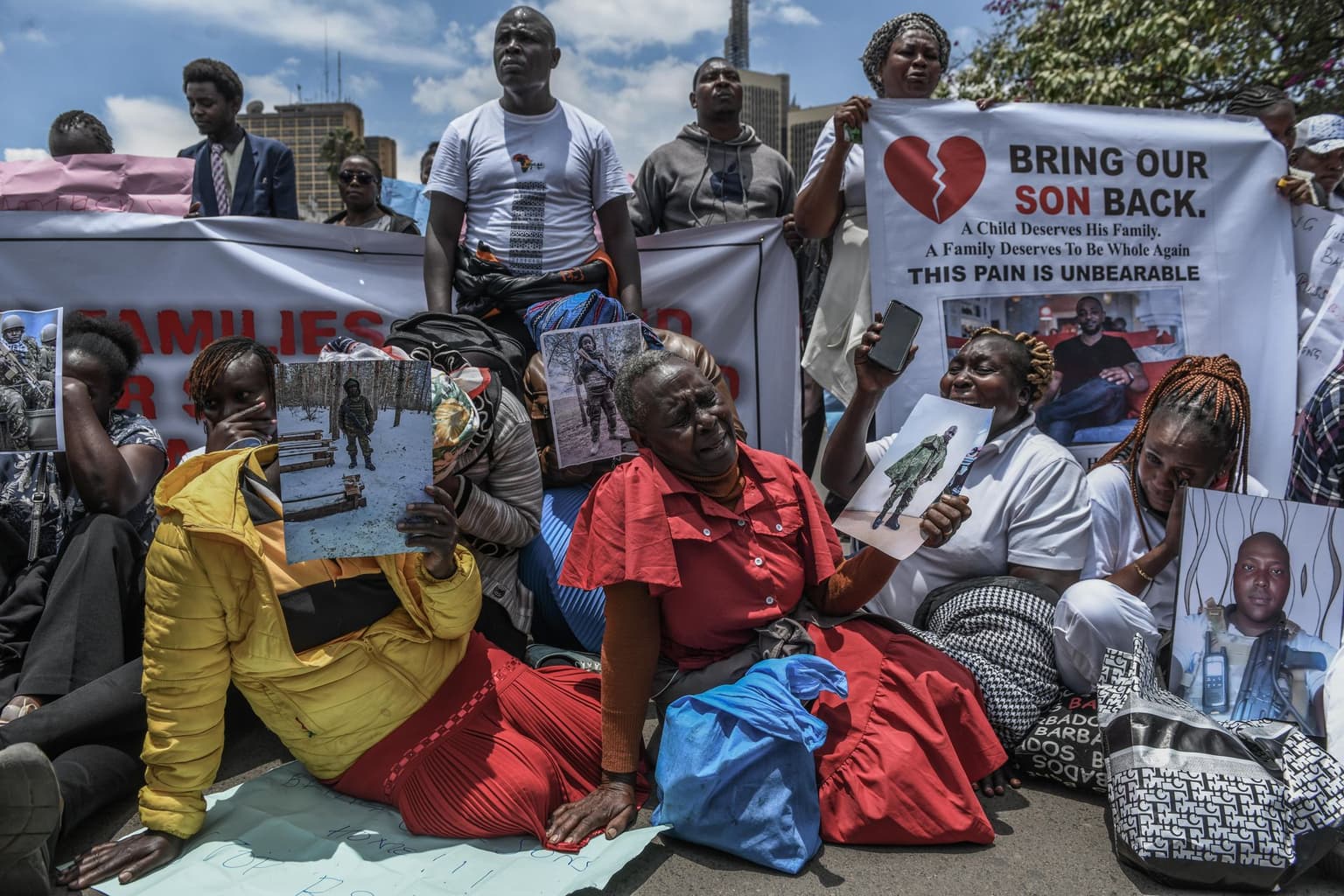
Families of Kenyans allegedly recruited illegally to fight for Russia in its war against Ukraine hold photos of their missing relatives during a protest demanding answers and their return, in Nairobi, Kenya, on March 5, 2026. (Gerald Anderson / Anadolu via Getty Images)
 on Google
Ieva Miyares
Independent consultant on illicit finance, anti-corruption, and governance
In February 2026, a group of women stood outside Kenya's parliament in Nairobi holding photographs of their sons and brothers.
One, Winnie Rose Wambui, was looking for her brother, Samuel Maina, who had left for Russia believing he had a job as a mall security guard; the last she heard was a distress voice note recorded from a forest.
Winnie's story is part of a bigger effort of illegal military recruitment conducted by Russia.
At least 3,000 Africans from 37 countries have been recorded fighting, or having fought, for Russia against Ukraine, according to Ukraine's Foreign Ministry. Russia, long tied to many African nations, has drawn their citizens into a war. It is also using African resources and financial channels to work around Western sanctions.

However, Russia's ties to Africa show that they are no longer aligned across the continent but are shifting towards a series of transactional arrangements — ranging from deep state capture in fragile, junta-led states (CAR, Sudan, and Mali) or to more cautious, interest-based cooperation in countries with stronger institutions.
Either way, it leaves African states absorbing the costs: exposure to secondary sanctions, complicated ties with Western partners, and citizens recruited into Russia's war, often without informed consent. The patterns show that the benefit seems to run one way.
That shift raises the question: how will, and should, African countries respond to Russia's changing role in the continent? And just as importantly, what should European countries do with the gap this leaves behind?
The recruitment scandal
By now, there have been numerous reports documenting the scheme. A young man looking for work is offered a job in Russia, with the recruiter promising a $3,500 a month, plus bonuses of as much as $13,000. The job usually offers driving, security, or technical work, so he takes the offer and travels to Russia.
Upon arrival, the Russian side confiscates his passport and hands him a military contract written in Russian. There is no lawyer or translator to explain what he is signing. Before long, the new recruit is pressured into signing the contract and sent into the trenches.
And even among those who know exactly what they are signing up for — some of whom willingly go in for the money — many never receive the pay they were offered in the first place.
The human cost of this recruitment has been severe: a fatality rate of 22%, with training as short as 1 to 1.5 weeks.
Russia denies illegally recruiting anyone, insisting enlistment is voluntary and lawful.
Yet it has been proven that Moscow recruits Africans through state-linked companies, intermediaries, military structures, and embassy officials. News reports indicate that even the Russian Orthodox church, which has expanded into at least 34 African countries in the last three years, has also encouraged citizens to travel there.

Even the top political elites are involved, former South African President Jacob Zuma's daughter has allegedly recruited men into fighting without their consent.
Russia’s presence in Africa — sanctions, gold, and guns
Russia's presence in Africa is largely a Soviet legacy: it armed liberation movements from Angola to Zimbabwe and positioned itself as an "anti-colonial ally against Western powers."
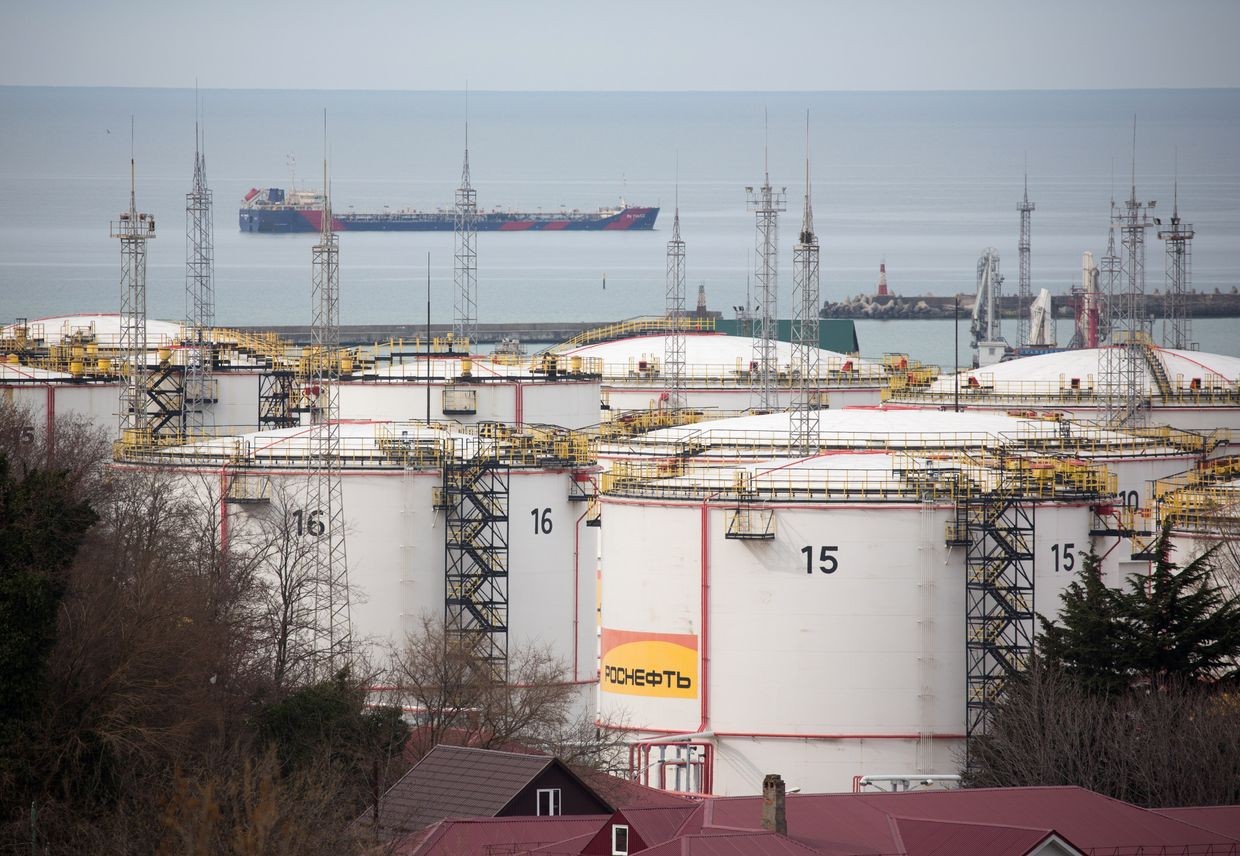
Since Russia's invasion of Ukraine, Russia has leaned on the African continent to keep its sanctioned economy afloat. The U.S. has identified African gold as a key tool for sanctions evasion, and Russia's "ghost fleet" tankers supply African ports to avoid Western price caps.
More than 40 African countries maintain some military cooperation with Moscow, but only the CAR, Mali, and Libya host large deployments.

There, Russian-linked networks (first Wagner, now Africa Corps) control mining operations whose gold moves through the UAE before re-entering global markets.
Beyond the military cooperation, Russian influence is spreading economically and through trade: Egypt and Algeria buy military equipment from Russia, whilst others, like Benin and South Africa, depend on Russian fertilizers.
Kremlin-backed A7 crypto-network is expanding, moving beyond sanctions evasion into direct integration with Kremlin military and strategic operations in Africa.
What Africa gets — and gives up
For Russia, Africa has become both a source of deniable manpower and a workaround for sanctions while framing itself as an anti-colonial ally against a "hypocritical West" — a narrative that many African governments have found convenient to embrace.
But this entanglement carries its own cost: researchers find Russian-backed forces have not improved stability in Mali, the CAR, or Libya, and the economic upside is concentrated among a political elite.
Hundreds of African-flagged ships have been sanctioned for participating in oil shipments that benefit Russia. South Africa's central bank has also warned that secondary sanctions on local banks facilitating Russian evasion would be "severe" for the economy.
African countries' response
African countries' response has been varied — in some cases, very cautious. Facing public anger, the Kenyan government forced Russia to agree to stop recruiting Kenyans. Kenya has since shut over 600 recruitment agencies.
Similarly, South Africa announced that two of its nationals had died fighting for Moscow. The Foreign Minister visited the families of returned citizens.

Nigeria's Foreign Ministry likewise warned its citizens against fighting in foreign conflicts, however, not naming Russia directly. But said several Nigerians "were deployed to combat zones after being misled and coerced into signing military service contracts."
With Russia's global power and wealth weakening after four years of war, African countries should ask a question: What is Russia actually giving them in return for their manpower, sanctions circumvention, and complicity in the war in Ukraine?
As sanctions scrutiny increases, the cost of that complicity will only rise, hopefully pushing African governments toward greater alignment with sanctions rather than their evasion.
Use of momentum
Ukraine, for its part, is trying to close a diplomatic gap.
Since 2022, it has opened new missions, pushing its total toward 18–20 missions, though many remain understaffed.
Europe should follow Ukraine's lead and use this opening in three ways: press African governments harder to stop facilitating Russia's gold, oil, and arms deals; build the partnerships Europe has long neglected — more embassies, trade, and scholarships — as well as offer credible security cooperation.
Without an alternative, many African countries will keep turning back to Russia, or to whoever else fills the gap.
Editor's note: The opinions expressed in the op-ed section are those of the authors and do not purport to reflect the views of the Kyiv Independent.
read also