Analysis: Why many Ukrainians feel Commander-in-Chief Syrskyi must go
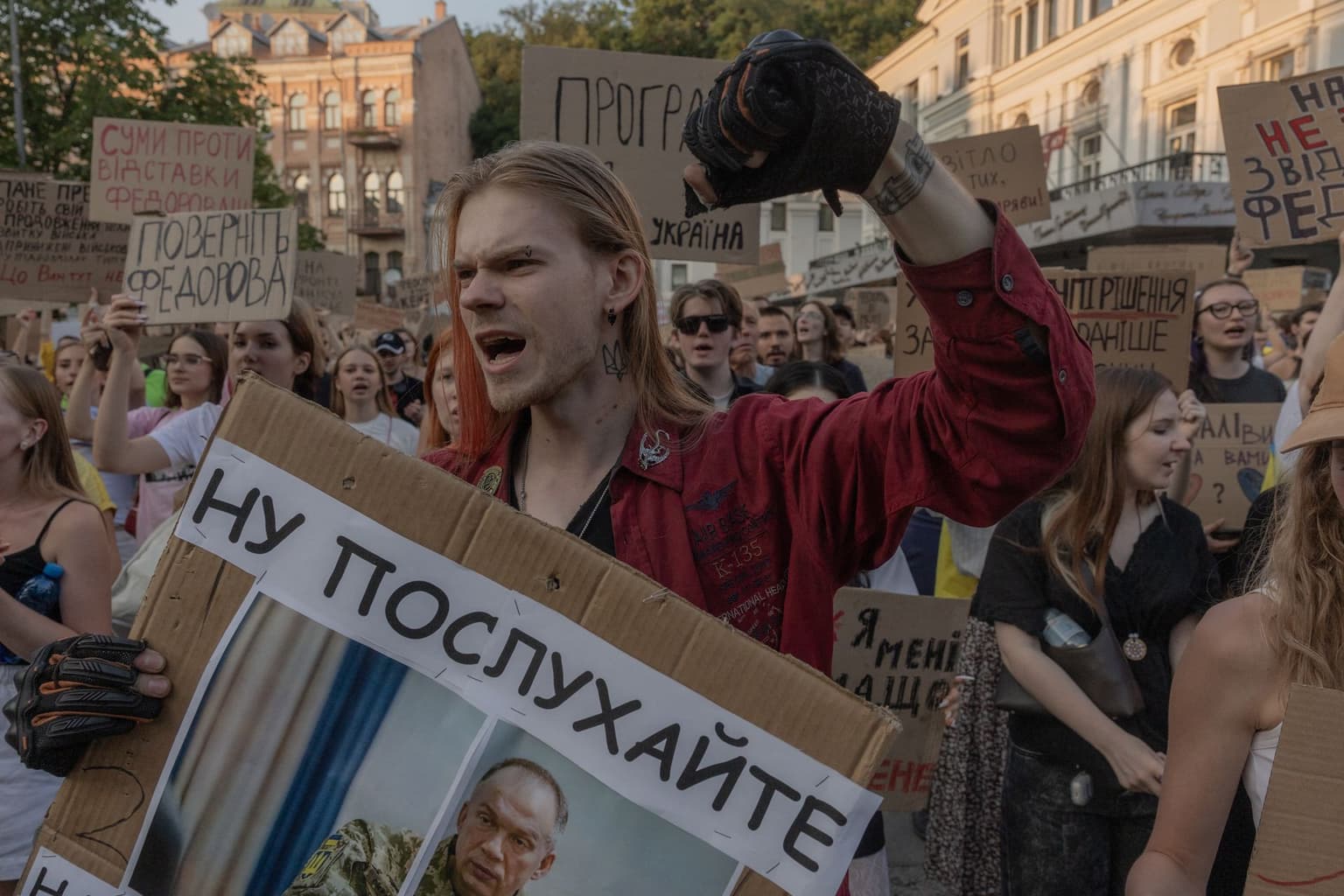
A protester hold a placard reading "Bring back Fedorov" and a portrait of Oleksandr Syrskyi, Commander-in-Chief of Ukraine's Armed Forces during a demonstration against Ukraine's President Volodymyr Zelensky's decision to dismiss Ukraine's former defence minister Mykhailo Fedorov, in Kyiv on July 16, 2026. (Roman Pilipey / AFP via Getty Images)
 on Google
"Fedorov = more Russian deaths, Syrskyi = more Ukrainian deaths."
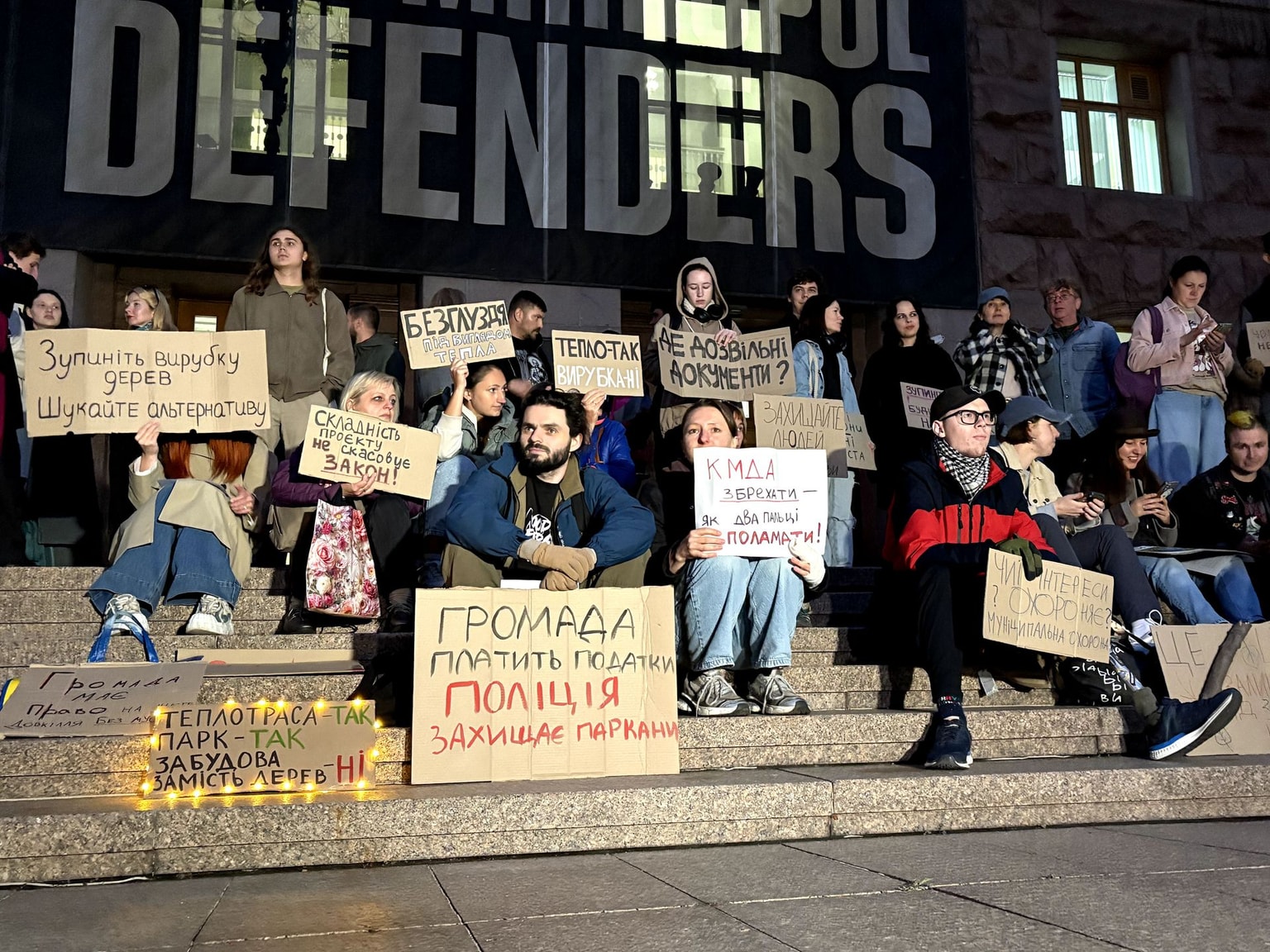
This slogan, neatly written on cardboard, was one of thousands held aloft in Kyiv and across Ukraine as outrage over the country's wartime leadership boils over.
Much of Ukrainian society, soldiers and civilians alike, is up in arms over President Volodymyr Zelensky's decision to dismiss popular and innovative Defense Minister Mykhailo Fedorov.
Zelensky's primary motivation for the decision was debated, with theories including the president seeing Fedorov as a political threat, or the latter's work closing off corrupt graft streams in the ministry upsetting people close to power.
The most popular theory proved to be correct: Fedorov's personal and professional clash with the military's controversial commander-in-chief, Oleksandr Syrskyi.
In a scathing press conference delivered with unprecedented directness for a top official in wartime Ukraine, Fedorov spoke out against the top general, accusing Syrskyi of blocking reforms, spreading a culture of lies, and directly moving to push him out of Zelensky's favor.
"All the initiatives that we proposed began to be blocked, and Syrskyi is not ready to personally talk about problems face to face," Fedorov said, adding that the general gave Zelensky an ultimatum to dismiss him as defense minister.

"Instead of thinking about how to asymmetrically defeat Russia, he thought about how to split the country, and this is a big problem."
Later, speaking at a press conference with outgoing U.K. Prime Minister Keir Starmer, Zelensky himself pointed to the inability of the minister and general to cooperate without his mediation.
"I wanted unity very much. The sides (Fedorov and Syrskyi) did not achieve it," the president said.
"But it is what it is, and in such a situation, the way out is either one side or the other, because without me they don't sit down together."

Disillusionment with the commander-in-chief has existed throughout much of the Ukrainian military since his first months in the job in early 2024, with Syrskyi often seen as the embodiment of everything wrong with the Soviet-style command culture still prominent in the Ukrainian military.
His micromanagement of tactical-level operations and preference for costly assaults and unfavorable defensive battles have given Syrskyi a reputation for having little regard for the lives of rank-and-file soldiers in a Ukrainian army already suffering from a deep manpower crisis.
But until the dismissal of Fedorov, active dissent and outward criticism were limited to a few outspoken voices, often those who had either left, were on their way out, or were already in the process of leaving military service.
Most top commanders, even those who may have deeply disagreed with Syrskyi's command style, followed orders and held the line.
Now, as Zelensky sided with Syrskyi over the reform-minded Fedorov, opposition to the top general has reached a boiling point across Ukrainian society and the military.
Old-school general
A graduate of a military academy in Moscow and an artillery officer in the final years of the Soviet Union, Syrskyi was one of Ukraine's top generals when Russia launched its full-scale invasion in February 2022.
It was during this first year of the full-scale war that the general recorded his most notable battlefield achievements, in particular the defense of Kyiv against Russia's frantic push toward the Ukrainian capital and the widely successful Ukrainian counteroffensive in Kharkiv Oblast that autumn.
That winter, Syrskyi's judgment in more drawn-out attritional fighting came under question as he led the defense of the city of Bakhmut in Donetsk Oblast, which, while incredibly costly for the attacking Russian forces, also led to high attrition rates among some of Ukraine's most battle-hardened units, particularly after Russian forces achieved a near-encirclement of the city in the spring of 2023.
In February 2024, after months of brewing tension between Zelensky and then Commander-in-Chief Valerii Zaluzhnyi, Syrskyi replaced the latter just as the final act of the Battle of Avdiivka was beginning.

At that point, Syrskyi's reputation within the military was already that of an old-school, Soviet-minded general who nonetheless had a solid tactical mind and plenty of experience. Because of the experience of Bakhmut, some in the military had already nicknamed him "the Butcher," but most were ready to give him a chance.
Since then, unlike the operations he led in 2022, Syrskyi's job as commander-in-chief has been to lead Ukraine through a drawn-out war of attrition from a strategic defensive posture.
Throughout his tenure, the general has been criticized for lacking a vision that reflected Ukraine's strategic reality.
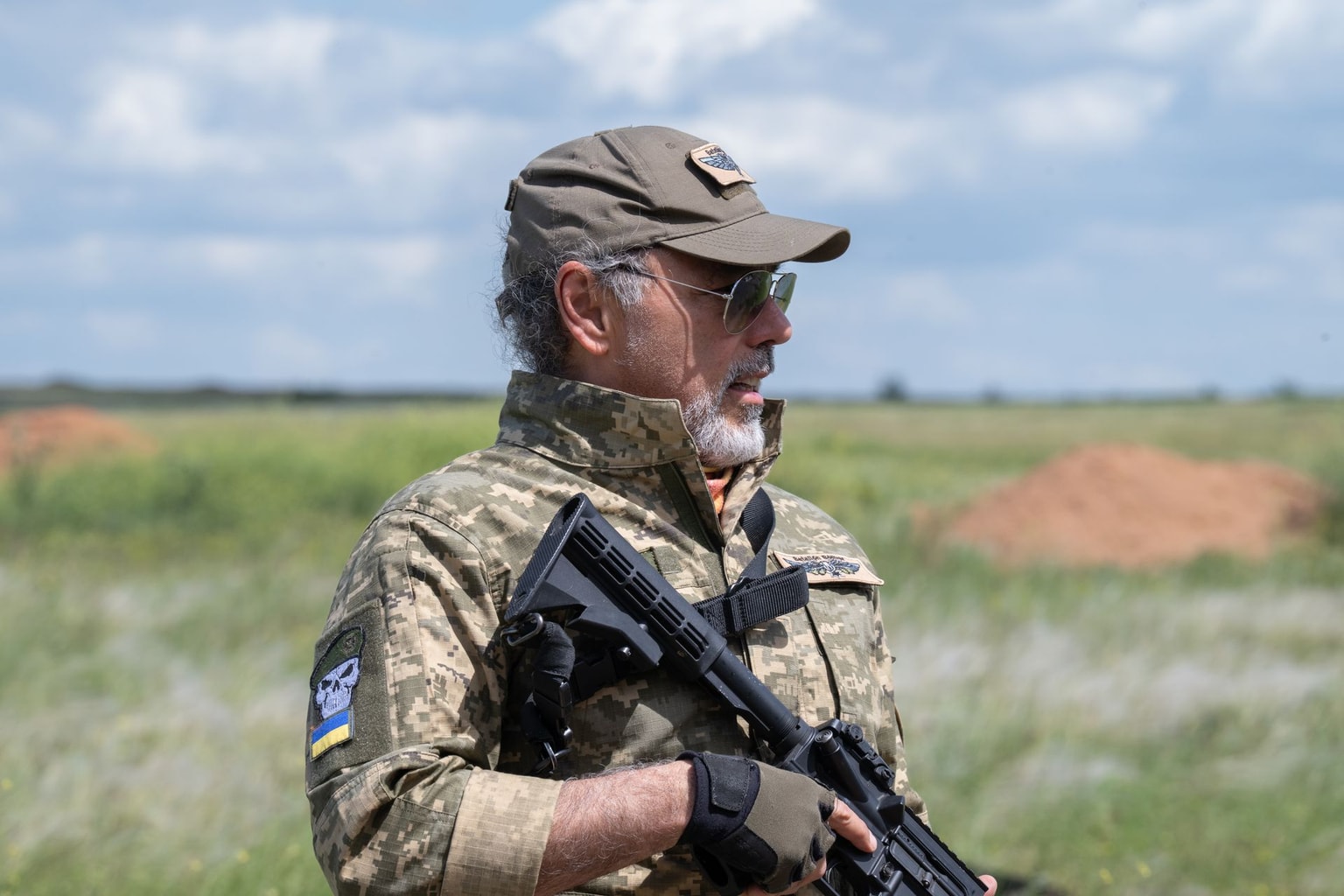
"I don't know if he (Syrskyi) has a strategy, in all the materials I've ever seen from the General Staff, I've not seen anything that resembled one," Oleksandr Shyrshyn, an ex-battalion commander in Ukraine's 47th Mechanized Brigade who was dismissed after speaking out against "idiotic orders" from higher command, told the Kyiv Independent.
"He said in one interview that his strategy is the 'defense of Ukraine'; that is not a strategy."
From micromanager to 'butcher'
To survive against an enemy with a huge manpower advantage, willing to take its time in grinding offensives across the front line, Ukraine needed to fight in a way that made the best use of the defender's advantage — maximize enemy casualties while protecting the lives of its own soldiers.
Syrskyi's leadership of the military over 2024 and 2025 often exposed not only systemic problems that got in the way of this task, but a failure to see that this was the task in the first place.
Instead, unfavorable attritional fights were often continued until the last moment, leaving commanders with orders not to retreat under any circumstances and to take back any lost positions.
Excessive losses suffered in the process led to the inability to properly man what would otherwise have been much more favorable lines of defense.
This was further exacerbated by other elements of the so-called Soviet-style command culture that Syrskyi embodied, with commanders often incentivized to send false reports up the command chain for fear of being punished for losing positions.
This, in turn, resulted in bad orders being passed down from the General Staff to brigade and battalion level, with commanders unable to challenge them.
"It didn't matter if the orders were impossible to carry out, didn't make sense, or would just lead to unnecessary losses. If Syrskyi ordered it, it had to be carried out," Shyrshyn said.
Syrskyi was also criticized for his tendency to micromanage combat operations, often handing orders all the way down the chain of command and spending much of his time focused on small tactical-level engagements far below his level.
"I could feel his influence everywhere, like when I was receiving orders all the way from the General Staff to my company level," Shyrshyn said.
Syrskyi's strengths and weaknesses were on show more acutely than ever with the surprise incursion into Russia's Kursk Oblast in the summer of 2024.
The initial maneuver offensive, using crack air assault units and achieved with near-perfect operational security, was praised for its audacity and execution.
But after the first few months of the operation, Ukraine's hold on Kursk Oblast became a clear strategic liability.
Itself presenting an unfavorable attritional fight, the Kursk salient only extended the frontage that Ukraine's already badly overstretched military was forced to defend.
Just like with Bakhmut and Avdiivka, the final withdrawal from Kursk Oblast, at a point where logistics routes were already under complete control of Russian fiber-optic drones, once again led to serious casualties that could have been avoided with a timely withdrawal.
Manpower malaise
The grinding on of Russia's attritional war not only deepened the Ukrainian military's chronic manpower crisis, but also came at a time when social tensions began to seriously rise over mobilization.
By mid-2024, almost no volunteers were willingly signing up for infantry roles, and the mobilization of Ukrainian men itself — the responsibility of the Ground Forces — became increasingly forced, with the image of draft officers dragging people from the street into waiting buses becoming more and more commonplace.
Because of its acute political sensitivity, Zelensky and then-Defense Minister Rustem Umerov largely avoided touching the mobilization issue.
Meanwhile, the military under Syrskyi, lacking any political pressure, continued the inefficient distribution and battlefield use of newly mobilized soldiers, even as their quality continued to decline.

New brigades were formed rather than replenishing old ones, while units were chopped and changed to plug gaps in the defense under temporary command structures that saw them as expendable material.
On the front line itself, the "no step back" tactical philosophy led to consistently higher losses across the board, with battalion commanders reporting seeing their infantry wiped out several times over within a single year.
Replacing the infantry with unmanned systems on the front line is a long process that might take years if possible at all.
But in the meantime, the drone-dominated kill zone has made the life of infantry and assault soldiers much deadlier than even two years ago, let alone in the last-generation conventional war that Syrskyi was trained in.
For Russia, using infantry as single-use assault soldiers can work so long as the inflow of recruits, contract or mobilized, can continue.
Ukraine does not have that luxury, and protecting the lives of its troops is crucial to avoiding battlefield collapse in a long attritional fight.
read also
Skeliagate
One of the most egregious examples of Syrskyi's exacerbation of the manpower crisis was his expansion and prioritization of the Assault Forces.
Regiments often larger than entire brigades were given a disproportionate amount of Ukraine's mobilized recruits and a mandate to conduct assaults and firefighting operations across the front line under Syrskyi's direct command.
While standard mechanized brigades were receiving often no more than a dozen combat-capable infantrymen a month, some of these regiments ballooned to over 10,000 men.
"These units had a special privilege, and if they were unsatisifed with my work or someone else's they could call Syrskyi and I would quickly receive a reprimand or punishment," said Shyrshyn.
In interviews, Syrskyi himself acknowledged that the Assault Forces received more mobilized men because their losses were higher, but argued that this was because they carried out the toughest tasks along the front line.

Over 2026, new revelations about the conditions inside Syrskyi's assault regiments became a flashpoint for criticism of the commander-in-chief.
One of the largest units, the 425th Assault Regiment, better known as Skelia, had already grown notorious in the military for violence, abuse, and coercive practices inside the unit, as well as for its wasteful use of soldiers on the battlefield.
In June this year, an investigation by the Ukrainian media outlet Babel uncovered 26 cases of soldiers dying during basic training, the issue took center stage in the Ukrainian information space.
Although Skelia's commander was suspended, further accountability has so far been avoided, while Syrskyi's direct patronage of Skelia brought more criticism upon the commander-in-chief.
Soon after the initial revelations, the ex-chief of staff of Skelia and commander of the 155th Mechanized Brigade — itself assigned to the assault regiment for operations around Pokrovsk — was arrested and charged with ordering the abduction and killing of two civilians in Kyiv Oblast.
The Skelia revelations came out at the same time as Fedorov's contract reforms looked to make Ukraine's infantry and assault soldiers the highest-paid soldiers in any military in the world — a stark contrast to the coercion and abuse associated with Syrskyi's assault forces.
read also
No room for coexistence
When appointed to the post of defense minister in January 2026, Fedorov's clash with Syrskyi was anticipated long before it was reported.
On top of his data-driven optimization drive and reforms to procurement efforts, Fedorov sought — if not to fix the manpower crisis — then to at least bring it under control, with an audit of battlefield losses and a controversial new program of military contracts.
But ultimately without being on the same page strategically with his commander-in-chief, a clash was inevitable.

Fedorov's press conference left no more room for doubt on the exact character of his problems with Syrskyi's leadership.
In 11 scathing points, the sacked minister outlined the biggest issues he found with the military upon arrival, with many of the harshest judgements aimed directly at the culture spread by the general.
"Responsibility is always pushed down the chain," said Fedorov.
"Someone else is always made to carry the blame, there is always talk of an investigation and of 'finding out who is guilty.'"
"Constant dishonesty," poor functioning of many army corps, the regular and haphazard firing and replacement of brigade commanders, and the lack of any analysis of losses suffered, were also among the issues mentioned.
Despite the difficulties, and despite directly suggesting he be dismissed, Fedorov claimed to have been open to working together with Syrskyi, while Ukrainians saw the minister's reforms as a promising counterweight to the general's Soviet-style command.
But Syrskyi, Fedorov claimed, refused to coexist, and leveraged his close relationship with Zelensky to convince the president to push out whom Ukrainians were calling the most effective defense minister in Ukraine's history.
Turning point?
While opposition to Syrskyi's methods has been long held in the military, Zelensky's siding with the general over young reformer Fedorov has pushed Ukrainians to demand Syrskyi's dismissal.
The day after Fedorov's press conference, his ex-advisor, trusted volunteer and thought leader Serhii Sternenko followed up with an even more emphatic assault on the harm brought by the general to the war effort.
Sternenko accused Syrskyi of "ruining the army from the inside," with particular attention paid to Skelia, and details of a reckless assault that saw heavy Ukrainian losses as a result of friendly fire.
The Kyiv Independent reached out to the General Staff for comment on these allegations but did not receive a response.
Breaking traditionally held military norms of not engaging in public criticism against the political or military leadership, soldiers and commanders across the country have spoken up, joining the burgeoning crowd of veterans, analysts, volunteers, and lawmakers.
Even Ukrainian generals, including the much-respected Mykhailo Drapatyi, often cited as the best choice to replace Syrskyi as Commander-in-Chief, wrote publicly about the need for change in the Ukrainian military.

As the critics grew in number, so did early reports of attempts by the General Staff to punish those speaking out.
According to Alina Mykhailova, head of the medical unit where Dmytro Koziatynskyi — who had initialled called Ukrainians to protest — once served, reported that the command of the Unmanned Systems Forces had called to ask for information on Koziatynskyi.
The next day, the same battalion's popular commander Serhii Filimonov posted that he had received a reprimand from the General Staff for voicing support for the protest.
"I'm honored," he added laconically at the end of the post.
Other units and commanders have spoken in support of Syrskyi, but, as Sternenko pre-emptively warned and some soldiers confirmed on social media, instructions were sent by the General Staff to post messages of support.
Meanwhile, soldiers of the Skelia regiment were filmed holding Ukrainian flags with portraits of Zelensky and Syrskyi inside the contested city of Kostiantynivka in Donetsk Oblast, where the unit claimed to have conducted clearing operations.
As of July 19, the storm is reaching critical mass.
Since reports emerged that Zelensky is considering firing his loyal but problematic general, the president has met not only with Fedorov and Syrskyi, but with other top generals, including Drapatyi.
Meanwhile, as the daily protest movement digs in, there remains a chance that the president's initial decision could catalyse a greater positive change in the military leadership.
Since Russian tanks rolled in in 2022, two competing visions of Ukraine have been at the center of the country's fight for survival and independence.
One is old, stubborn, and Soviet: hardy, experienced, and with many victories to its name, but often hiding lies, corruption, and mismanagement just under the surface.
The other is young, innovative, and driven not by military traditions,but by civilian business and IT culture.
Much of the internal conflict in Ukraine's military has come from the inherent tension between these forces, and they could not find purer representatives than in Syrsky and Fedorov respectively.
Zelensky's final choice, when he makes it, could set the tone for the rest of Ukraine's war, and coming at a moment when the pressure is squarely on Russia for the first time in years, the stakes couldn't be higher.
Note from the author:
Hi, this is Francis Farrell, cheers for reading this article. This one was a long time coming, and after years of focusing on the Ukrainian military, issues with its command, and the consequences it was having not only for the course of Russia's war, but also the lives of thousands of Ukrainians, it was only logical that we reached this point. These are complex, sensitive, and often painful issues that are often, simplified, misunderstood, or manipulated in reporting from large foreign outlets. We here in at the Kyiv Independent commit to bring you a deeper understanding from our permanent home hee in Ukraine. Please consider supporting our reporting.