The corruption scandal Volodymyr Zelensky won't confront
Why does the president remain silent about the biggest corruption scandal within his own ranks?
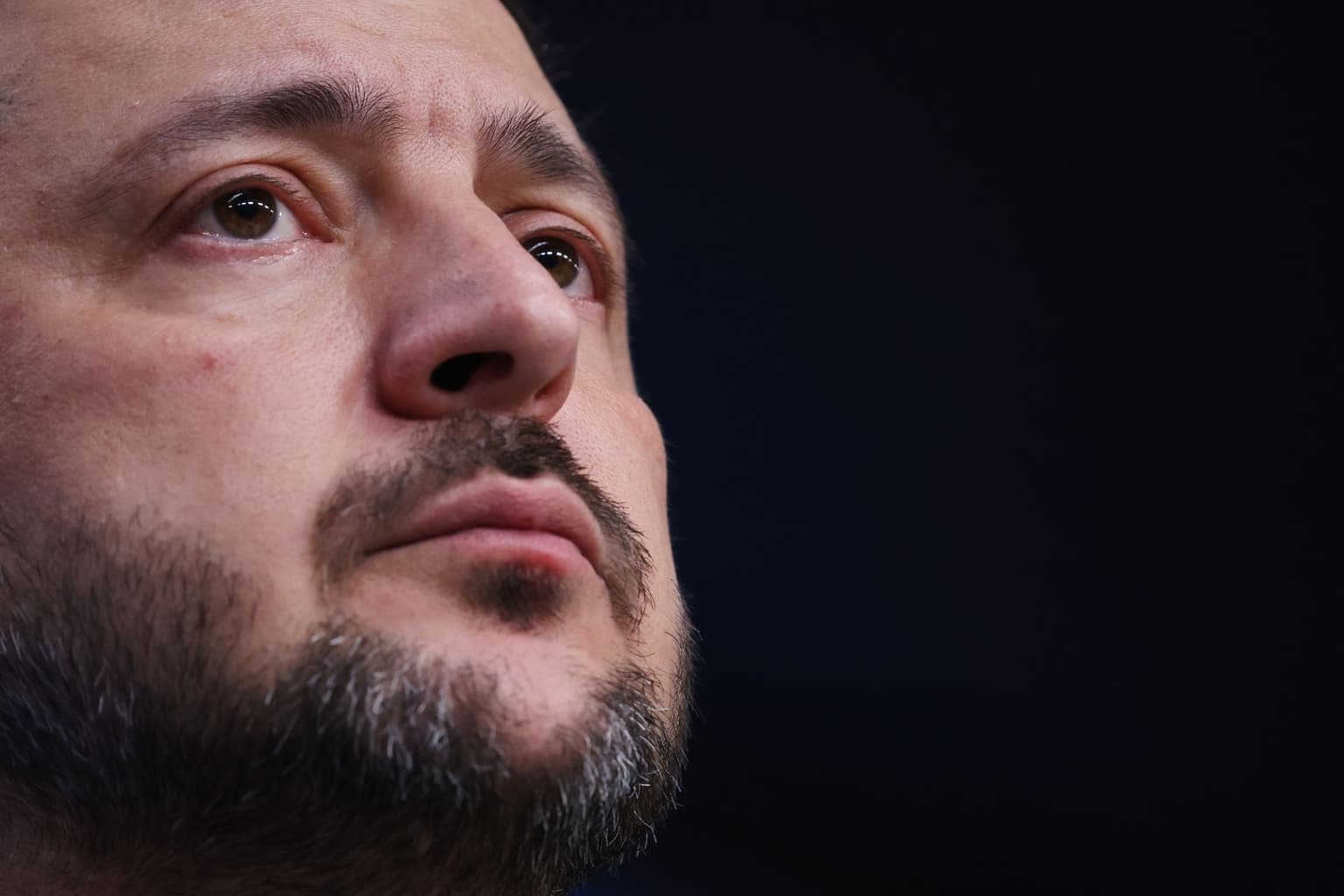
President Volodymyr Zelensky in Brussels, Belgium on Dec. 18, 2025. (Omar Havana/AP Photo)
 on Google
When it comes to Ukraine's largest corruption scandal, President Volodymyr Zelensky prefers to remain tight-lipped.
Recent leaks, published by journalists and lawmakers over the past week, indicate that the largest corruption scandal affecting Zelensky's inner circle has expanded beyond the energy sector.
It now reportedly implicates the banking and defense industries, with attention also centered on the construction of four luxury homes near Kyiv. A man named "Vova," a short form of Volodymyr, is briefly mentioned as being involved.
In the span of a year, the scandal saw nine people being charged, and three ministers — a deputy prime minister, along with ministers of energy and justice — losing their jobs as a result of being implicated in what anti-corruption bodies say is a $100 million scheme.
Zelensky's Chief of Staff Andriy Yermak, the second most influential person in the country for a time, also lost his job following searches by the National Anti-Corruption Bureau.
The president and a number of top officials have been downplaying the scandal from the very beginning, with critics saying that the fast-paced news cycle gives the president hope he can weather the storm.
"I think (the government) is afraid of two things. First, that it could trigger a Barbra Streisand effect — if they start denying it, everyone will assume it actually happened. Second, there may be something we don't know, and they fear it becoming public, which would deal a serious blow to the government's image," says political analyst Ihor Reiterovych.
"We need to stop the shitstorm, stop political games."
When the corruption scandal began unfolding in November, the president quietly imposed sanctions on his former business partner and alleged ringleader — Timur Mindich — and businessman Oleksandr Tsukerman, both of whom had fled Ukraine prior to being charged.
When asked about it, Zelensky shifted the responsibility to Prime Minister Yulia Svyrydenko to deal with the consequences, a sequence he repeated after the new revelations.
The president also urged to privatize the state-owned bank mentioned in the tapes, without referring to the reasons behind his decision.

Back then, the scandal was quickly overshadowed by the release of a U.S.-backed 28-point peace plan that effectively rallied the country around Zelensky.
In his address, the president described the U.S.-pushed peace negotiations as "one of the most difficult moments in our history."
"We need to stop the shitstorm, stop political games," he added.
The situation began to settle: Zelensky carried out a major political reshuffle and began building support among popular former politicians and public figures.
Half a year later, the scandal is resurfacing with more revelations.
During the last presidential race, Zelensky accused then-President Petro Poroshenko of corruption and nepotism. An investigation into embezzlement in the defense sector hurt Poroshenko's approval ratings and affected the election outcome.

Seven years later, Zelensky finds himself in a similar position.
"Of course, this weakens the president's position — in the short-term, the medium-term, and the long-term future," a lawmaker from Zelensky's Servant of the People party told the Kyiv Independent on condition of anonymity.
"But the consequences can only be legal ones."
Reiterovych says that as the case develops and new recordings and details emerge, it could influence Zelensky's approval ratings, though the scale of any impact will depend on the president's possible involvement in the scandal.
"It's more about the legitimacy of the authorities in terms of public support," he said. "Obviously, it may decrease, but if the findings are not critical, then it will be a relatively smooth outcome for the government."
Throughout the full-scale war, trust in Zelensky has remained relatively high. Even after protests last year when the president's team attempted to limit the independence of anti-corruption agencies, only a slight decline was recorded.
By late 2025, around 60% of Ukrainians considered Zelensky personally responsible for the actions of the alleged main culprit, Mindich, who is at the center of Ukraine's largest corruption scandal.
Over the past year, trust in Zelensky has ranged between 53% and 65%, standing at 58% in April, according to the Kyiv International Institute of Sociology (KIIS).
"Regardless of whether the president is actually involved or not, it still needs to be proven," the second lawmaker from Zelensky's party told the Kyiv Independent.
"Frankly, I hope he is not."
read also
Note from the author:
Hello there! This is Kateryna Denisova, the author of this piece. Despite Russia's ongoing full-scale war, Ukraine's domestic politics has been back in the spotlight in recent months.
Please consider supporting our reporting. We promise to deliver more stories on this topic going forward.
Thank you.