Watchdog calls for EU sanctions on raw glycerin exports to Russia after Kyiv Independent investigation
 on Google
A Ukrainian economic watchdog has urged the European Union to sanction exports of raw glycerin to Russia after a Kyiv Independent investigation found that European suppliers continued shipping the chemical, which can be used to produce explosives, to companies connected to Russia's military industrial complex.
The recommendation was submitted on March 11 by the Economic Security Council of Ukraine, or ESCU, an independent Kyiv-based organization that said it based its proposal on the Kyiv Independent's findings.
Discussing the council's findings, Roman Steblivskyi, director of policy and advocacy at ESCU, said the EU's current sanctions approach leaves gaps for dual-use goods with military applications like glycerin.
"While these items have clear civilian applications, their potential military utility should carry greater weight in the design of sanctions regimes. And the supply networks, connected to the Russian military, should also appear on the European black lists," he said.
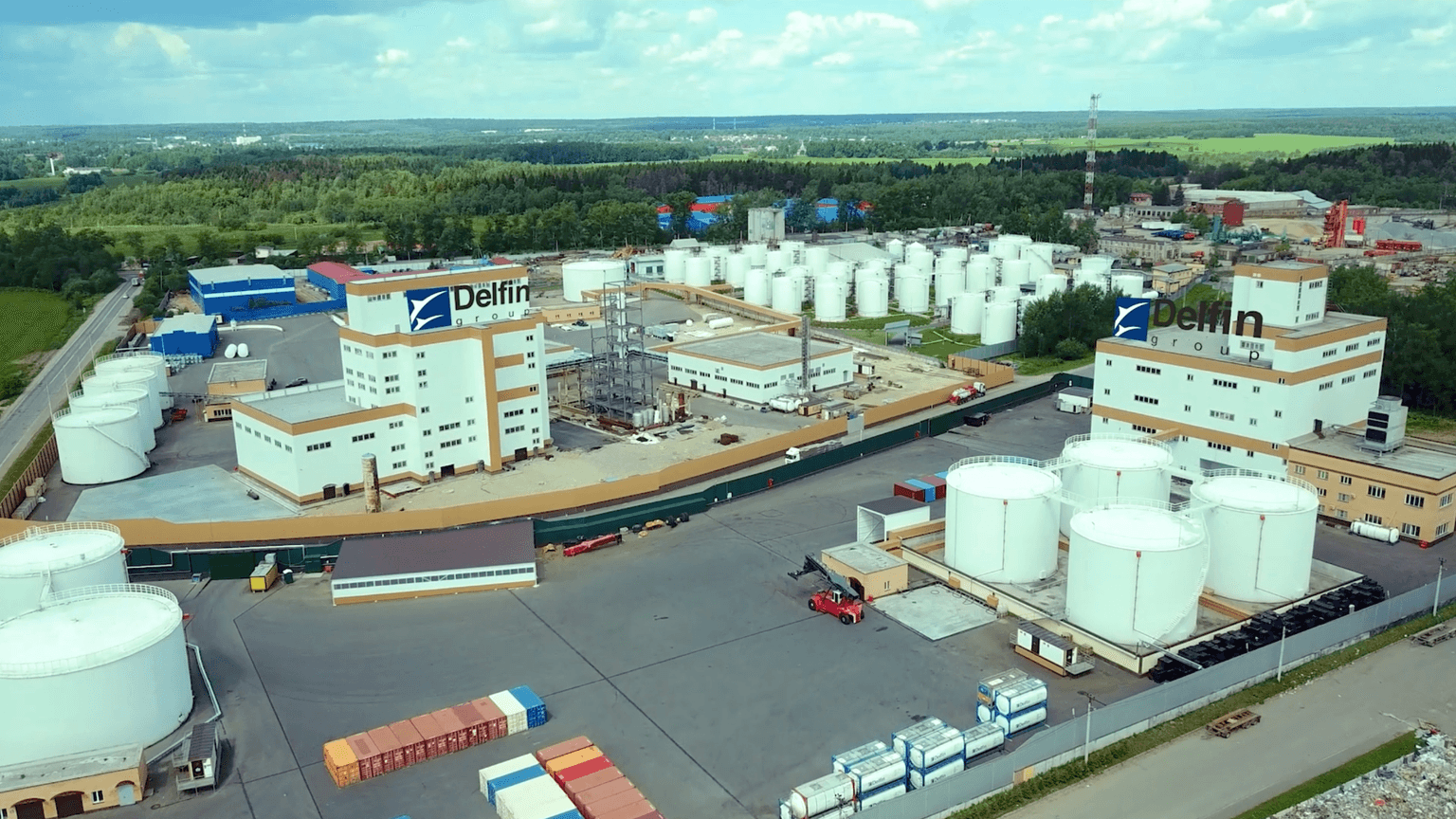
The Kyiv Independent and OSINT for Ukraine previously found that EU subsidiaries of Russia’s Delfin Group, a petrochemical manufacturer, may have continued exporting raw glycerin to Russia even after the EU sanctioned refined glycerin, despite its potential military uses.
According to ESCU’s recommendation, which cites import and export data, Russia imported 47,537 tons of crude glycerin worth more than $45.6 million from 2024 through March 2025. Most of those shipments came from EU countries, primarily Latvia, Poland, and Lithuania.
Latvia accounted for the largest share by volume, exporting 36,443 tons to Russia during that period. Poland supplied 2,205 tons, while Lithuania exported 5,217 tons worth through the first quarter of 2024.
The Kyiv Independent investigation found that one of the largest European suppliers of crude glycerin to Russia was Vega Stividors, a Latvia-based subsidiary of Russia’s Delfin Group. Export data indicated that Vega Stividors shipped 36,443 tons worth $15.4 million to Russian companies affiliated with Delfin in 2024 and early 2025, including firms that had previously supplied glycerin to the Kazan Powder Plant, a Russian ammunition manufacturer.
ESCU also said another Delfin-linked company, OKAKHIM Trading House, supplied glycerin to GOSNII KRISTALL JSC, which develops explosives and mixtures used in rocket fuel, gunpowder, and ammunition for Russia’s Defense Ministry.
Poland was another key route for raw glycerin exports to Russia, according to the ESCU, which named UK-registered Smasty Limited as a major supplier. According to the council, Smasty shipped 2,039 tons worth $25.4 million from Poland to Russia in 2024. Its biggest Russian customers were Dealer Group LLC and Hermes LLC.
The ESCU also said shipments of refined glycerin continued even after an EU ban took effect. According to the council, Russia received 2,250 tons of refined glycerin worth $1.7 million between September 2024 and March 2025, despite the EU’s June 25, 2024 sanctions on refined and distilled glycerin. It said 95% of those deliveries came from the Netherlands through various companies, including Milia International Trade Limitada, and Wesp Kft.
In Lithuania, ESCU named UAB Velum Maris as the largest exporter of raw glycerin to Russia. The council said the shipments were produced by Lithuanian company UAB Rapsoila and imported by Agroprostory LLC, a Russian agricultural wholesaler.
A spokesperson for UAB Velum Maris told the Kyiv Independent that the company complies with EU and international sanctions and has internal control and compliance procedures in place. The spokesperson said the company works exclusively with farms and agricultural businesses and that the product is used in line with its declared purpose.
UAB Rapsoila said it condemns Russia's aggression against Ukraine and contacted Velum Maris for an explanation after receiving the Kyiv Independent's request for comment. Rapsoila said it conducts mandatory checks and would consider ending the business relationship if evidence showed its products were exported to Russia. The company said Velum Maris is a customer but that it has no official data on its glycerin exports to Russia.