Chief economist at key Russian state development bank reportedly fired after warning of economic defeat to West
 on Google
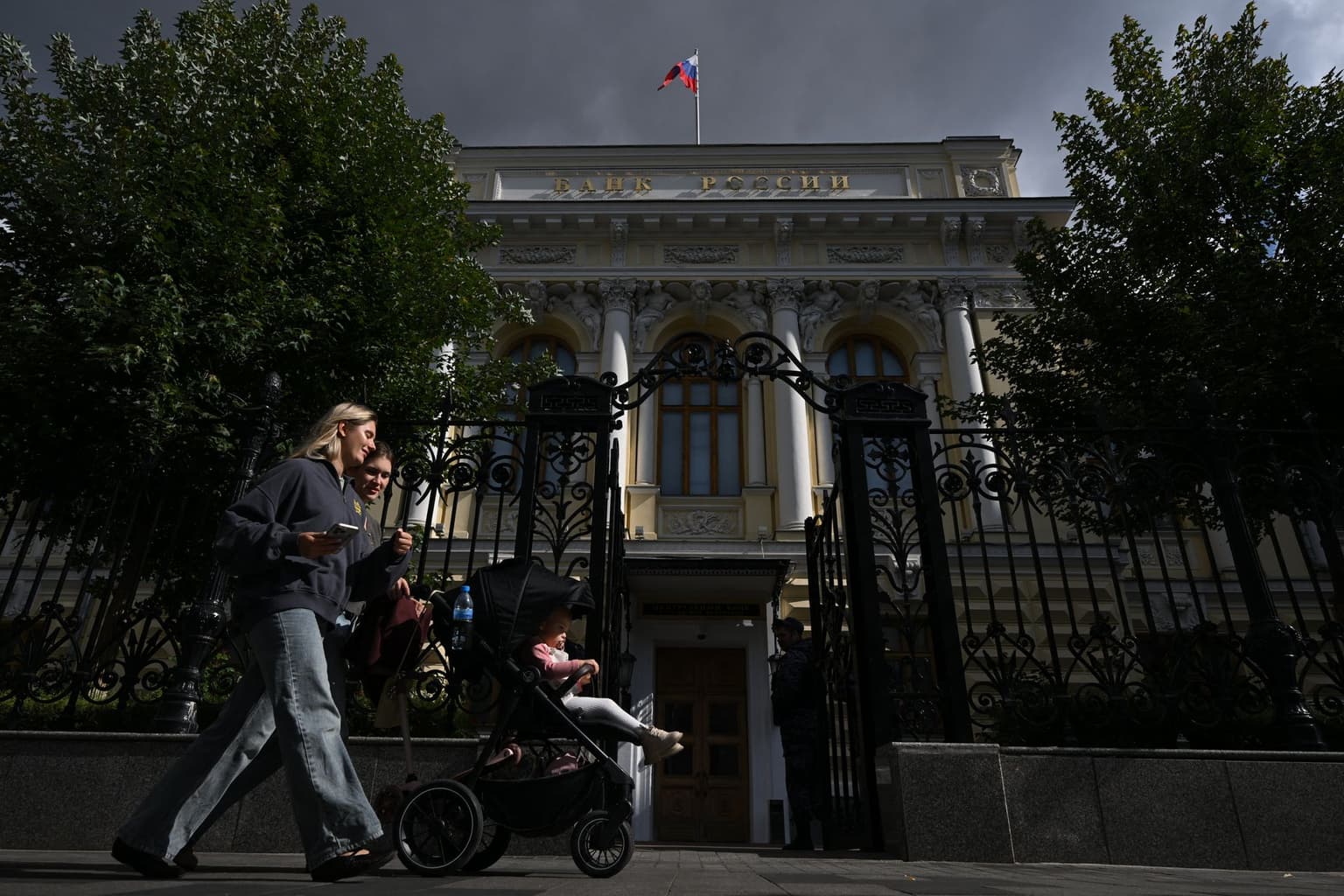
Andrei Klepach, the chief economist at Russian state development corporation VEB.RF, was reportedly fired on Aug. 16, a day after Russian media widely circulated his warnings that Russia was losing its economic and technological competition with the West.
Russian independent media outlet The Bell reported Klepach’s dismissal on Aug. 16, citing two people familiar with the matter. The report came two days after The Moscow Times published excerpts from Klepach’s May remarks, which were subsequently picked up by other Russian media.
The Kyiv Independent can't immedately verify the claims.
Speaking at an event organized by the Moscow Exchange’s Nikitsky Club, Klepach reportedly said Russia would be unable to sustain competition with the West in a prolonged confrontation and predicted that the country would eventually face a social crisis.
According to one of The Bell’s sources, VEB.RF head Igor Shuvalov dismissed Klepach following an order "from above." A second source confirmed that the firing was connected to Klepach’s May remarks. The Bell said it had requested comment from VEB.RF.
Klepach had served as VEB.RF’s chief economist for 12 years. Before joining the state development corporation, he spent a decade at Russia’s Economic Development Ministry. He joined the ministry in 2004 as head of its macroeconomic forecasting department and served as deputy economic development minister from 2008 to 2014 under Elvira Nabiullina, Andrei Belousov, and Alexei Ulyukayev.
"We are falling behind. We are losing both the technological and economic competition in the world. And, as I have already said, we are losing it not only to China and the United States — in some respects, we are losing it to Ukraine," Klepach said.
"Ukraine’s economy has, of course, been partly destroyed, and there is a demographic catastrophe. But again, despite everything, the Ukrainian economy is surviving. Of course, it receives enormous financial assistance. (…) With that support, their military spending and their own expenditures amount to almost 50% of our budget," he was quoted as saying.
"We will not win this competition in a war of attrition," Klepach continued. "We have this illusion that everything there will collapse. It has not collapsed, and it will not. Our costs are growing."
"I believe Russia will not fall apart, but I am almost certain that we will arrive at a social crisis," he concluded. "Economically, we will not collapse, but we will continue to fall further behind, with all the consequences that entails."