Analysis: Russia doubles down, setting stage for new phase of total war
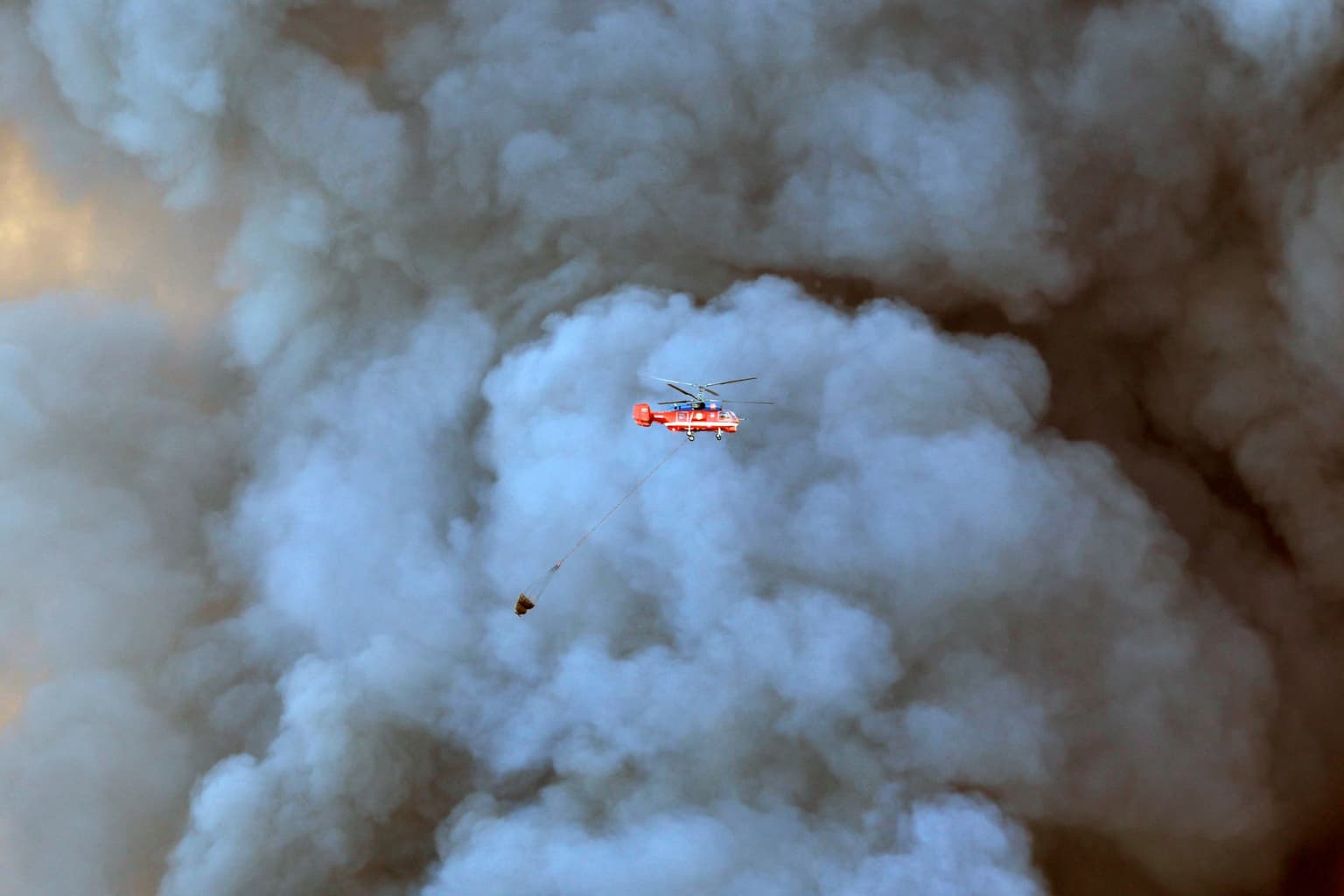
A firefighting helicopter attempts to extinguish a fire at Wildberries' logistics complex in Elektrostal, outside Moscow, Russia, following a Ukrainian drone attack on July 18, 2026. (Tatyana Makeyeva / AFP / Getty Images)
 on Google
Two large and heavily armed states locked in an existential armed struggle. Hundreds of thousands of casualties. Mass mobilization. Systematic long-range strike campaigns against the enemy's economy and infrastructure. Defense budgets swallowing huge proportions of state spending.
All these factors evoke an image of "total war" — the kind of interstate conflict where state, society, and economy are all not only an active part of the war effort but also a target of enemy strikes.
Russia's full-scale war against Ukraine is now one of the deadliest conflicts of the 21st century and one of the most brutal, drawn-out interstate wars since 1945.
Yet the term "total war" has barely been raised in the otherwise lively intellectual discourse.
"Total war is a synonym for a complete national effort, employing all the elements of national power in your war effort."
For as long as Russian President Vladimir Putin continued to refrain from announcing sustained forced mobilization in Russia, and for as long as economic activity in both countries continued in a somewhat normal pattern, it didn't always feel like both sides were all in.
But many of the restraints that have kept it from becoming total war are beginning to disappear.
For Kyiv, the fifth year of the full-scale war has undeniably seen many positives, especially compared to the same period last year.
Back then, Ukraine was in survival mode, reeling from the prospect of being abandoned, or even pressured into capitulation, by the Trump administration, riding a fraught diplomatic rollercoaster while Russian forces maintained pressure and advanced across the front line.
Most crucially, while Russian battlefield casualties have largely stayed steady, territorial gains on the front line have been miserly.
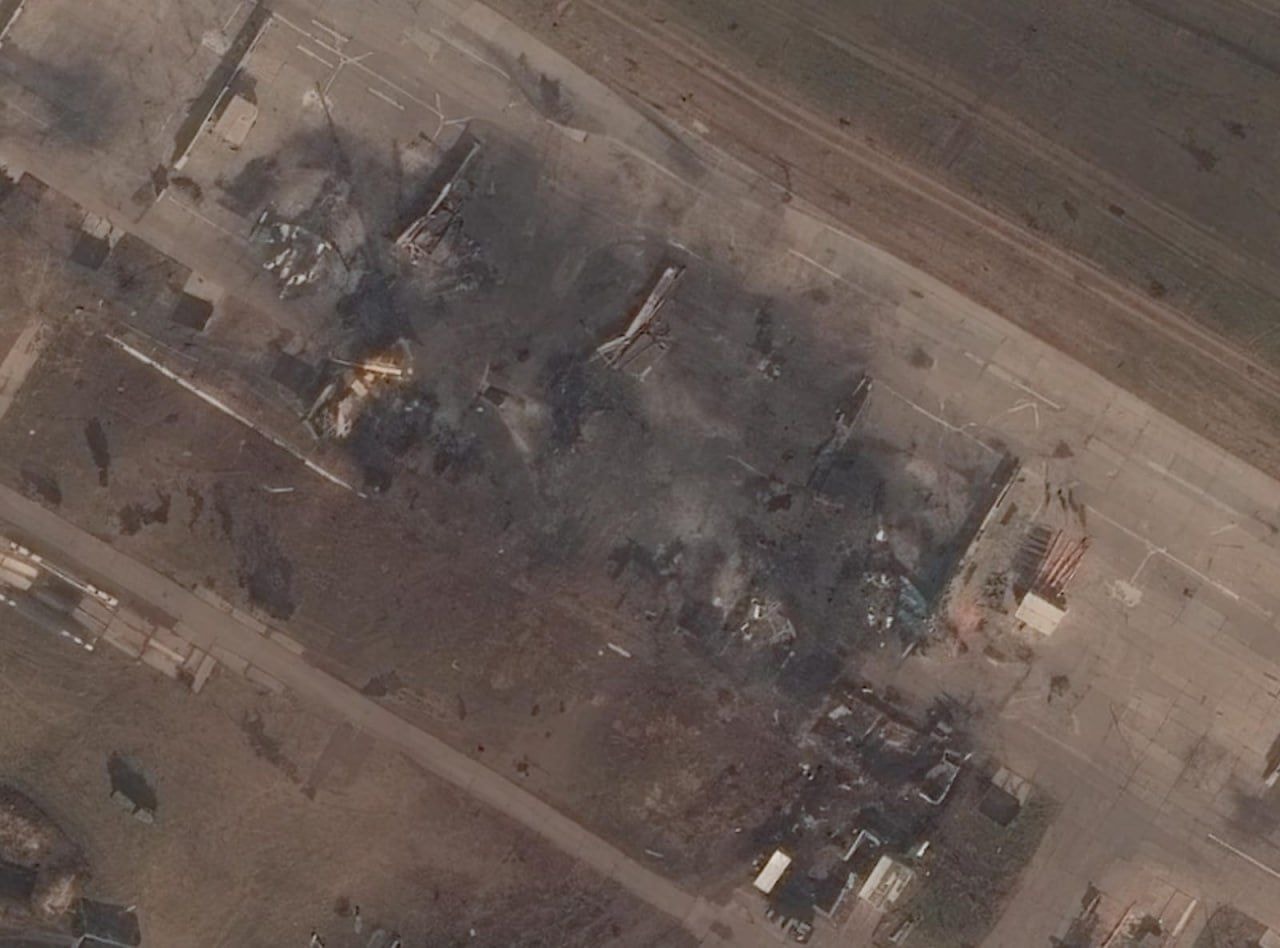
Now, Ukraine's scaled-up strike campaign in the Russian rear has brought strategic offensive pressure on Moscow for the first time, both at "middle-strike" range (50-200 kilometers) on Ukraine's occupied territories and with longer-range attacks on oil refineries, energy export facilities, and warehouses.

"It's already a kind of boxing match with no fixed number of rounds," said Mykola Bielieskov, research fellow at Ukraine's National Institute for Security Studies and senior analyst at the Come Back Alive foundation.
"Each side frames its victory as the ability to stay on their feet till the last round hoping that the opponent would crumble given sheer destruction and accumulated social, economic, political problems."
What is total war?
Total war lacks an agreed-upon academic definition.
While some draw links all the way back to Prussian officer Carl von Clausewitz’s idea of "absolute war," the term itself was first popularized by World War I general Erich Ludendorff in his 1935 book "Der totale Krieg" (The Total War).
Ludendorff's work, while reflecting on aspects of Germany's war effort on the battlefield and at home, did not attempt to create a new theory of war.
In the decades following, the modern idea of total war took shape, based on the experience of the world wars of the 20th century.
Total war implies a conflict in which belligerents focus not only on battlefield success but also on the degradation and destruction of the enemy state's warfighting capacity in the rear, from military production and sources of revenue to infrastructure and, in turn, society's will to fight.
"Total war is a synonym for a complete national effort, employing all the elements of national power in your war effort," retired Australian Army Major-General Mick Ryan told the Kyiv Independent.
"It means you are utilizing every element of your nation to fight this war, either in the defensive or offensive, and the further the war goes on, the more total it becomes."
Campaigns of destruction against the enemy rear as a key component of total war were enabled by the advancement of technology, in particular the long-range strategic bombing campaigns of World War II that culminated in the dropping of nuclear weapons on Japan.
In this sense, with both Ukraine and Russia's ability to damage the other's strategic rear limited by one's own strike assets and the enemy's air defense in an environment of constant innovation, the constant advancement on both sides of strategic weaponry suggests an intent for total war outcomes.
"It looks like a textbook total war proportional to new technologies — attempts to undermine the front with destruction of vital rear infrastructure to sustain war," Bielieskov said.
read also
Economic escalation
Looking to press Ukraine's advantage and project an image of Kyiv as the winning side, in late June President Volodymyr Zelensky announced a "40-day influence operation," aimed at pushing Moscow to the negotiating table.
The period saw new Ukrainian long-range attacks not only on Russian oil refineries and ports, but also on shadow fleet tankers in the Azov Sea and warehouses belonging to e-commerce giant Wildberries.
The fact that Wildberries infrastructure was indeed used for the purchase and delivery of goods for the war effort makes it a legitimate target.
But the broader economic impact — most likely intended — has been billions of dollars in damage to the Russian economy, risks of a major financial shock, and crucially, an elevated feeling that the war is directly affecting the lives of ordinary Russians.
Instead of being pushed to wind down Russia's war, the 40-day period has seen Moscow escalate attacks of its own against Ukraine's economy.
Ukrainian retail and logistics warehouses, from hyperstore Epicentr, supermarket Silpo, post service Nova Poshta, and Wildberries equivalent Rozetka have all come under increasing fire.

Perhaps most crucially, a new wave of strikes against port infrastructure and civilian cargo ships in Odesa Oblast have reduced Ukraine's Black Sea shipping, depriving Ukraine of vital revenue sources from the export of grain and raw materials.
"With attacks against port infrastructure Ukraine will get less export revenue," said Bielieskov.
"Attacks against Kyiv, which generates approximately 20% of GDP, might generate a lot of social, economic, military and political problems if left unaddressed."
Russia's new economic escalation comes amid a challenging situation for Ukraine's air defense, with critically low stocks of interceptors for the Patriot air defense system leaving the country effectively undefended against ballistic missile attacks, while new jet-powered Shahed-type drones and missile-drone hybrids look to counter Ukraine's efficient network of drone interceptor teams.
"Unlike Ukraine, Russia places a disproportionate bet on the destruction of life-sustaining infrastructure," noted Bielieskov.
"But the logic behind each side's approach is the same."
"In other words, to bring the opponent to their knees before one's own collapse."
Ahead of what could be the toughest winter yet for Ukraine, the threat looms that Russia's targeting of ports, businesses, and critical infrastructure could compound in a textbook "total war" effect.
"What we see is a variation on what the Russians have been doing since the end of 2022," said Ryan.
"It is not different to Lincoln's 'anaconda strategy' against the South (in the American Civil War), which is just to put pressure at every point on every element of Ukraine's national warfighting ability: on their military, on the people, on diplomacy, and pressure on the economy."
Going all in
Central to the idea of total war is the mass — usually forced — conscription of military-aged men into the military, a feature of all major belligerents' experience of both world wars.
Perhaps the main argument against Russia's war against Ukraine amounting to a total war for Moscow is the way in which Putin has gone to great lengths to avoid mass forced mobilization in Russia.
In September 2022, after Ukrainian forces broke through Russian lines in a dramatic counteroffensive in Kharkiv Oblast, Putin announced a "partial mobilization" of around 300,000 soldiers to avoid a collapse of the front line.
The process was haphazard and chaotic, triggering an exodus of hundreds of thousands of Russian men from the country and tarnishing the domestic image of the war as a "special military operation" that would not otherwise affect ordinary Russians.
Since then, to ensure a steady inflow of troops to feed its costly offensive campaigns, Russia has relied mostly on volunteer service, with lucrative sign-up bonuses, high salaries, and deceptive promises of service in the rear consistently bringing in around 30,000 recruits per month, mostly from economically depressed areas.
In the battlefield reality of 2026 — where Ukraine has found more success countering Russian infiltration assaults through the use of a dense drone-based "kill zone" — Russian forces have seen diminishing returns on the front line.

"Russia has been trying to form new units the last few years, but they couldn't do it because they didn't have enough new soldiers," military analyst Rob Lee, senior fellow at the Foreign Policy Research Institute, told the Kyiv Independent.
"This year, the attrition rate is basically where the recruitment rate is."
For this reason, not to mention the increasing difficulty of squeezing out new voluntary contract soldiers from the regions, speculation that Putin might reluctantly order a fresh wave of mobilization has surged, including in Russia's own domestic information space.
The move, which Ukraine says will come no sooner than after Russia's State Duma "elections" in September, would be unlikely to spark mass resistance, let alone unrest, given the Kremlin's complete monopoly of violence and repression in the country.
More importantly, mobilization could signal a final decision to swallow the hit to Putin's domestic image as a price to be paid for doubling down on his maximalist war aims.
"During 2024-25, Russia's theory of victory was based on the idea of its nominal advantage in resources and manpower to outwait Western support to Ukraine and advance however slowly on the front," Bielieskov said.
"Now we see a plateau of Russian battlefield strategy as it doesn't deliver the results it did, and Russia is forced to think about a new round of mobilization."

Meanwhile, Ukraine, with a much smaller demographic pool to draw from, has conducted forced mobilization since the start of the full-scale war.
The process has exacerbated social tensions among a population unwilling to capitulate to Russia but also holding simmering contempt for the state, and particularly for draft officers sometimes seen as employing violent, illegal, and corrupt methods.
At the same time, Kyiv itself has protected some groups from mobilization, particularly by allowing 18-24-year-olds to leave the country, and the toleration of a bloated and often corrupt system of exemption for military-aged men.
"The problem is, as we've seen from other wars," Ryan said, "the longer the wars go on, the less likely society is to support additional conscription measures."
"And notwithstanding the demographic challenges that Ukraine faces, the core idea is that you don't have a problem if you don't have a country."
For the long haul
As Zelensky's 40-day campaign fades into the past, long-range strikes escalate, and the battle for the Donbas "fortress belt" begins in earnest in Ukraine's east, hopes that a ceasefire could come before winter have dissipated.
Beyond that, even if the front line remains static, so long as neither side is really compelled to make serious concessions, Russia's war against Ukraine looks likely to become more and more total.
"When one is unable to attain goals through combat at the front, then there are attempts to undermine the enemy through destruction of critical rear targets that sustain its functioning," Bielieskov said.
"In other words, to bring the opponent to their knees before one's own collapse."
Ukrainian pressure on Russia's economy will continue to create domestic dilemmas for Moscow, but identifying — let alone predicting — a breaking point continues to feel like chasing shadows, even for experts.
The last few years of war have been marked by frequent commentary on the topic of which side time is really on.
If Putin does bite the bullet and announce mobilization, Russia will not only look to expand offensive operations in the short to medium term, but more importantly, will be able to continue to sustain them for years to come.
In the meantime, the brutal mathematics of Ukraine's manpower disadvantage on the battlefield presents a clear weakness for Kyiv in a drawn-out total war.
"Ukraine's strategy needs to focus on sustainability, because you don't know how long this war can go," said Lee.
"It could have hot phases, it could have colder phases, it could have a ceasefire then start again six months later. It's important to have a longer-term perspective."