Can Ukraine choke off Russia’s LNG trade at the source?
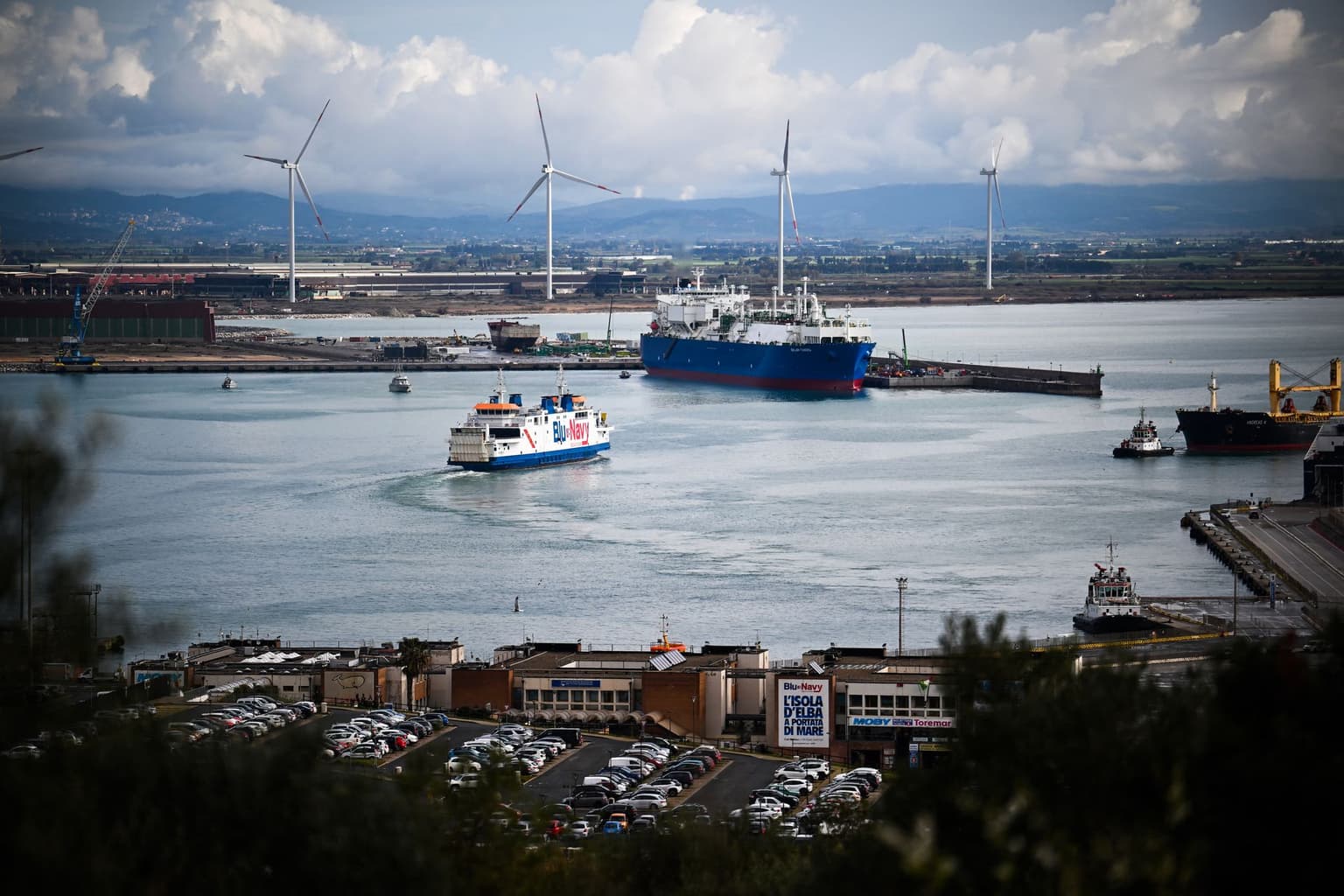
For illustrative purposes, the LNG tanker Golar Tundra, a floating storage and regasification unit, is seen at the port of Piombino, Italy, on March 20, 2023. (Filippo Monteforte/AFP via Getty Images)
 on Google
Despite increasingly stringent sanctions on Moscow, countries worldwide continue to import Russian fossil fuels. The flexibility and transportability of liquefied natural gas (LNG) are particularly significant, helping sustain the flow of energy revenues into the Kremlin's coffers.
In July 2026, Belgium stood out for sourcing 100% of its LNG imports from Russia, mere months before a full EU ban on LNG imports comes into force.
But if countries won't wean themselves off their addiction, how much can Kyiv intervene and have them go cold turkey? Or rather, how much can Ukraine dismantle Russia's LNG trade, before it even reaches the consumer?
Why has LNG become all the rage?
Historically, Europe and Russia both depended on pipelines to deliver and consume gas, which flowed directly from Siberia westward to European consumers.
But geographically, Europe is a peninsula jutting out of Russia's western flank, meaning that with the exception of Norwegian gas, there are no other ready-and-waiting pipeline networks to plug into.
Likewise, Russia had become accustomed to selling fossil fuels to rich Europeans, so its pipeline networks were oriented in that direction.
Lithuania was the first to realize that to break away from Russian gas, it would need to ship it via sea, compressed into a liquid form and processed at the coast.
Vilnius inaugurated the floating LNG terminal, christened "Independence," at the port city of Klaipeda back in 2014.

Now Europe as a whole is adopting that approach, and LNG terminals have sprung up across the continent, bolstering capacity, and are increasingly processing supply from the U.S. and Qatar.
Russia, meanwhile, is depending more on exports to Chinese and Indian markets.
Moscow has only one pipeline supplying China, though it is working to change that. India, with Central Asia and mountains in the way, lacks any direct pipeline connection.
For both the Europeans and Russia, then, gas aboard ships in the form of LNG is the answer.
Where is Russian LNG going?
Even though the EU has agreed to end imports of Russian LNG starting in 2027, it remains Moscow's largest customer, according to a report by the Center for Research on Energy and Clean Air (CREA) think tank.
The two other supporters of Ukraine, Japan and South Korea, which together round out the top importers of Russian LNG, seem to be even less willing to curb their dependence.
In the EU's 21st sanctions package, passed in July 2026, the bloc extended an exemption to both Seoul and Tokyo for the supply of crude oil from Russia's Sakhalin-2 oil and gas project, and added a new exemption that LNG supplies from the same terminal would not come under sanctions.
A senior EU official told the Kyiv Independent that this exemption was granted at the request of the two countries, and that the EU decided to do so out of solidarity with its allies, and because the economic discomfort to Russia that would otherwise be caused would be small.
Sinking the ships
The easiest option for Ukraine to take military action against the LNG trade could be to destroy LNG ships before they reach their customers.
Ukraine has shown that it is able to regularly destroy Russian shipping, and in July alone, it struck no fewer than 78 shadow fleet ships in the Black Sea.
Kyiv might also have been responsible for striking the Arctic Metagaz LNG tanker off Libya's Mediterranean coast in March.
Crucially, exports from Russia's Yamal LNG Terminal, which accounts for 63% of total LNG exports according to an April Kyiv School of Economics report (KSE), rely on special ice-breaking ships to export through the winter.
Isaac Levi at CREA told the Kyiv Independent that Russia has "just 15 specialized ice-class vessels," serving its Arctic LNG facilities.

"These expensive, difficult-to-replace ships could be vulnerable to Ukrainian drone strikes, although the involvement of Western owners and insurers may be discouraging Ukraine from targeting them," he said.
But significant amounts of LNG are also carried by ships operated by Ukraine's allies, significantly limiting Kyiv's room for maneuver.
Greek shipping company Dynagas operates 11 such tankers and accounted for 35% of Yamal's LNG volumes in 2026 on its own, reads a press release from the sanctions-monitoring NGO Urgewald.
The company's trade is set to continue after Greece secured an opt-out for Dynagas in the latest round of EU sanctions.
The opt-out allows Dynagas to continue delivering Russian LNG to third countries, on the grounds that the trade would otherwise revert to Chinese entities and cause no harm to Russia.
The Greeks are not the only allies of Ukraine in the Russian LNG game.
The KSE report notes that Dynagas, together with Japan's Mitsui Osk Lines and the U.K.'s Seapeak Maritime Glasgow, transport roughly 60% of Russia's total LNG exports each month.
If attacking allied shipping is off the table, then a ship-centered strategy to end Russia's LNG trade would be limited to stopping less than half of the current total.
But Levi thinks once the EU ban on LNG imports comes into force in 2027, Kyiv's "calculus could change."
"Fewer cargoes will be destined for European buyers, potentially reducing the political risks of targeting the vessels involved. As Russian LNG trade shifts towards Asian markets, these ships may therefore become more likely targets for Ukrainian drone strikes," Levi said.
Storming the ports
Going after ports could be a more promising option for Ukraine if it seeks to disrupt Russia's LNG trade without waiting until 2027.
Ukraine has previously damaged a liquefied petroleum gas (LPG) terminal in the nearby region of Krasnodar Krai, and through 2026, significantly disrupted oil production across a broad swathe of Russian territory.
The list of ports Kyiv would need to strike to stop the flow of LNG is short: only five terminals are in operation, with a further two in the planning phase.
And of those five, as mentioned, the Yamal facility handles almost two-thirds of the exports alone, and it might now be within range of Ukrainian weapons.
The two export terminals nearest to Kyiv, Vysotsk and Portovaya in Russia's Leningrad Oblast near the Finnish border, are some 1,130km (700 miles) away.
These are well within the range of Ukrainian drones, and on July 6, Ukraine struck the oil terminal at Vysotsk, demonstrating that the LNG terminal would theoretically also be reachable.
That same night, Ukraine also attacked Russia's oil refinery in Omsk, some 2,500km (1,550 miles) away, which the government-aligned website United24 claimed was the longest one-way drone strike ever carried out.
The attack on Omsk included "systems produced by Fire Point with a reported range of up to 3,400km (2,110 miles)," reads a document Ukraine sent to the White House and seen by the Kyiv Independent.
With Ukraine's drone strike range expanding, the Arctic 2 and Yamal export terminals, which lie just over 3,100km (1,930 miles) from Kyiv, could already be within reach.
The terminal at Sakhalin, on the other side of the Eurasian landmass, is most likely out of reach for now, sitting roughly 7,430km (4,615 miles) away.
What's stopping Ukraine?
Just because Ukraine can hit a target, it does not mean that there are no risks involved.
Kyiv "will not want to frustrate EU governments, weaken support for sanctions, or jeopardize military assistance," Levi told the Kyiv Independent.
While for Alexander Kirk at Urgewald, the EU's low gas storage levels could factor into calculations.
German reserves were still below 50% capacity in early August, Kirk said.
"Some European politicians would therefore be wary of any sudden disruption to that trade and its possible effect on supply and prices."
Levi also notes that the Yamal LNG project is 20% owned by France's TotalEnergies, meaning some European commercial self-interest is at stake.
Environmental considerations could also play a role.
"An explosion in the Arctic would be particularly difficult to contain. Extreme weather, sea ice, darkness, and vast distances make emergency response much harder, while the ecosystem is unusually fragile," Levi said.
And for some, shifting focus from Europe to Ukraine for ending Russia's LNG trade is also missing the point.
"Debating whether Ukraine should attack Yamal risks overlooking Europe's own responsibility," Kirk said.
Instead, he thinks the EU should simply sanction the Arc7 fleet delivering LNG to Europe and stop importing Russian LNG immediately.
"Waiting until 2027 while creating new exemptions prolongs this trade and the flow of European money into Russia. Europe should use sanctions rather than leave Ukraine facing this decision."