Investigation: How EU machinery keeps feeding Russian missile makers

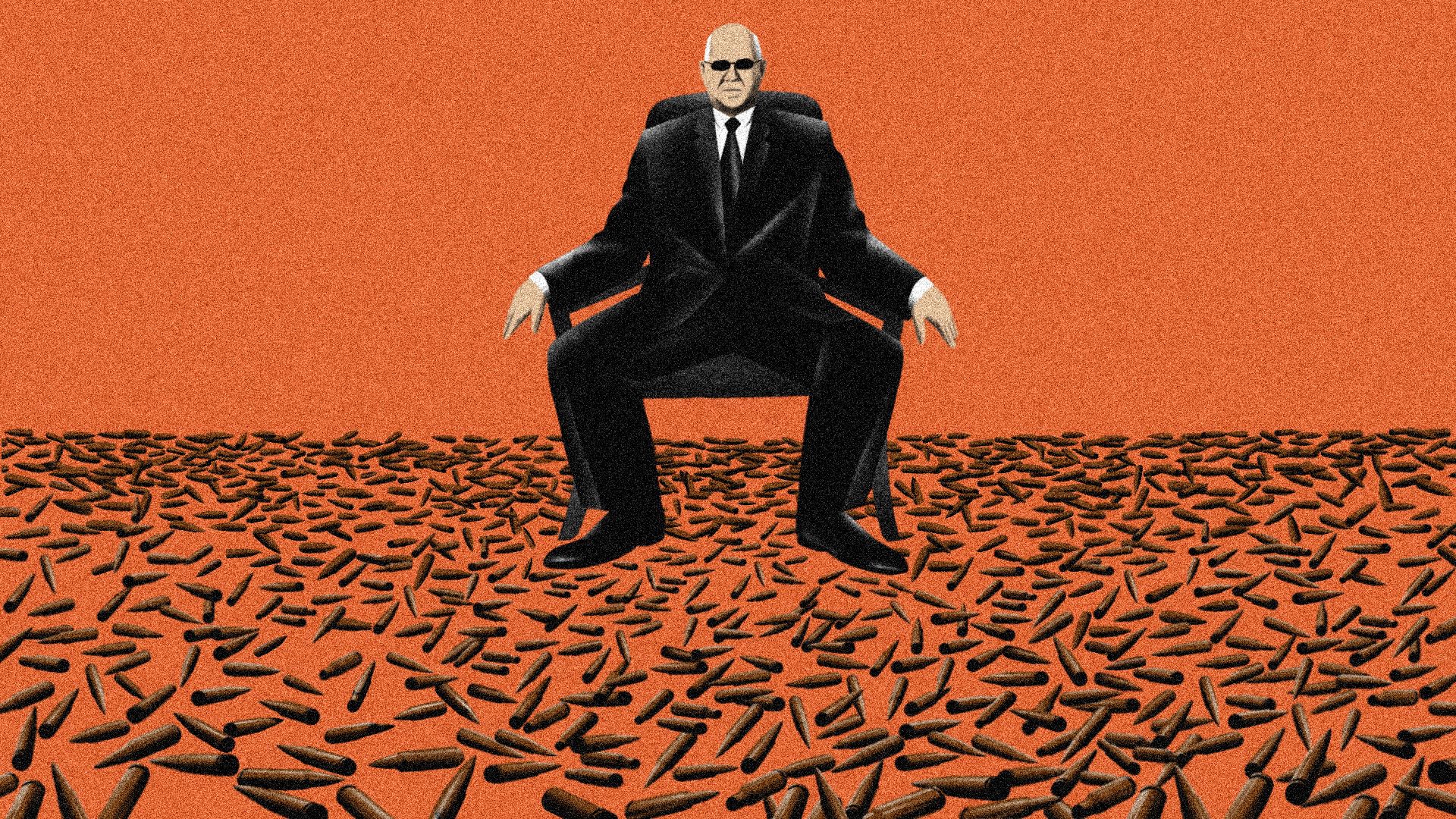
Despite sanctions, Russia's metallurgical plants have successfully imported EU-made equipment to feed the Russian defense industry. (Nataliia Shulga / The Kyiv Independent)
 on Google
Editor's note: This investigation is a collaboration between The Kyiv Independent (Ukraine), IrpiMedia (Italy) and OCCRP. The story is also available in German, translated by Krautreporter.
Key findings
- A Turkish company co-owned by an EU national shipped EU-made equipment to Russian defense plants despite European export restrictions, customs records reveal.
- The Russian plants use such equipment to produce metal alloys, later used to make missiles and fighter jets.
- Two plants that benefit from the scheme belong to the son-in-law of Igor Zavyalov, long-time deputy head of Rostec, Russia’s state-owned defense conglomerate.
Russian metallurgical plants that supply the country's defense industry during Russia’s war against Ukraine have imported EU-made equipment despite the restrictions aimed at preventing it.
An intermediary, set up in Turkey and owned by a Dutch national, helped supply the banned machinery to Russia, according to customs records obtained by the Kyiv Independent and IrpiMedia.
The records show that the Turkey-based company Redwing Metal shipped $5 million worth of equipment in 2023 and 2024 to two plants in Russia: Aluminum Metallurg Rus (AMR) and Stupino Metallurgical Company (SMK).
Both are controlled by Russian businessman Nikolay Timokhin.
Timokhin is no ordinary businessman. He is the son-in-law of Igor Zavyalov, the long-time deputy head of Rostec, Russia's state-owned defense conglomerate.
Timokhin’s plants have been supplying metal alloys to Russian defense companies, including those of Rostec.
The metal alloys are produced using the machinery that reached Russia despite EU export restrictions intended to prevent defense-linked Russian companies from obtaining Western industrial equipment.
The shipments, uncovered by the Kyiv Independent in customs records, illustrate how Russia's dependence on Western technology extends far beyond the microchips and electronics commonly found in its weapons.
Even producing the metal parts used in missiles and aircraft requires Western-made industrial machinery that continued to reach Russia through third-country intermediaries despite sanctions.
How European machinery feeds Russia's war machine
The shipments included CNC lathes, a metal heat-treatment furnace, a hydraulic press, an aluminum disc pre-assembly machine, belt conveyors, and other equipment made by Italian, German, Spanish, and Czech manufacturers.
"Taken together, this is not a random basket of ordinary industrial goods. These look like core capabilities for a modern metallurgical production line and can potentially support Russia's defense-industrial base," said Alex Bashinsky, co-founder of the U.S.-based Global Sanctions Training Institute (GSTI) and a member of the International Working Group on Russian Sanctions, who was shown the list of equipment.
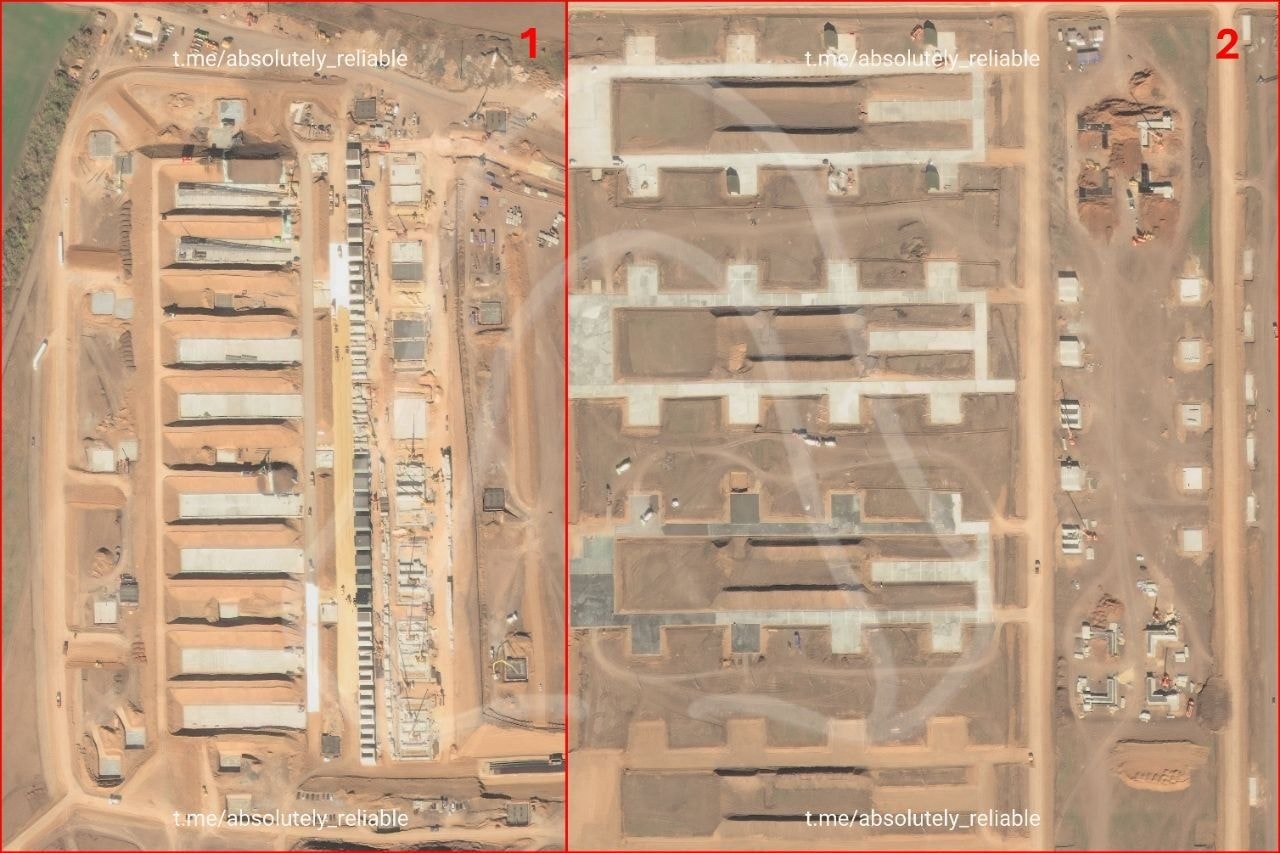
That industrial capacity supports aircraft and missiles Russia regularly uses to attack Ukrainian cities. According to Ukraine's military intelligence, AMR produces metal parts used in Su-34 fighter-bombers and Kh-101 cruise missiles.
One such missile struck a residential building in Kyiv on May 14, 2026, destroying 18 apartments and killing 24 civilians.


Over more than four years of the full-scale invasion, Kh-101 missiles have been used to strike residential buildings, energy infrastructure, and even a children's hospital in Kyiv.
The role of AMR and SMK in Russia's war machine extends far beyond a single missile type. A Kyiv Independent analysis of financial documents reveals that the plants have supplied more than 40 defense manufacturers since the start of Russia's full-scale invasion of Ukraine, including companies that produce Kh-59 missiles, missiles for S-300 and S-400 air defense systems and fighter jets.


Timokhin is also closely connected to Rostec, Russia's state-owned defense conglomerate. His father-in-law, Igor Zavyalov, has served as its deputy head since 2007, overseeing its finances.
Many of the companies supplied by AMR and SMK are themselves part of Rostec.


Timokhin also holds stakes elsewhere in Russia's defense industry, including in a metal supplier to missile, aircraft, and warship producers, All-Russian Institute of Light Alloys, and in KAMAZ, a manufacturer of military-vehicle chassis in which Rostec is the dominant shareholder.

How banned EU machinery reached Russia
EU export controls bar Russian plants from purchasing and importing the equipment directly from the bloc.
"It is impossible to buy items such as CNC machines directly from the EU for delivery to Russia — in this case, sanctions are effective," said Roman Steblivskyi, director of policy and advocacy at the Economic Security Council of Ukraine (ESCU).
He points to a common way to circumvent the EU ban: "Countries such as Kyrgyzstan, Uzbekistan, Hong Kong, and Turkey have no sanctions against Russia, making it far easier for companies based there to procure and re-export such goods."
The intermediary in this case was Redwing Metal, a Turkish company established shortly after Russia's full-scale invasion of Ukraine in 2022.
Redwing Metal is co-owned by Alexander Tattersall, a Dutch national residing in Switzerland. According to Turkish corporate records, Tattersall owns 40% of the company, with 59.9% held by a local lawyer, Veysel Cengiz Soylemezoglu.
Tattersall has long had ties to Timokhin's metallurgical business group, specifically to AMR.
In photos taken at AMR in 2019, he is seen inside the Russian plant holding its emblem, attending the factory's 65th anniversary celebrations. According to an AMR publication, the event brought together representatives of companies that distribute its products.


The explanation for Tattersall's presence at AMR is straightforward: He was responsible for selling AMR's aluminum products to European and American markets.
For years, he ran a network of AMR Trading distributors based in Switzerland, Germany, and the U.S. The companies handled AMR's global exports and formed an integral part of the Russian AMR group.
According to German corporate records, Tattersall temporarily stepped down from the management of AMR Trading Germany GmbH in 2017-2018, with his position filled by Russian national Vitaly Sidorov, another key figure in Timokhin's businesses.
Sidorov heads the Russia-based AMR-SMK Joint Management Company, which oversees both metallurgical plants.

Five years after Tattersall was photographed at AMR in Russia, the Turkey-based company he co-owned shipped banned European equipment to the same plant, according to Russian customs records.
Tattersall dodged the questions about his ties to Timokhin, but confirmed that he is a co-owner of Redwing Metal and CEO of the network of AMR Trading companies based in Europe and the United States.
In a written response, Tattersall said he had only limited knowledge of Redwing Metal's operations, despite being a co-owner, the sole contact listed on its website and, by his own description, a part-time consultant.
"I am a part-time consultant for the Turkish company Redwing Metal and have limited knowledge of the operations of this company. To the best of my knowledge, Redwing Metal has never been involved in any 'schemes' of shipping sanctioned goods to Russia," Tattersall wrote.
read also
What European manufacturers knew
Russian customs records contradict Tattersall's claim, identifying the specific models of EU-made machinery shipped by Redwing Metal to AMR and SMK between 2023 and 2024.
The shipments included four CNC lathes produced by Italian manufacturer M.C.M., which were delivered to SMK in late 2023.
In a written response, M.C.M. confirmed that it had sold products to Redwing Metal in 2023, and stated that the agreement explicitly prohibited the "re-export to countries, areas, or entities subject to restrictive measures."
The Italian company added that it had no knowledge "of any re-export to Russia of the goods sold to Redwing Metal."
The other European metalworking equipment manufacturers mentioned in the customs records did not respond to the written inquiries.


The majority owner of Redwing Metal, Veysel Cengiz Soylemezoglu, declined to comment on the shipments, citing privacy obligations, and claimed that "the statements and assumptions regarding alleged trade flows appear to be unsupported by any factual information provided."
Beyond metallurgy: EU equipment for Russian Navy ships
According to Russia's customs records, Redwing's shipments were not limited to metallurgical equipment.
The data reveals that Redwing Metal also shipped $1.3 million worth of EU-made shipbuilding equipment to Russia despite sanctions. It was delivered to the Russian company SMS, known as SMK-Snab until 2024, which is also part of Timokhin's business group.
Russian customs descriptions show that anchors, mooring winches, ventilation fans, onboard wastewater treatment systems and other goods were imported for installation on two Russian Navy ships under construction. One of them, the Mikhail Kalashnikov, was completed in mid-2025, less than a year after the last deliveries.


Some of the EU manufacturers of the shipbuilding gear told the Kyiv Independent and IrpiMedia that they had not sold their products directly to Redwing Metal and had no knowledge of who the actual sellers were.
"Based on the information provided, it is difficult to determine who might actually have sold these goods to this Turkish company," Michael Kresse, managing director of Wolter GmbH in Germany, said in a written response to questions about vessel ventilation fans that Russian customs data attributed to Wolter. "Therefore they could have been sourced from many channels, including stockists."
He added that the company has no current business relations with companies in Russia, Belarus, or occupied territories of Ukraine and "will not supply to any customer if we must suspect that goods will be re-exported to those countries or any seagoing vessel with relation to such countries."
The Polish producer Alwo and the Austrian manufacturer Palfinger stated in written responses that they had never dealt with Redwing Metal and were unaware of their products entering Russia.
"Our products should not be there," said Jaroslaw Jablonski, Alwo's director, who added that the company had canceled all contracts intended for the Russian market since the war began.
According to Katja Pötsch, director of corporate communications at Palfinger, conducting business with Russia is not permitted under the company's guidelines. "In accordance with the applicable EU directive, our contracts include a clause under which resellers undertake not to deliver Palfinger products to Russia under any circumstances," she said.
Timokhin and the Russian companies AMR, SMK, and SMS did not reply to written requests for comment.
Costs of circumvention
According to three sanctions experts interviewed by the Kyiv Independent, routing prohibited EU-made equipment through Turkey to Russia amounts to circumvention of EU sanctions.
"The supplies can be considered a violation, as their declared identifications match exactly with the same IDs being explicitly banned from export by the EU. Some of these goods were banned already in the first half of 2022, indicating their early acknowledgement as critical to the Russian war effort," said Erlend Bjortvedt, founder of Corisk, an Oslo-based sanctions risk advisory firm, after reviewing shipment data.
A European Commission spokesperson said that "tackling circumvention of EU sanctions, including through third-country jurisdictions, is among the Commission's key priorities."
The spokesperson added that EU member states are responsible for "identifying breaches and imposing penalties through their national competent authorities," and that the EU sanctions framework in relation to Russia allows the Council to impose individual sanctions "against third-country individuals or entities for circumvention or other forms of frustration of EU sanctions."
As a result, AMR, SMK, SMS, Redwing Metal, as well as individuals behind them, could face Western sanctions, experts say. AMR and SMK are not currently subject to EU or U.S. sanctions, despite supplying Russia's defense industry and receiving banned European machinery during the war.
Sanctioning the plants would go beyond existing restrictions on exporting certain machinery to Russia. It could freeze assets they hold under Western jurisdictions and largely bar Western companies and financial institutions from dealing with them.
According to sanctions experts, the European equipment manufacturers could face liability only if an investigation by an EU member state established that they knew the shipments were destined for Russia.
"It would be worth law enforcement investigating the involvement of EU citizens in running this supply chain network, given that the EU has criminalised sanctions evasion and authorities across various member states are already doing significant work to uncover such schemes," said Roman Steblivskyi of ESCU.
If investigators establish that an EU national knowingly helped to bypass export restrictions through a third-country intermediary, that individual could face both financial penalties and criminal charges under the laws of the relevant EU member state, according to Bashinsky of GSTI.
"This has not been much applied legally yet, but the legal risk certainly exists," said Erlend Bjortvedt, founder of Corisk.
Note from the author:
Hi, I'm Alisa, the author of this piece. What struck me most when reporting it was that factories like AMR, SMK, and the All-Russian Institute of Light Alloys — playing a key role in supplying metal for Russian missiles — have gone unnoticed by EU and U.S. sanctions authorities for more than four years of full-scale war. The same is true of the factories' owner.
But now, at least, we've dragged them out of the shadows.
If you'd like to support our journalism and help us report more stories like this, please consider becoming a member of The Kyiv Independent. Together, we can do more.
 Alisa Yurchenko
 Alisa Yurchenko