Ukraine's foreign minister meets with new Hungarian counterpart to discuss minority rights
 on Google
Editor's note: The story was updated with additional details.
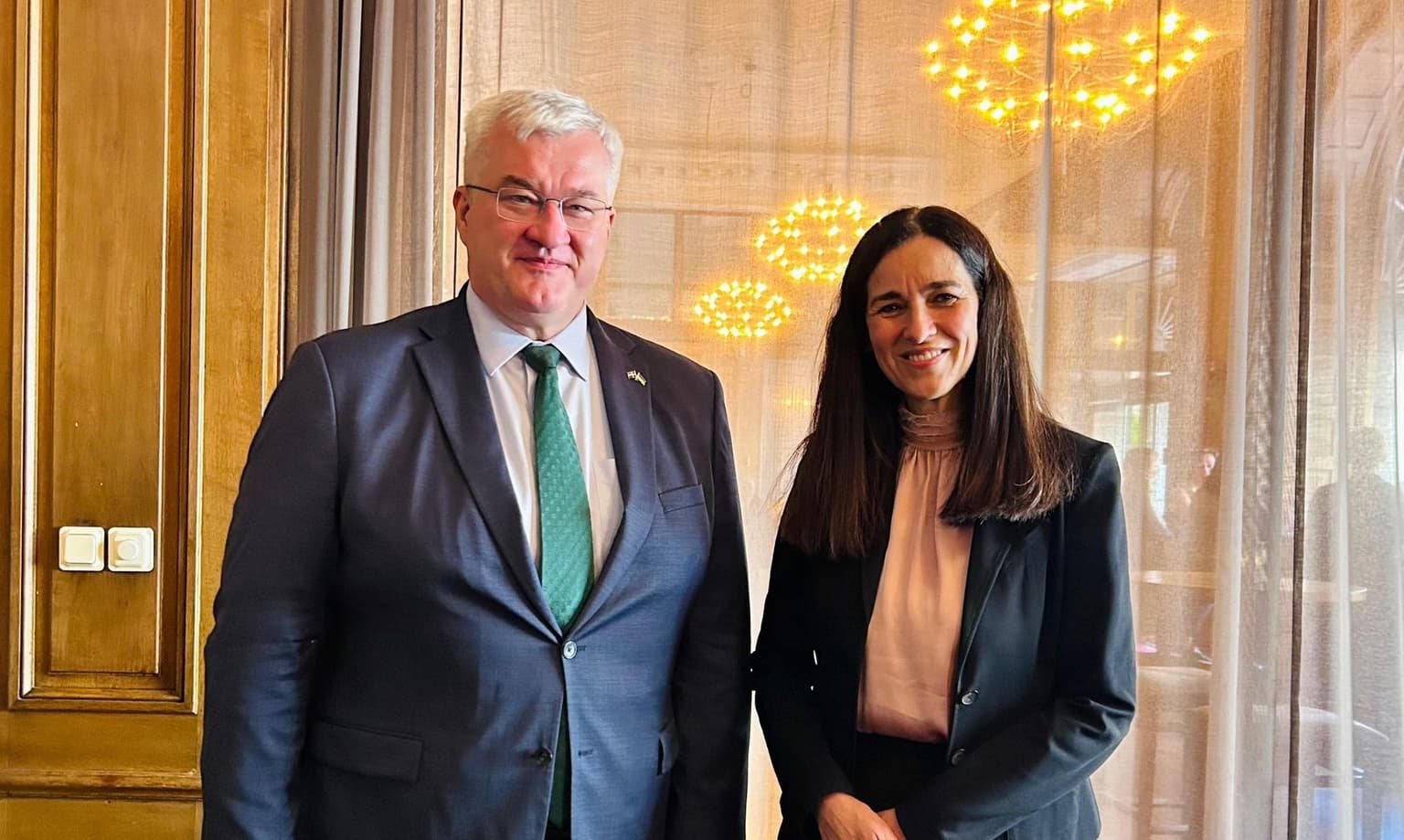
Foreign Minister Andrii Sybiha held his first in-person meeting with his new Hungarian counterpart, Anita Orban, on May 22, as the two countries seek to reset ties.
The ministers reviewed expert-level consultations held this week on the Hungarian minority in Ukraine and agreed to hold a second round next week, Sybiha said after meeting Orban (no relation to former Hungarian Prime Minister Viktor Orban) on the sidelines of a NATO ministerial summit in Helsingborg, Sweden.
"We both recognize the importance of progress on this track; we seek to find constructive solutions and achieve tangible results," Sybiha said on X.
Ukraine's chief diplomat also said he had briefed his Hungarian counterpart on "the battlefield situation, peace process, and Europe's potential new role."
Ukraine and Hungary held the first round of expert-level online talks on minority issues on May 20, described by Anita Orban as "important steps toward rebuilding our bilateral relations and strengthening future cooperation."
Ukrainian-Hungarian relations have thawed after Peter Magyar's new government, sworn in earlier in May, pivoted away from Viktor Orban's pro-Kremlin policies, affirming Ukraine's territorial integrity and denouncing Russian aggression.
The status of the Hungarian national minority in Ukraine, concentrated in the western Zakarpattia Oblast, remains a contentious issue, however.
Budapest has focused its criticism on Ukraine's language laws that strengthen the role of Ukrainian in education.
Kyiv rejects claims that the legislation discriminates against the Hungarian community, saying it is intended to reinforce national identity after decades of Russification.
Magyar has tied minority issues to Kyiv's bid to launch formal EU accession talks, a step blocked for months by Hungary's former government.
During his meeting with Orban, Sybiha said he "underscored the critical importance of Ukraine's EU accession and the timely opening of negotiation clusters."
Talking to journalists later on May 22, Sybiha noted that Ukraine expects the launch of all six clusters by June.
"The main political obstacle from the Orban government has been removed," he said, underscoring that Kyiv has met the necessary conditions.
Previously, the Ukrainian foreign minister said Kyiv aims to open the first cluster already in late May.