The anniversary of Russia's long-forgotten genocide
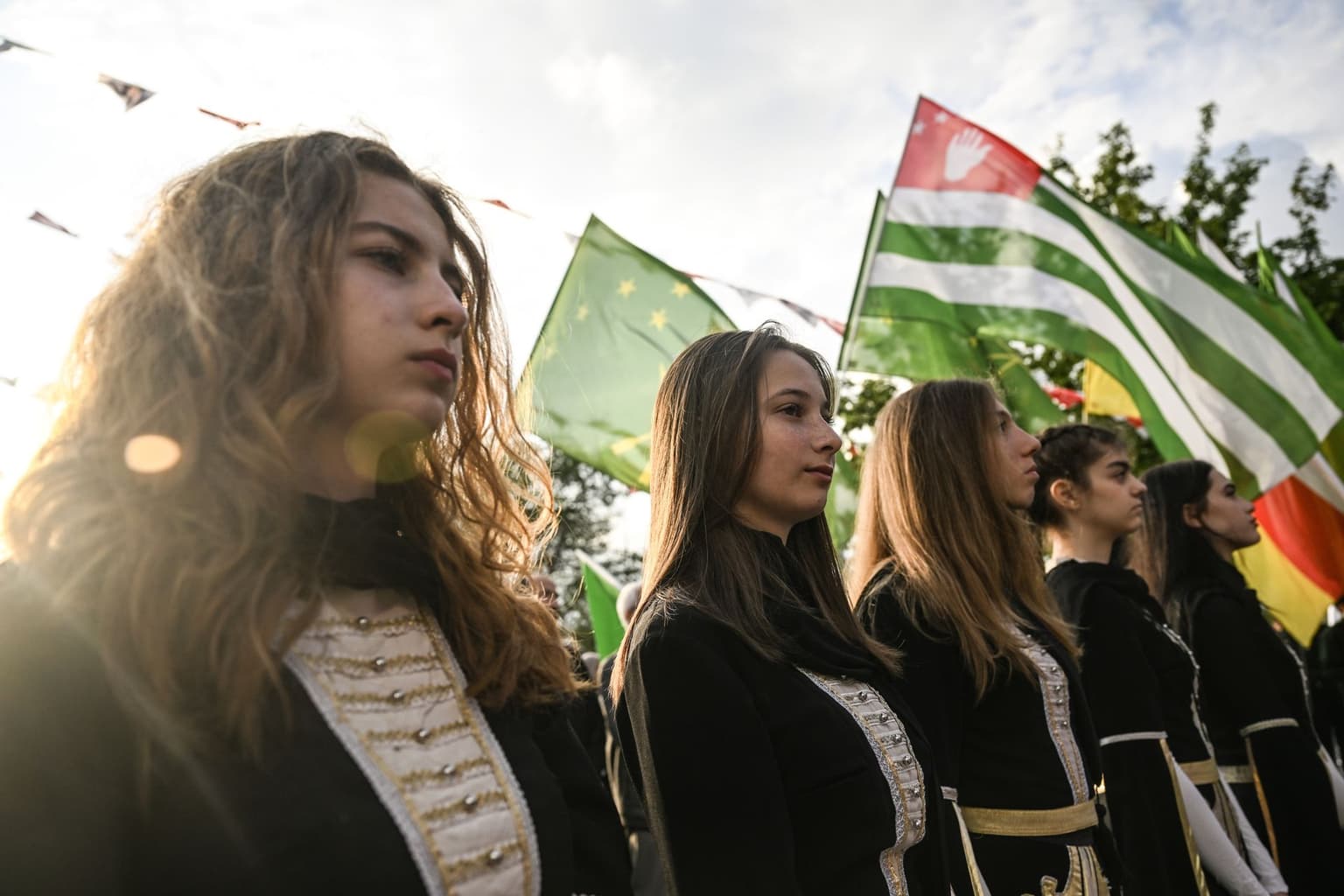
Members of the Federation of Caucasian Associations gather during a protest marking the 159th anniversary of the Circassian exile in Ankara, Turkey, on May 21, 2023. (Esra Hacioglu Karakaya / Anadolu Agency / Getty Images)
 on Google
Jack Gill
Co-Founder and Director of the European Nations and Regions Organization
For millions of Europeans, the era of Russian domination over the nations east of the former Iron Curtain remains a vivid, living memory.
But while the Kremlin's tide receded across most of Central and Eastern Europe, others remain stuck within Russia's borders, yearning for the freedom of national expression that has yet to materialize.
European history is littered with tales of one nation's brutality towards another, but very few nations have experienced what can truly be called a genocide — the annihilation of one nation from its own homeland.
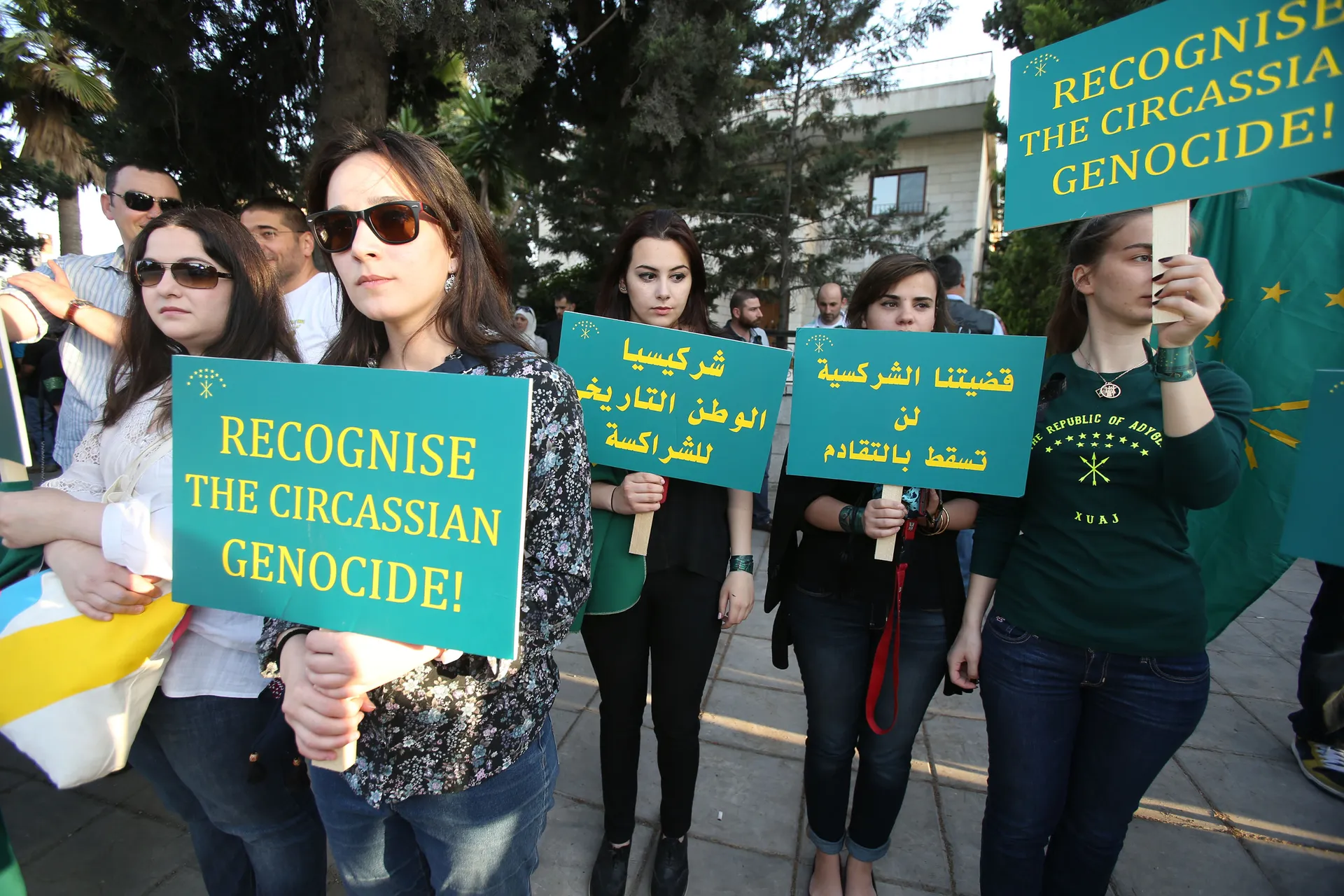
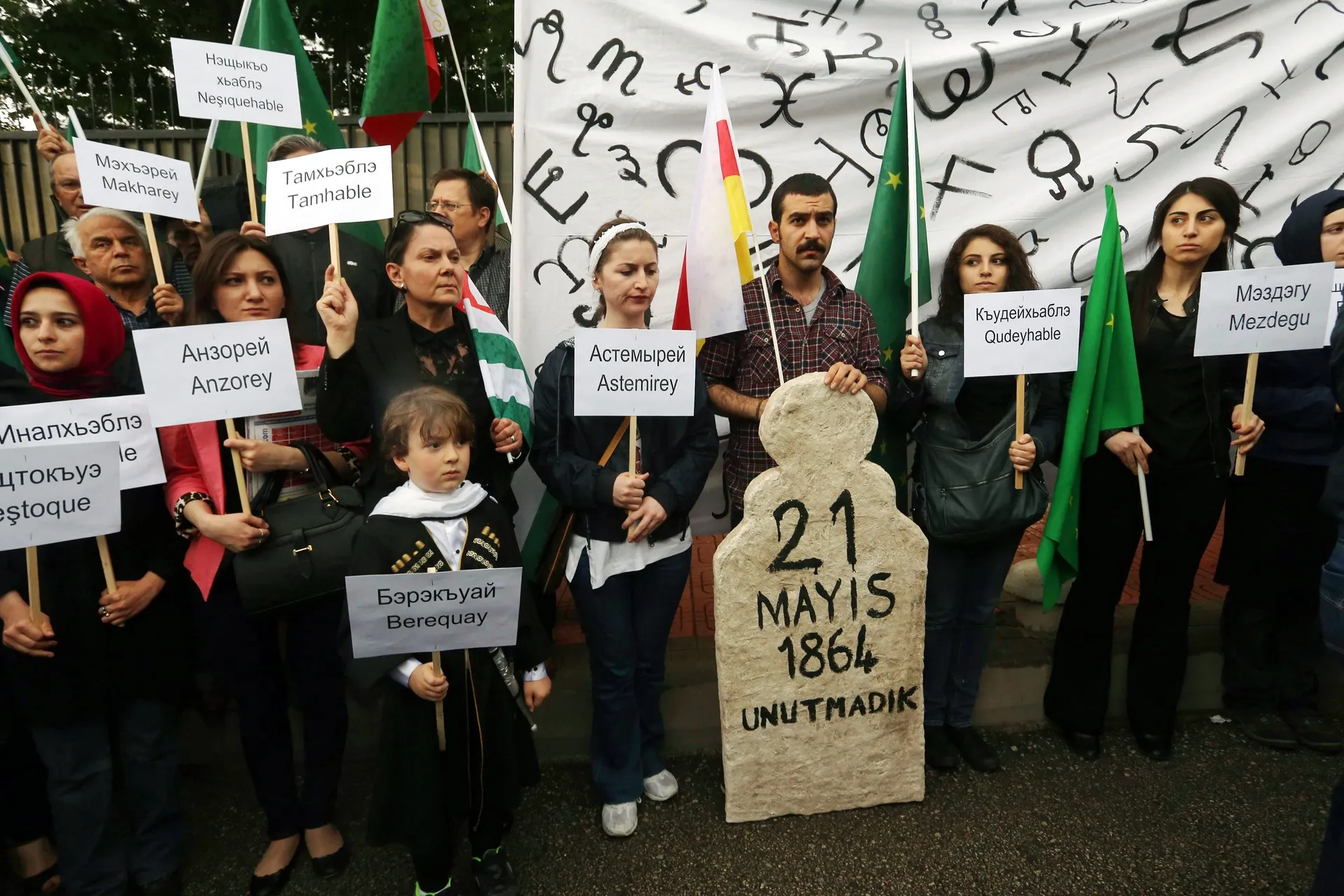
One such nation is the Circassians, who are today commemorating the 162nd anniversary of their final subjugation and genocide by the Russian Empire in 1864, where it is estimated that between 95 and 97% of all Circassians were either killed, directly by Russian soldiers or indirectly through a deliberate policy of ethnic cleansing and starvation, or deported under inhuman conditions to the Ottoman Empire.
Other smaller peoples, closely related to Circassians, were also targeted. The Ubykh, a small nation living in an area around modern Sochi, were deported entirely. The last speaker of Ubykh, a remarkable language that had more consonants than any other human language, died in the 1970s in Turkish exile. Additionally, the vast majority of Abazas were cleansed and deported under similar circumstances.
While Georgia and Ukraine have recognized the event as a genocide, the status of the Circassian "genocide" is widely disputed, lacking, according to some experts, the UN's definitional criteria of "destruction" of a people.
This is because most Circassians were forced to the Black Sea coast and deported by ship to the Ottoman Empire; half died during the journey or shortly after arrival. Ultimately, according to Walter Richmond, up to and perhaps more than 1 million Circassians, Ubykhs, and Abazas are estimated to have been removed from their homeland.
The few Circassian communities that did survive in Russia were dispersed across three main territories, and their lands were subjected to a vast wave of settler colonization by Cossacks from southern Russia and Ukraine. Despite sharing a common language (with some dialectal differences), religion (Sunni Islam), and endonym — all Circassians call themselves "Adyge" in their own language — the Russian Empire and later the Soviet Union prevented their unification as a single nation.
Instead, the three territorial communities were given distinct ethnonyms: "Adygean", "Cherkess," and "Kabardian," and merged with other Caucasian peoples into multi-ethnic territorial units, which exist today as the Republics of Adygea, Karachay-Cherkessia, and Kabardino-Balkaria.
Although Circassian Adygeans enjoy their own titular republic, they constitute only 25 % of its population, which is overwhelmingly ethnically Russian; the Soviet authorities used deliberate demographic manipulation to maintain control over national minorities. In Kabardino-Balkaria, Circassian Kabardians make up 57 % of the republic's inhabitants, while in Karachay-Cherkessia, the Circassian Cherkess form just 13 %.
After the collapse of the Soviet Union, Circassians retained and in some cases increased their autonomy, with the elevation of their autonomous regions (oblasts) to autonomous republics. This was, however, against the backdrop of ethnic conflicts that plagued most of the Caucasus during the late 20th and early 21st century, as well as the acute focus of Russia's political and security apparatus on Islamic peoples brought by the global War on Terror.
The situation for Circassians in Russia has worsened since 2014. That year's Winter Olympics in Sochi presented the Circassians with a significant opportunity to bring the genocide to global attention, with 2014 marking the 150th anniversary of the beginning of the genocide, and Sochi lying within historical Circassia. The world, however, remained largely silent.
Russia's invasion of Ukraine in 2022 marked yet another deterioration for Russia's national minorities. The hyper-securitization of Russian society ensures that authorities crack down on anything deemed a threat, including expressions of national defiance that could be interpreted as separatism.
But perhaps most concerning for Circassians and other national minorities in Russia today was the Kremlin's announcement in November 2025 of a new "State National Policy Strategy," whose stated goal is to ensure that at least 95% of Russia's population identify with a singular "all-Russian civic identity" (obshcherossiyskaya grazhdanskaya identichnost') by 2036, characterized by usage of the Russian language, "belonging to the Russian state," and "adherence to traditional Russian spiritual-moral and cultural-historical values."
The Strategy frequently refers to a multinational Russian nation (Rossiyskaya natsiya), emphasizing the unity and belonging of all the country's peoples to this singular nation.
What this means for Russia's minorities in reality is too early to predict, though it appears the Kremlin is attempting to transition the country from an explicitly multinational federation into a culturally and linguistically homogenous society, where expressions of difference are condemned.
For Europeans concerned with the future of small nations across the continent, the occasion of the anniversary of the Circassian Genocide should offer pause for thought for the many non-Russian peoples within Russia, who have been largely powerless against the whims of successive Russian tsars, Bolsheviks, and presidents for over 150 years, and may only tepidly express their national identity under the watchful eye of the Russian authorities.
Editor's note: The opinions expressed in the op-ed section are those of the authors and do not purport to reflect the views of the Kyiv Independent.