Is Belarus about to enter the Russian war?
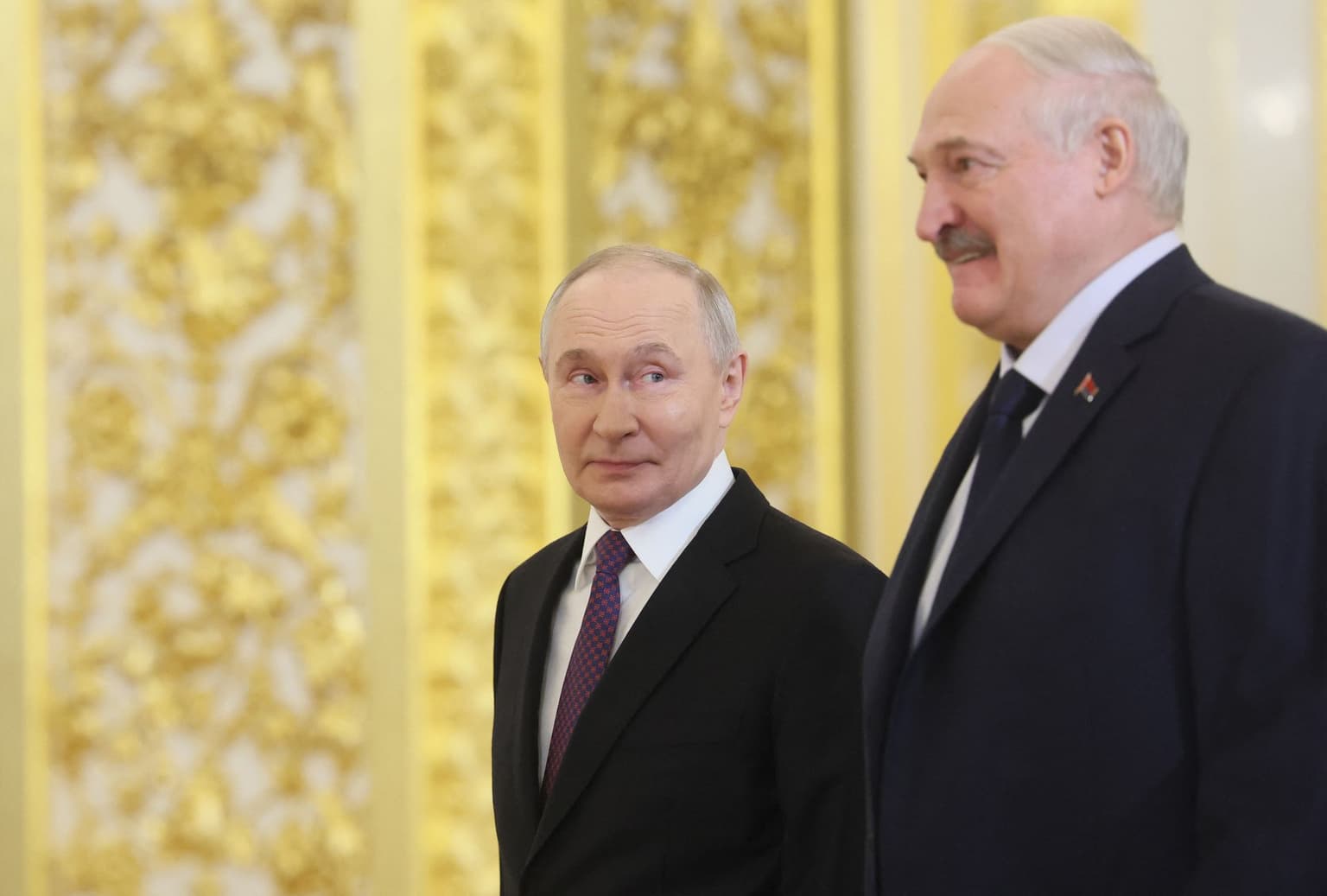
Russian President Vladimir Putin (L) greets Belarusian President Alexander Lukashenka (R) in Moscow, Russia, on Feb. 26, 2026. (Maxim Shipenkov / Pool / AFP / Getty Images)
 on Google
Luke Coffey
Senior fellow at Hudson Institute
With much of the focus on Ukraine being placed on the stagnant state of U.S.-led peace talks and recent successful Ukrainian drone strikes against Russia's oil refineries, Western policymakers should not overlook Ukraine's northern border with Belarus.
This week, Belarus is participating in alarming Russian-led nuclear warfare exercises. Last week, President Volodymyr Zelensky publicly raised concerns about the possibility of Belarus entering the war from the north in support of Russia.
None of this should be surprising. Belarus has taken provocative measures in the past, suggesting it might enter the war on Russia's behalf. The most notable example came in 2024, when Belarus reportedly mobilized one-third of its ground forces toward the Ukrainian border.
Belarus's support for Russia since the large-scale invasion in 2022 has been critical for Moscow's military operations.
During the opening weeks of the war, Russia's main effort to capture Kyiv and decapitate the Ukrainian government originated from Belarusian territory. It was also from Belarus that Russian troops advanced toward places now remembered for some of the war's worst atrocities, including Bucha and Irpin.
Belarus has also been accused of participating in the abduction of Ukrainian children. Even today, Russian drones and missiles use Belarusian airspace for safe transit to strike targets deep inside western Ukraine before they can be intercepted by Ukraine's air defense systems.
Even with the saber-rattling coming from Moscow and Minsk, Belarusian President Alexandr Lukashenko must know that any Belarusian invasion of Ukraine would be widely unpopular at home.

Such a move could make his already tenuous rule even more unstable. It would also be deadly business for the Belarusian military. Belarusian troops have no meaningful combat experience, and much of their best equipment has been gutted by Russia in recent years to replace combat losses in Ukraine.
Meanwhile, they would be going up against Ukrainian armed forces that not only have the motivation of defending their homeland but are also among the most combat-experienced militaries in the world. Learning the lessons of 2022, Ukraine has also built up fortifications along its northern border with Belarus in recent years. Any Belarusian attempt to invade Ukraine would therefore likely be disastrous and deadly for the Belarusian army.
But Lukashenko also knows that he is beholden to the Kremlin for his continued rule. It is possible that Vladimir Putin could put enough pressure on him to enter the war directly.
If this happens, there are two likely scenarios.
The first would be a Belarusian attack toward Kyiv. It is unlikely, if not impossible, that Belarus could achieve in 2026 what Russia failed to achieve in 2022 with greater numbers and more military capability.
There is little doubt that Kyiv would remain in Ukrainian hands. However, the threat to the capital alone would be enough to force Ukraine to divert forces from the front line, where they are badly needed in places like Donetsk, and relocate them to help defend Kyiv. This would give Russia more opportunities elsewhere along the front.
The second scenario could see Belarus bypassing the capital area altogether and instead invading western Ukraine in an attempt to sever, or at least disrupt, the vital western supply lines from Poland that help keep Ukraine's war effort going.

Again, this would pose a logistical challenge for Ukraine and require the relocation of tens of thousands of Ukrainian soldiers from important positions along the front line hundreds of kilometers away. In both scenarios, even if Belarus failed to take and hold Ukrainian territory, the invasion itself would be enough to weaken Ukraine's defenses elsewhere and create opportunities for Russia.
In response to recent concerns about Belarus, there are three immediate things Ukraine's Western partners can do.
First, they should continue sharing intelligence on what the Belarusian military is doing and what the Belarusian political leadership intends to do. The earlier the warning Ukraine receives, the better prepared it will be if Belarus enters the war from the north.
Second, NATO should take this opportunity to conduct a snap military exercise in Poland, Lithuania, and Latvia, all countries that border Belarus.
The purpose would not be to threaten Belarus, but to show force and remind Minsk that geopolitical events can quickly spiral out of control. It would also demonstrate that a strong NATO is nearby and ready to defend its territory if necessary. Such an exercise could help Lukashenko convince the Kremlin that he needs to keep his forces at home rather than send them into Ukraine.
Finally, military planners and logisticians among Ukraine's Western partners need to build more resilience and redundancy into current supply routes. If routes from Poland are disrupted or severed, alternative routes from Romania will become even more important. Backup plans to ramp up capacity through these alternative routes are needed now, not after a crisis begins.
The possibility of Lukashenko sending his own forces into Ukraine might seem remote. However, at this point in the more than four-year-long war, and as Russia becomes more desperate to change the momentum on the battlefield, nothing can be ruled out.
Ukraine and its partners need to prepare for the unexpected. With attention focused elsewhere, Western policymakers should not forget the north.
Editor's note: The opinions expressed in the op-ed section are those of the authors and do not purport to reflect the views of the Kyiv Independent.