Ukraine war latest: Ukraine destroys half of Russia's 'key' Pantsir air defense systems, security service says
 on Google
Key developments on Feb. 14-15:
- Ukraine destroys half of Russia's 'key' Pantsir air defense systems, security service says
- Ukraine hits Russia's BK-16 landing craft in Crimea and other targets in Russian-occupied territories, military says
- Zelensky, Rubio discuss air defense for Ukraine, possibility of leader-level peace talks
- Territorial concessions by Ukraine won't bring peace, Zelensky says in Munich
- Ukraine сonfirms strike on oil terminal in Russia's Krasnodar Krai, hits air defense system in Crimea
- Over 177,000 Russian soldiers killed in Ukraine identified by media investigation
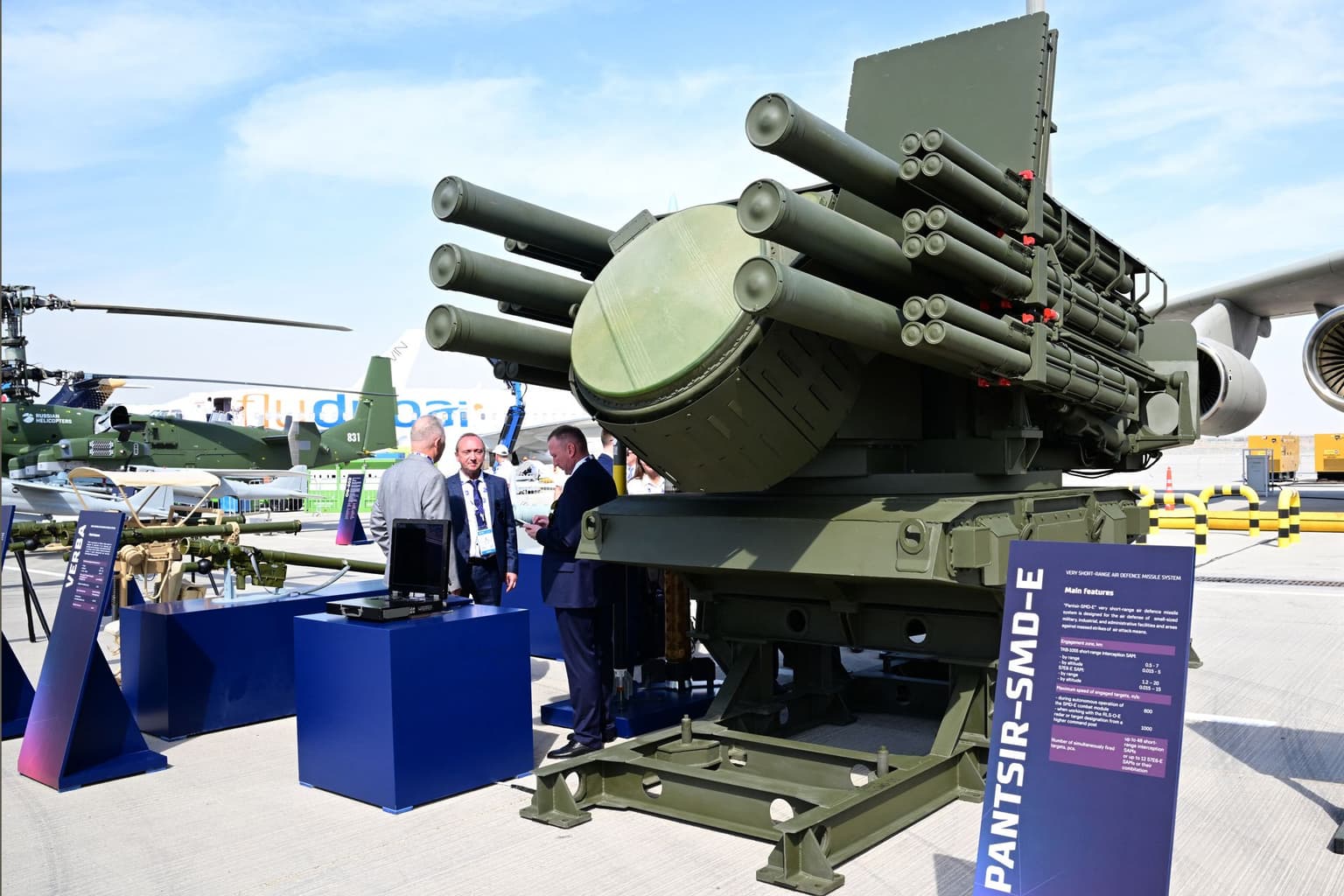
The Alpha unit of Ukraine's Security Service (SBU) destroyed half of Russia's stockpile of the coveted Pantsir air defense system, the SBU announced Feb. 14.
"The 'Pantsir' is one of Russia's modern and key air defense systems. The cost of a single system ranges from $15 to $20 million. These anti-aircraft missile systems are the most effective in countering Ukrainian long-range drones," the announcement read.
The "systemic destruction" of the air defense system has the "strategic goal" of making Russia vulnerable to long-range strikes as Moscow continues to wage its war, the SBU said.
A diminished arsenal allows the Armed Forces to effectively strike Russian "military bases, warehouses, airfields, and other occupied facilities."
Ukraine regularly strikes military infrastructure deep within Russia and its own occupied territories in an effort to diminish Moscow's fighting power.
The SBU claimed on Jan. 19 that its long-range strikes during the year of 2025 either "destroyed or disabled" Russian air defense systems worth a total of approximately $4 billion.
On Feb. 12, Ukraine struck a Russian 55Zh6U "Nebo-U" long-range radar station, estimated to be worth approximately $100 million, near Yevpatoriia in occupied Crimea, the General Staff of Ukraine’s Armed Forces later reported on Feb. 13.
Meanwhile, the 1st Separate Center of the Unmanned Systems Forces (USF) on Feb. 12 struck an airfield in the village of Hvardiiske in Crimea, the Kirova electrical substation in Luhansk, and a data center in Prymorsk, Zaporizhzhia Oblast.
Ukrainian long-range cruise "Flamingo" missiles struck a major Russian arsenal storing missiles, ammunition, and explosives in Kotluban, Volgograd Oblast, overnight, Ukraine's General Staff reported on Feb. 12.
The facility belongs to Russia's Main Missile and Artillery Directorate (GRAU) and is described as one of the largest ammunition storage sites used by the Russian army. Powerful explosions and secondary detonations were recorded at the site.
In addition to the strike on the arsenal, Ukrainian forces on Feb. 12 hit the Progress Plant in Michurinsk, Tambov Oblast. The enterprise produces high-tech equipment for aviation and missile systems and is involved in supporting Russia’s military.

Ukraine hits Russia's BK-16 landing craft in Crimea and other targets in Russian-occupied territories, military says
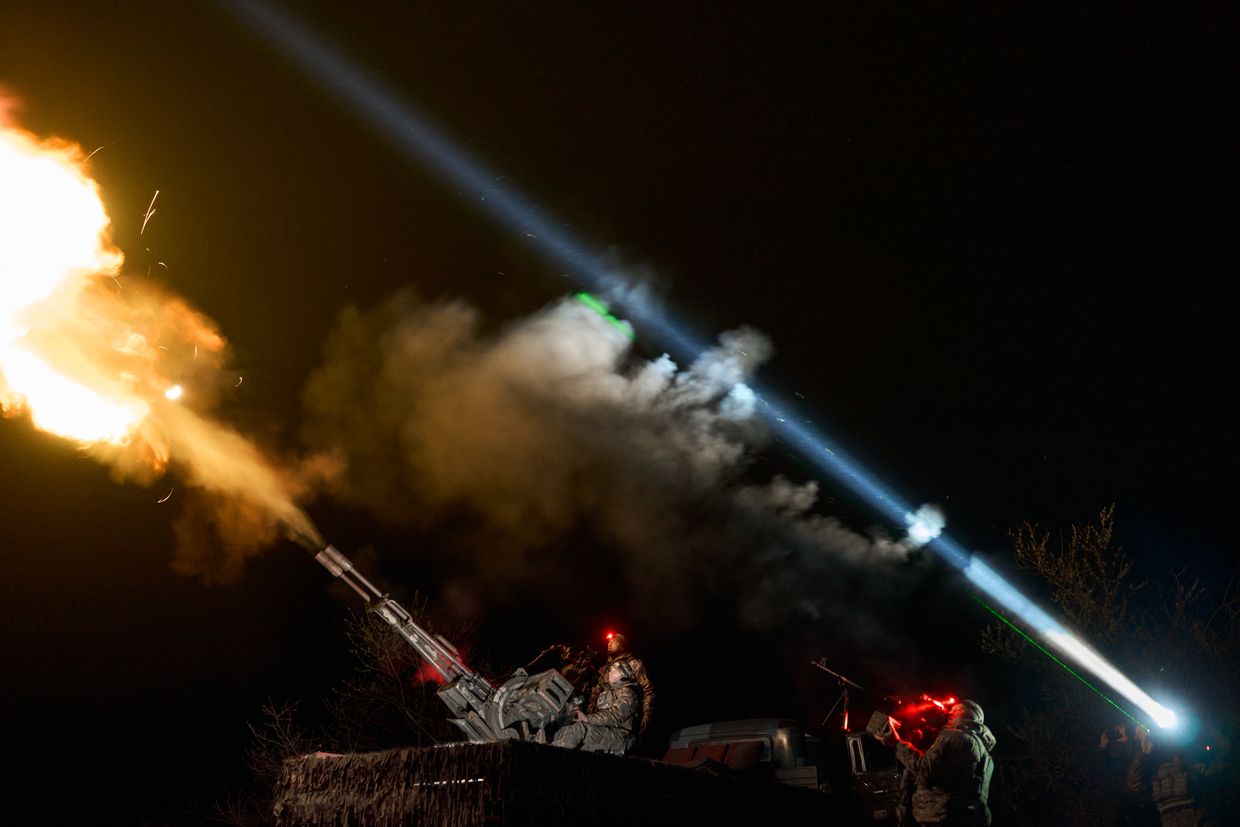
Ukrainian forces successfully attacked a Russian BK-16 landing craft and other targets in Russian-occupied territories, the General Staff of Ukraine's Armed Forces said on Feb. 14.
The General Staff reported that Russia's BK-16 landing vessel, a high-speed landing craft for coastal operations and troop transport, was "successfully hit" on Feb. 12 in the Novoozerne area, Russian-occupied Crimea.
Some other military targets were also hit on Feb. 12, such as the RSP-10 radar station in Crimea and Russia's communications node in the occupied part of Zaporizhzhia Oblast, the General Staff said.
Additionally, on Feb. 13, Ukraine hit a Russian ammunition depot near the village of Novoeokonomichne in occupied Donetsk Oblast.
"The Ukrainian defense forces will continue to systematically carry out measures aimed at weakening the combat potential of the Russian aggressor," the General Staff said.
Crimea has been under Russian occupation since its illegal annexation in 2014.
Ukraine has stepped up strikes on military infrastructure on the peninsula and other newly occupied territories since the full-scale invasion began in 2022.
Zelensky, Rubio discuss air defense for Ukraine, possibility of leader-level peace talks
Editor's Note: This is a developing story and is being updated.
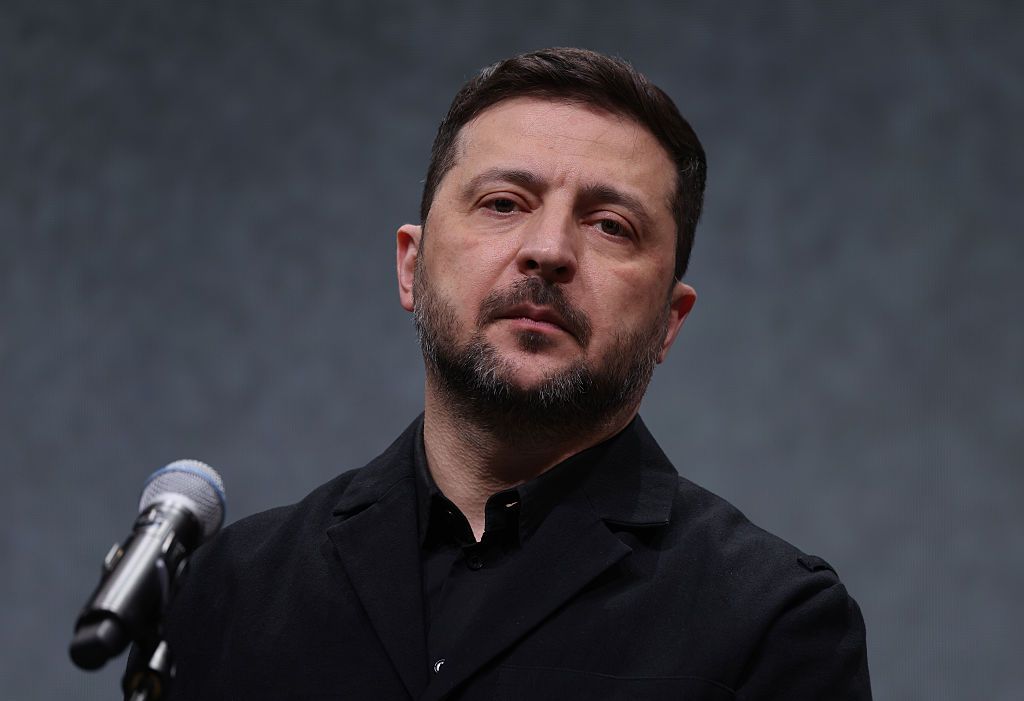
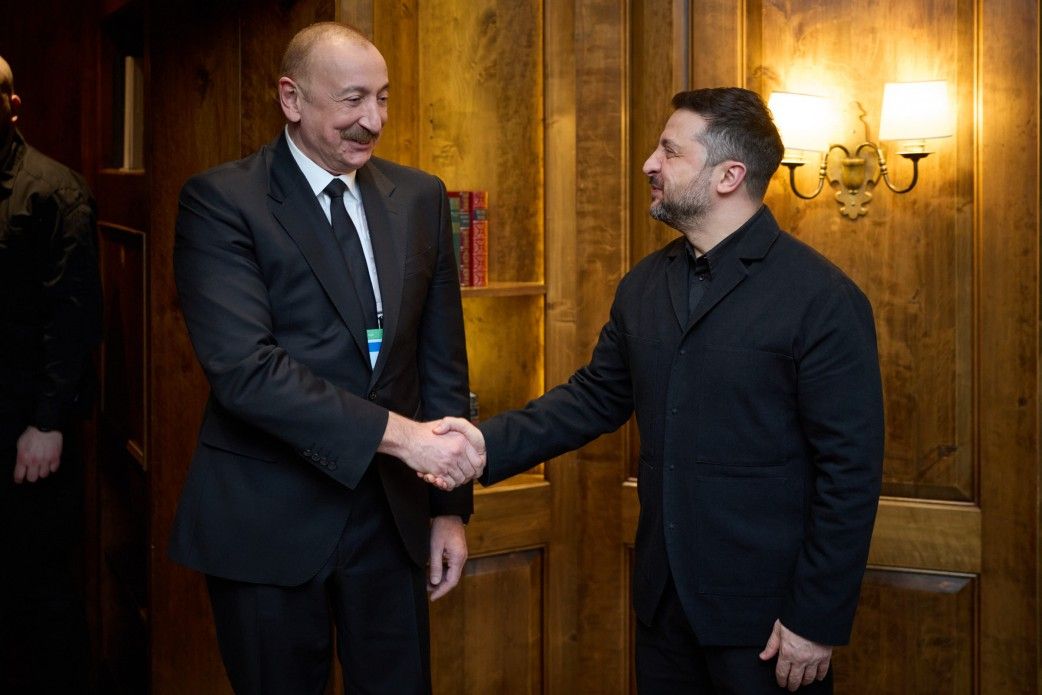
President Volodymyr Zelensky spoke with U.S. Secretary of State Marco Rubio on the sidelines of the Munich Security Conference on Feb. 14, Presidential Office Spokesperson Serhii Nykyforov told the media.
The discussion focused on the situation on the battlefield, Russian attacks, and the damage caused to Ukraine's energy infrastructure. Part of the discussion included ways to support Ukraine with additional air defense missiles during the winter, according to the Presidential Office.
Rubio and Zelensky also discussed the next round of trilateral peace talks among the U.S., Ukraine, and Russia, set to take place in Geneva on Feb. 17–18.
"It's important that the planned negotiations in Geneva be productive, and I thank the United States for its constructive approach," Zelensky said after the meeting. "We also touched on the sequence of steps. It's important to make progress on issues of security guarantees and economic recovery."
The peace negotiations will eventually require a top-level meeting with the leaders of Ukraine, the U.S., and Russia, the Presidential Office said in a statement published after the talks.
"Ukraine believes that a meeting at the leadership level should ultimately be held to resolve the most problematic issues," the statement said.
Zelensky met with Rubio following his conference speech earlier in the day. Foreign Minister Andrii Sybiha and Secretary of the National Security and Defense Council Rustem Umerov joined him in the talks.
Following the meeting, Zelensky also held a phone call with Steve Witkoff and Jared Kushner, U.S. President Donald Trump's envoys representing Washington in the ongoing negotiations. They discussed the upcoming talks, the recent rounds of negotiations in Abu Dhabi, and the meeting with Rubio.
"Not everything can be disclosed over the phone, and our negotiating team will present Ukraine's position next week," Zelensky said after the call on Feb. 14. He thanked the U.S. team for their "constructive attitude."
Both Zelensky and Rubio addressed the conference in separate speeches on Feb. 14. Zelensky stressed Ukraine's commitment to the ongoing peace negotiations among Kyiv, Moscow, and Washington, but said territorial concessions to Russia would not lead to peace.
Rubio also acknowledged that the question of control over Ukraine's eastern Donbas region has not been resolved in the current negotiations.
In a briefing after his speech, Zelensky told journalists that the U.S. had offered Ukraine a 15-year security guarantee, but that Kyiv was looking for a longer-term pledge.
"Today we have a proposal from the American side for 15 years," he said at a briefing. We want to have 20 years plus. Thirty, 50 ... We'll see what the administration and Congress will do."
The day before Zelensky's meeting with Rubio, Trump said that Zelensky needs to "get moving" to secure a peace deal with Russia.
"Russia wants to make a deal and Zelensky is going to have to get moving, otherwise he's going to miss a great opportunity," Trump claimed. "He has to move."
When asked about Trump's comments, Zelensky acknowledged on Feb. 14 that the U.S. president may be "preparing (the) atmosphere" ahead of the upcoming peace talks in Switzerland.
"Not losing our dignity, we can move," Zelensky said.
Territorial concessions by Ukraine won't bring peace, Zelensky says in Munich
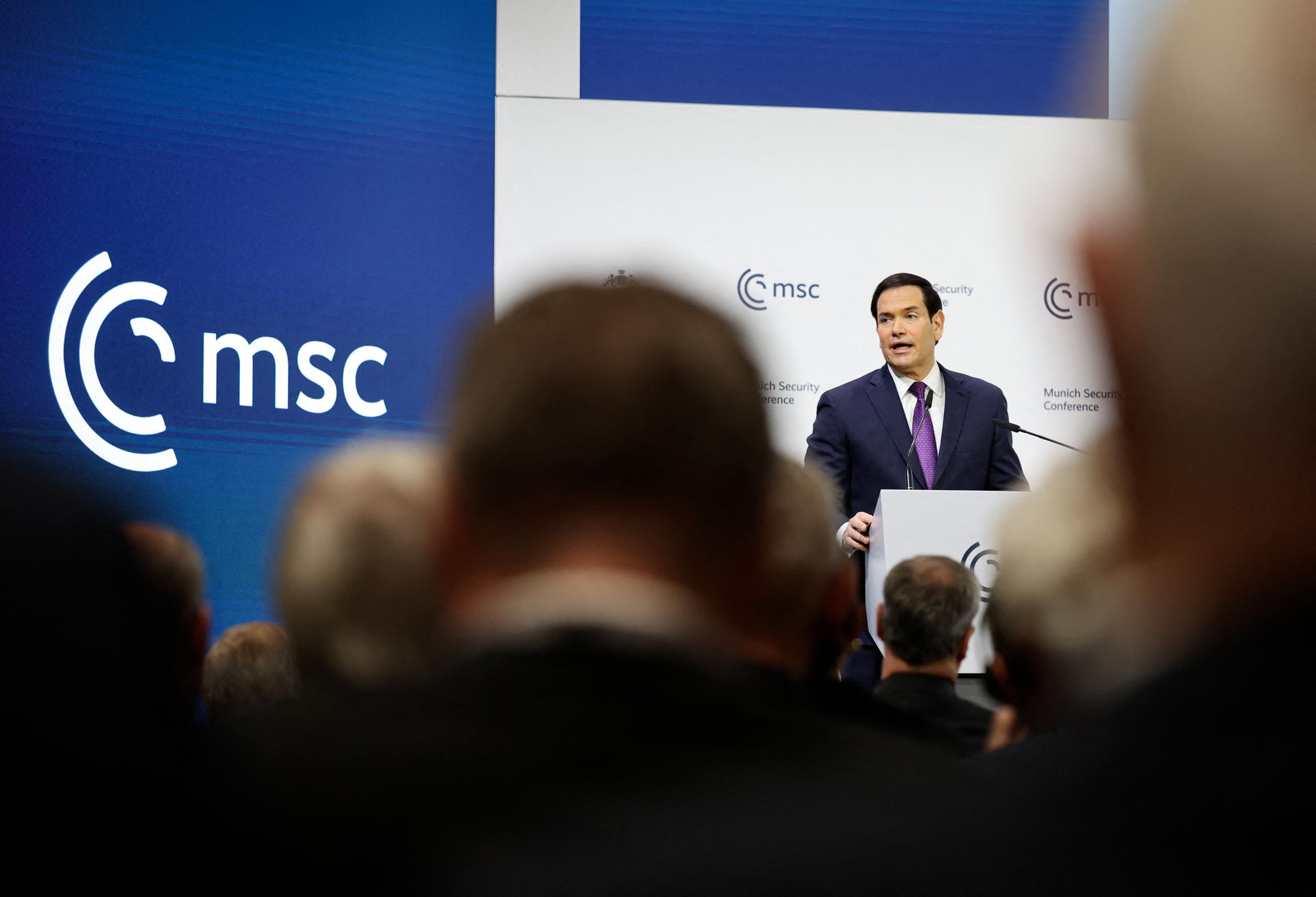
President Volodymyr Zelensky said on Feb. 14 that territorial concessions by Ukraine would not bring peace, just as the 1938 Munich Agreement did not prevent World War II.
"It would be an illusion to believe that this war can now be reliably ended by dividing Ukraine — just as it was an illusion to believe that sacrificing Czechoslovakia would save Europe from a greater war," Zelensky said at the Munich Security Conference.
The Munich Agreement was a compromise reached by Nazi Germany, the U.K., France, and Italy in 1938, allowing German dictator Adolf Hitler to annex Czechoslovakia's Sudetenland region. The agreement was touted as an effort to prevent a war but did not achieve its goal, with Germany invading Poland the following year.
It has since become the primary historical example of the failures of appeasement — the policy of granting concessions to an aggressor in hopes of achieving peace.
In his speech, Zelensky compared Russian President Vladimir Putin to the "previous Putin, who began dividing Europe" — a reference to Hitler.
As part of the ongoing peace talks between Moscow, Kyiv and Washington, Russia is demanding Ukraine's withdrawal from the parts of Donetsk Oblast that it still controls.
Zelensky has repeatedly stated that territorial concessions are unacceptable to Ukraine. He reiterated on Feb. 14 that concessions are often discussed during peace talks only in the context of Ukraine, not Russia.
Regarding elections, Zelensky said that Ukraine can make changes to its constitution and hold elections if there is a ceasefire. He added that Ukraine could also agree to a truce if Russia holds an election.
He also stressed that Ukraine will do "truly everything" to make these negotiations successful.
"Ukraine wants the result of all these efforts to be real security and real peace. Real peace. Not what came out of Geneva in 2021. Not what the Russians hope for, from this so-called spirit of Anchorage."
Zelensky's comments are a reference to Russian-U.S. talks held in Geneva in 2021 and in Anchorage, Alaska, in 2025.
Zelensky also argued that the absence of Europe at the negotiation table is a "big mistake."
"And it is we — Ukrainians — who are trying to bring Europe fully into the process, so that Europe's interests and voice are taken into account," he added.
In later remarks to journalists, Zelensky said that the U.S. had offered Ukraine a 15-year security guarantee as part of a peace deal, but that Kyiv is looking for guarantees that last at least 20 years.
"Today we have a proposal from the American side for 15 years," he said at a briefing.
We want to have 20 years plus. 30, 50 ... We'll see what the administration and Congress will do."
Following the briefing, Zelensky held private talks with U.S. Secretary of State Marco Rubio.
Estonian Foreign Minister Margus Tsahkna told the Kyiv Independent that Zelensky's message was "very clear".
"The first thing is that the Ukrainian people are fighting and not giving in. This is most important. And second, that Putin is not changing the goal," Tsahkna said.
Tsahkna added that the Ukrainian people are willing to stop the war, but not under any conditions, as "Putin is actually not willing to change the goals."
"Putin will continue the aggressive behavior, and Ukraine is protecting Europe," he said. "And the other way around, Ukraine is an opportunity for Europe."
NATO Secretary General Mark Rutte said at the conference that Russia does not seek a peace agreement, as indicated by the appointment of Vladimir Madinsky, a controversial Putin aide and historian, to the Russian negotiating team.
The return of Medinsky signals a potential hardening of Moscow's stance during the negotiations, given his history of uncompromising rhetoric in previous rounds of talks.
During the conference, Zelensky also met Rutte to discuss the funding of the PURL initiative and its further development.
Signed by the U.S. and NATO in July 2025, the Prioritized Ukraine Requirements List (PURL) agreement lays out a mechanism for NATO member states and partners to purchase high-priority equipment for Ukraine.
"We are counting on continued funding for this initiative, which enables us to purchase missiles for air defense systems," Zelenky wrote on X.
Zelensky also thanked for a "highly productive meeting" in the Ramstein format. After the meeting, the allocation of €38 billion in military aid for Ukraine was confirmed, Zelensky said.
Ukraine confirms strike on oil terminal in Russia's Krasnodar Krai, hits air defense system in Crimea
Editor's note: This is a developing story and is being updated.
Ukraine carried out strikes on an oil terminal in southern Russia and a Russian air defense system in occupied Crimea overnight on Feb. 14–15, according to Ukraine's military intelligence (HUR).
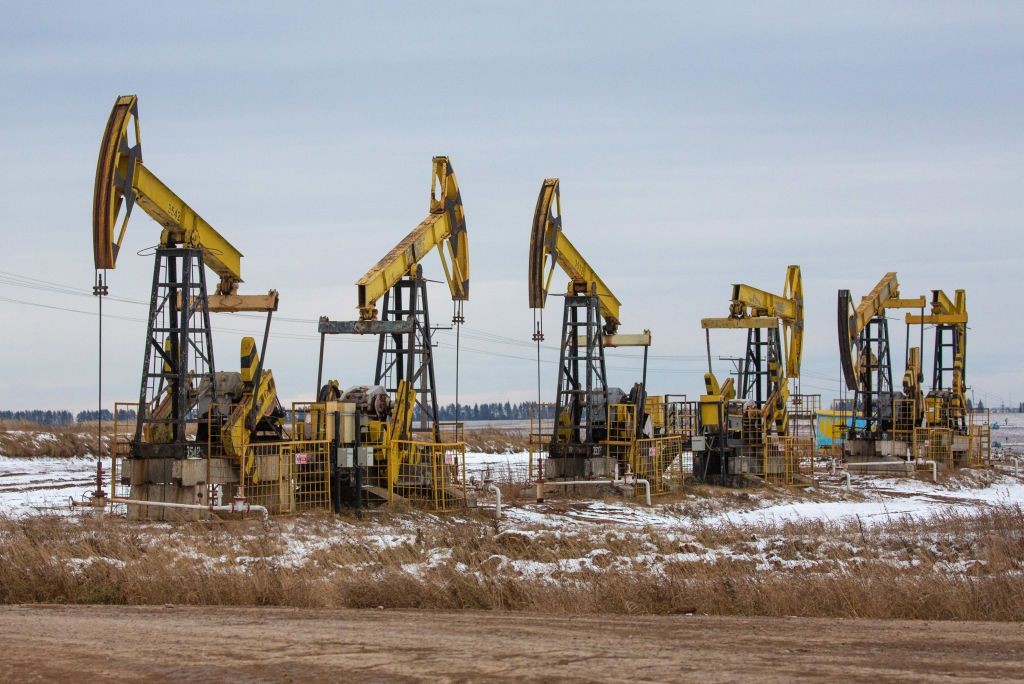
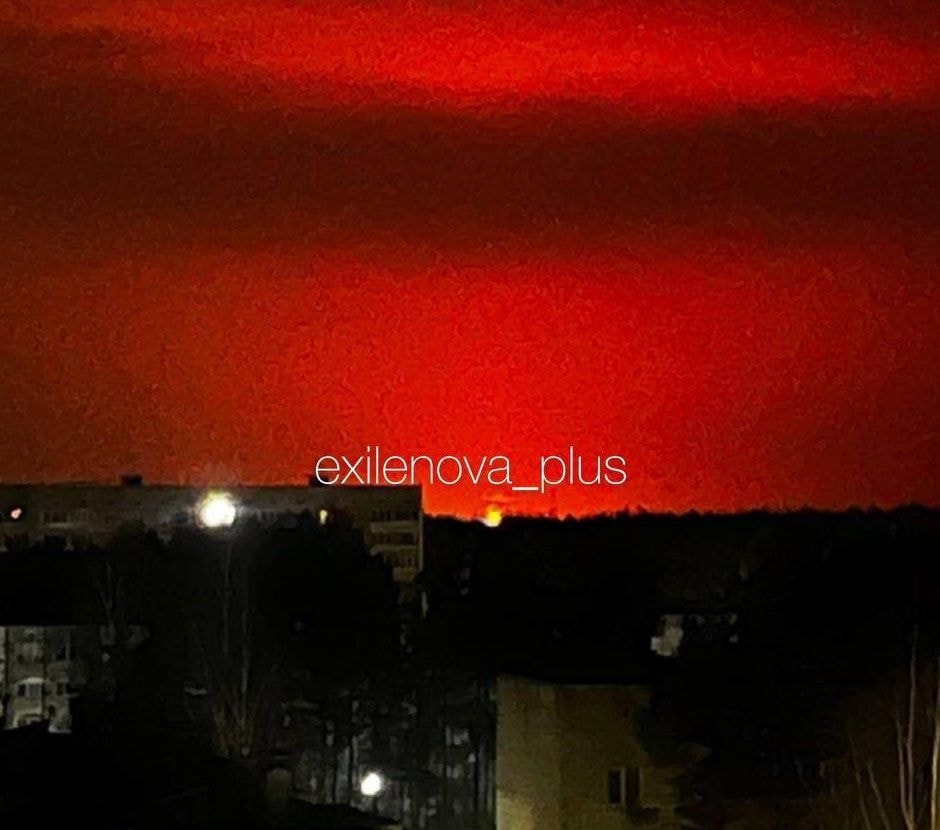
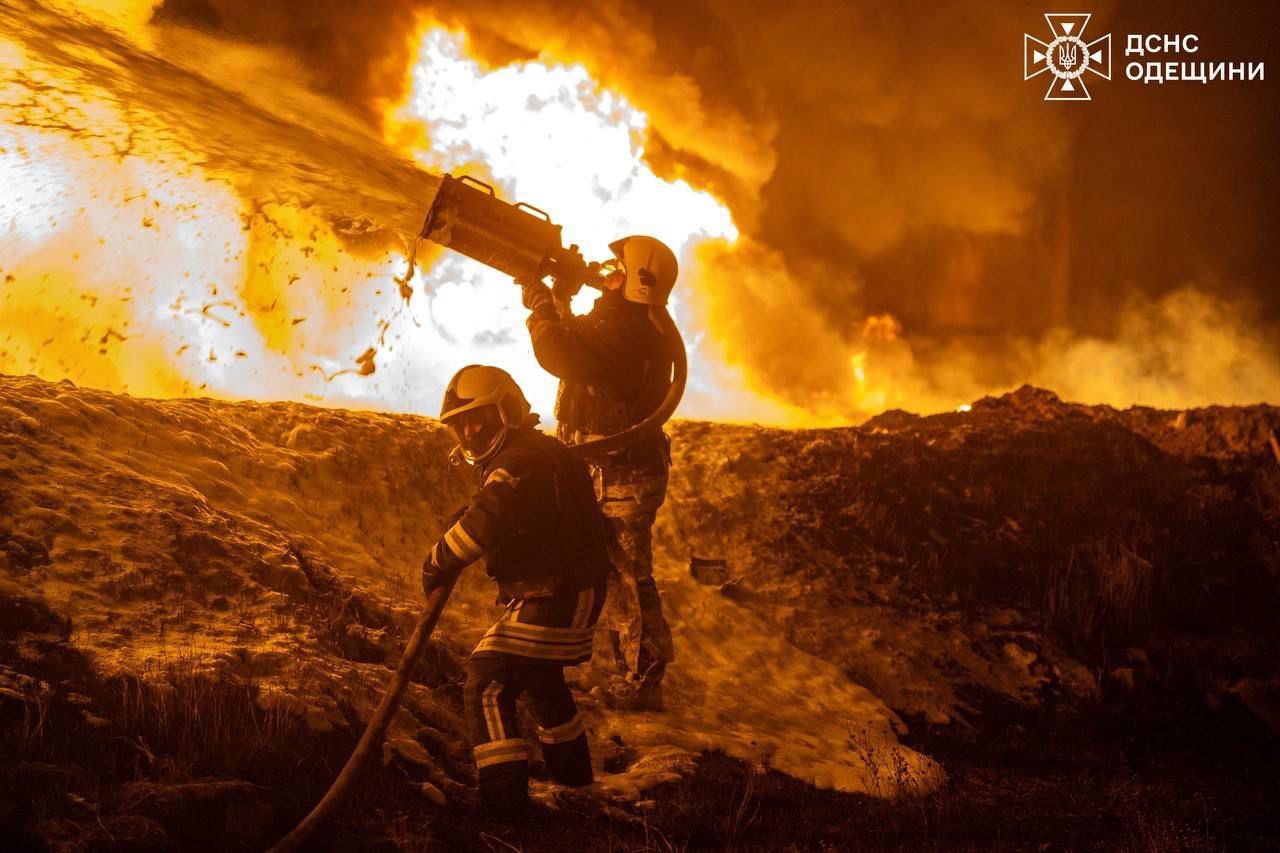
In southern Russia, Ukrainian forces struck the Tamanneftegaz oil terminal near the village of Volna in Krasnodar Krai. A fire was recorded at the facility, HUR said, adding that the extent of the damage is still being assessed. The terminal is located near the Kerch Strait, east of Russian-occupied Crimea.
The confirmation follows earlier claims by Krasnodar Krai Governor Veniamin Kondratyev, who said Ukrainian drones had targeted several sites in the region, including an oil depot in Volna. He said two people were injured and that emergency crews responded to multiple fires in the region.
Volna is located just east of Crimea's Kerch Peninsula and about 325 kilometers (200 miles) from Ukrainian-controlled territory near Nikopol.
HUR also said Ukrainian forces successfully struck a Pantsir-S1 air defense missile system near the village of Kacha in occupied Crimea.
The Pantsir is one of Russia's key modern air defense systems. The cost of a single system ranges from $15 to $20 million. It is considered the most effective against Ukrainian long-range drones.
In addition, a repair unit belonging to a Russian artillery brigade was reportedly hit near Vilne in occupied Donetsk Oblast, and a concentration area of Russian personnel was struck near Liubymivka in occupied Zaporizhzhia Oblast.
Kyiv considers energy infrastructure to be a military target as they directly fund Russia's war. Ukraine regularly strikes military infrastructure deep within Russia in an effort to diminish Moscow's fighting power as the Kremlin continues to wage its war against Ukraine.
An oil terminal near the village of Volna was also struck on Jan. 21, sparking a blaze, killing three people and injuring eight others, Kondratyev and independent media previously reported.
On Feb. 12, Ukraine struck a Russian 55Zh6U "Nebo-U" long-range radar station, estimated to be worth approximately $100 million, near Yevpatoriia in occupied Crimea, the General Staff of Ukraine’s Armed Forces later reported on Feb. 13.
The Alpha unit of Ukraine's Security Service (SBU) has destroyed half of Russia's stockpile of the coveted Pantsir air defense system with the "systemic destruction" of the system, the SBU announced Feb. 14.
Over 177,000 Russian soldiers killed in Ukraine identified by media investigation
Russian independent media outlet Mediazona, in collaboration with the BBC Russian service, has confirmed the identities of 177,433 Russian military personnel killed in Ukraine as of Feb. 13.
Since the media outlets' last update in early February, the names of 9,291 Russian soldiers have been added to the list of casualties.
The journalists note that the actual figures are likely significantly higher, as their verified information comes from public sources such as obituaries, posts by relatives, regional media reports, and statements from local authorities.
The confirmed death toll now includes over 57,200 volunteers, 21,400 recruited prisoners, and 17,000 mobilized soldiers, according to the media outlets. A total of 6,414 officers have also been confirmed to have been killed.
While Moscow does not disclose its casualty figures at all, President Volodymyr Zelensky told France TV in an interview on Feb. 4 that at least 55,000 Ukrainian soldiers have been killed on the battlefield since the start of Russia's full-scale war. Kyiv largely avoided commenting on its losses for the first two years of the full-scale invasion, until Zelensky announced in February 2024 that 31,000 Ukrainian troops had been killed.
Zelensky also told France TV that Russia would continue to incur staggering losses if it attempted to conquer all of eastern Ukraine by force of arms. His comments come amid the latest round of trilateral peace talks between Ukraine, Russia, and the U.S., where the status of Ukraine's eastern Donbas territory remains a major point of contention in negotiations.
Despite the heavy losses, Russia has been able to make marginal advances in Ukraine's front line region as it is able to offset its casualties through fresh contract soldiers. The Ukrainian open-source mapping project DeepState reported that Russian forces occupied 4,336 square kilometers (1,674 square miles) of Ukrainian territory in 2025, accounting for less than 1% of the country
The General Staff of Ukraine's Armed Forces estimates that as of Feb. 13, Russia has lost around 1,250,950 troops in Ukraine since Feb. 22, 2022. The figures do not specify killed or wounded, though the overall consensus is that it includes dead, wounded, missing, and captured.
Mediazona published the complete list of identified casualties for the first time in February, marking three years since Russia launched its full-scale invasion of Ukraine. According to the publication, volunteers manually enter and verify each record to prevent duplicate entries in the database.