Ukraine war latest: Russians in panic after Ukraine strikes St. Petersburg
 on Google
Editor's note: Got an opinion on anything you've read in the Kyiv Independent so far? Send it to letters@kyivindependent.com, and it may appear in our Letters section.
Key developments on June 4:
- 'What should we do?' Russians in panic after Ukraine strikes St. Petersburg
- Ukraine strikes Russian patrol ship in Sea of Azov, confirms damage to St. Petersburg oil terminal
- Why Ukraine is talking about ending 'hot phase' of Russia's war before winter
- Ukraine strips 8 military units of right to conduct basic training after inspections, Syrskyi says
- 'Heavy attack' hits Zaporizhzhia Thermal Power Plant, IAEA says
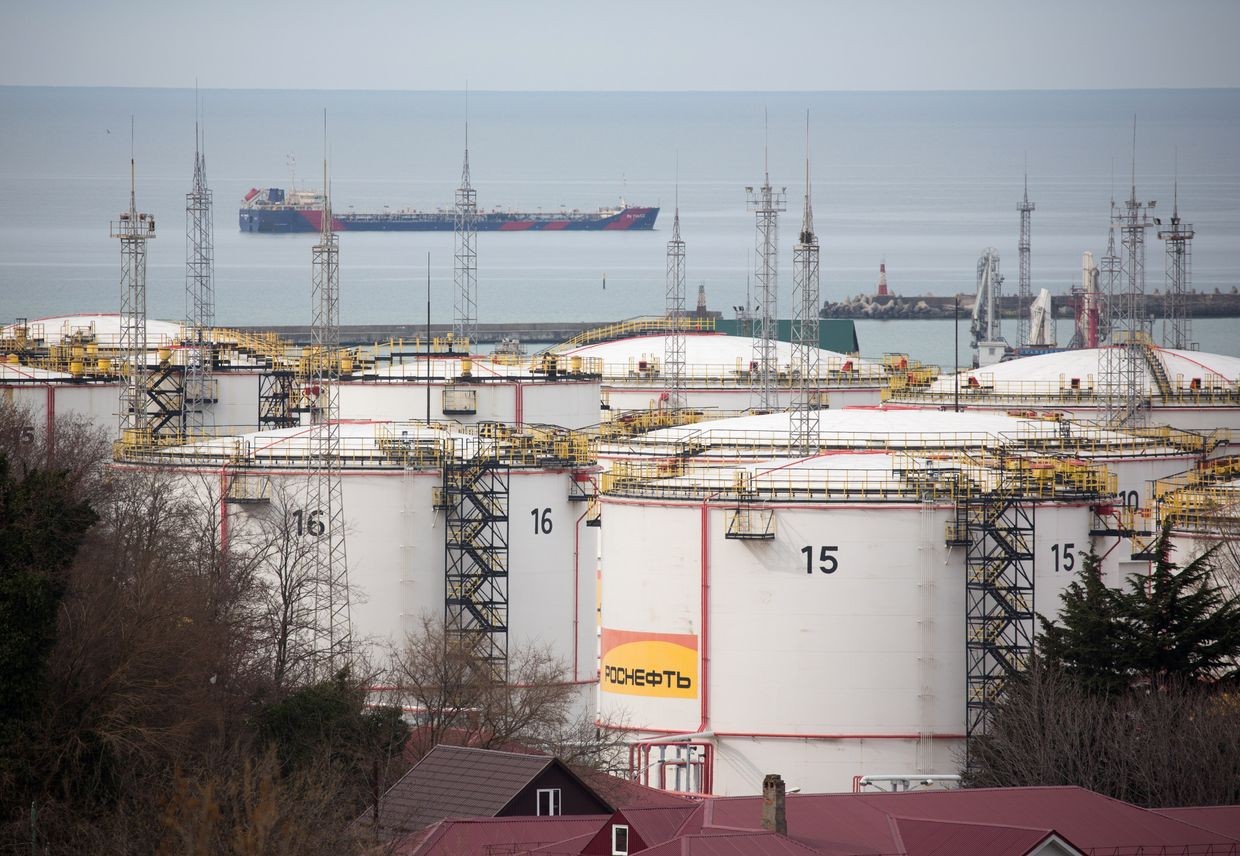
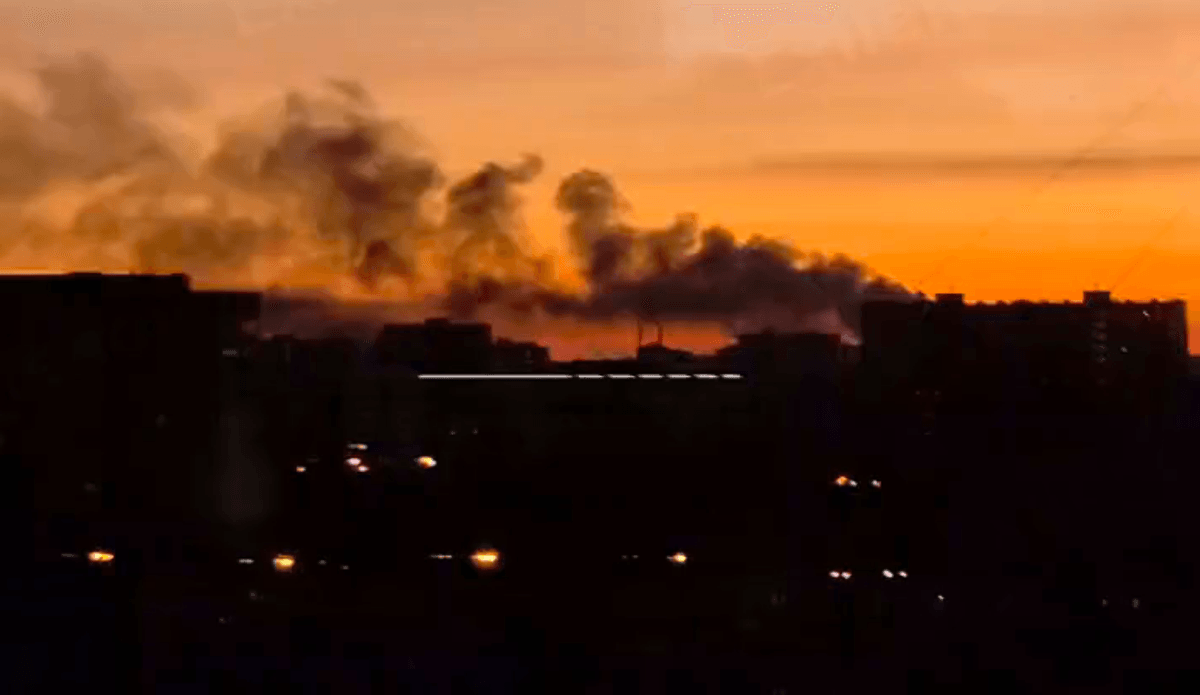
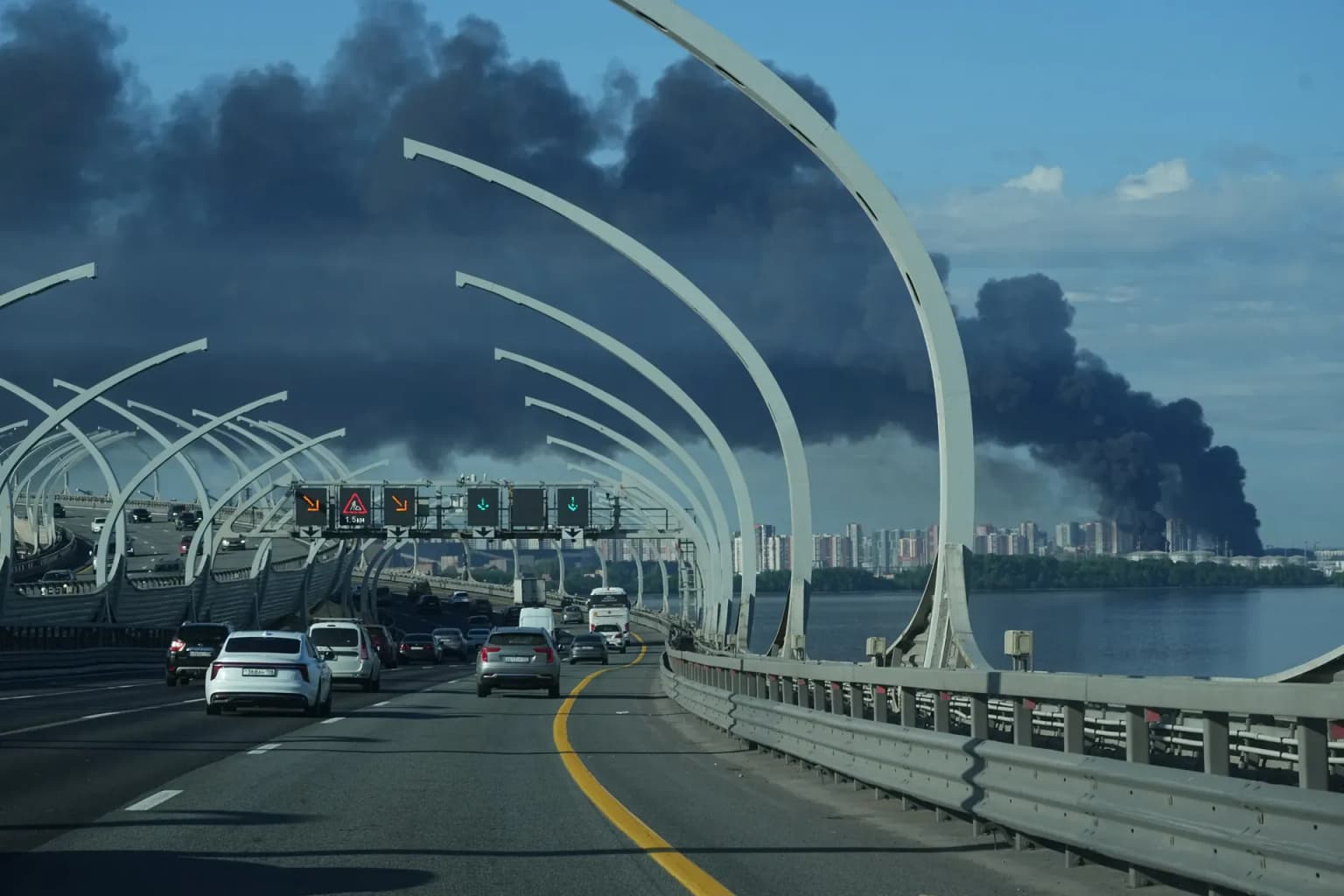
Following a Ukrainian drone strike that set fire to an oil terminal in Leningrad Oblast ahead of the St. Petersburg International Economic Forum on June 3, local residents and pro-Russian military bloggers have increasingly voiced doubts over whether even Russia's largest cities can still be considered safe.
"The business elite in St. Petersburg can now see firsthand how the Russian Defense Ministry is eroding their share of the so-called 'social contract,'" a Russian military blogger known by the nickname Reporter Filatov wrote on his Telegram channel.
"We should have foreseen the obvious and honestly predicted such raids two years ago."
As early visitors made their way to the pavilions hosting the annual economic forum in the hometown of Russian President Vladimir Putin, large columns of smoke were visible on the horizon following a Ukrainian strike on the local oil terminal. Ukraine's General Staff confirmed on June 4 that the strike destroyed one storage tank and damaged six others, along with two technical platforms.
At the same time, fuel supply disruptions are worsening in Russia and Russian-occupied territories as Ukrainian attacks on Russia's oil sector intensify. Several gas stations in St. Petersburg have also introduced restrictions, limiting customers to no more than 50 liters of fuel per purchase, according to Russian independent media outlet Astra.
Ukraine strikes Russian patrol ship in Sea of Azov, confirms damage to St. Petersburg oil terminal
Ukrainian forces struck several Russian military targets overnight on June 4, including a Project 10410 "Svetlyak" border patrol vessel in the Sea of Azov, Ukraine's General Staff said.
The vessel, measuring nearly 50 meters in length, was struck near the settlement of Iurkine in Russian-occupied Crimea, Unmanned Systems Forces commander Robert "Magyar" Brovdi said on Telegram.
Brovdi added that the boat was armed with 16 Igla man-portable air-defense system launchers, an AK-176 naval gun, as well as machine-gun mounts and six-barrel anti-aircraft autocannons. The crew consisted of 28 personnel, according to the commander.
The extent of the damage to the patrol vessel is still being assessed, the General Staff said.
In addition to the patrol vessel, Ukrainian forces also struck concentrations of Russian weapons and military equipment in Kharkiv Oblast, as well as a Russian army command post in Donetsk Oblast.
Ukrainian forces further hit an ammunition depot in Donetsk Oblast, fuel and lubricants storage sites in Russian-occupied Crimea and in the occupied part of Zaporizhzhia Oblast.
Inside Russia, a Ukrainian overnight strike also hit a gunpowder plant in Ryazan Oblast, sparking a fire covering more than 400 square meters.
Why Ukraine is talking about ending 'hot phase' of Russia's war before winter
Kyiv hopes U.S.-mediated peace talks with Moscow could yield results before winter as Ukrainian officials grow concerned about shortages of anti-missile systems and signs Russia may be preparing a new mobilization.
President Volodymyr Zelensky told lawmakers from his Servant of the People party in late May that Kyiv sees what he described as a realistic opportunity to end the war, according to two people familiar with the matter.
Head of Zelensky's office, Kyrylo Budanov, later publicly echoed that assessment, saying it was realistic to end Russia's war against Ukraine before winter 2026. And although Budanov has a history of making optimistic predictions about the war that have not materialized, this time, his remarks come amid more encouraging circumstances.
Lately, both expert analysis and public debate increasingly suggest the tide of the war is turning in Ukraine's favor.
Russian offensives have stalled, Ukrainian long-range strikes are intensifying and expanding deeper into Russia, and Moscow has failed to achieve the battlefield breakthroughs it promised.
But officials speaking to the Kyiv Independent describe a far more complicated picture they see behind closed doors.
Ukraine strips 8 military units of right to conduct basic training after inspections, Syrskyi says
Eight Ukrainian military units have lost the right to independently conduct basic training for new recruits following inspections in May, Commander-in-Chief Oleksandr Syrskyi said on June 4.
The inspections were conducted at 72 military units authorized to provide basic combined arms training at their own bases, Syrskyi said. Separate brigades and regiments were also instructed to review their capabilities and improve conditions and the curriculum for training.
"There are no untouchables," Syrskyi said. "The quality of military training must meet uniform high standards."
Syrskyi said Ukraine's military is continuing to update its basic training program to reflect the realities of the modern battlefield. The program now includes practical group exercises in detecting and destroying small drones, including copters and first-person-view (FPV) drones.
The changes follow previous efforts to overhaul military training as Ukraine faces a persistent manpower shortage and a battlefield increasingly dominated by drones.
'Heavy attack' hits Zaporizhzhia Thermal Power Plant, IAEA says
The Zaporizhzhia Thermal Power Plant, whose switchyard helps transmit electricity to the Russian-occupied Zaporizhzhia Nuclear Power Plant, came under a "heavy attack" on the morning of June 4, the International Atomic Energy Agency (IAEA) said on X.
The IAEA did not specify whether the attack was carried out by Russian or Ukrainian forces, noting that its team observed smoke rising from the thermal power plant and heard the sound of "military activity."
The news comes as the nuclear power plant experienced its 17th blackout since the start of the full-scale invasion on June 3, and its fifth so far in 2026. The outage was caused by a drone strike on the Nikopolska substation on the opposite bank of the Dnipro River from the plant, which is located in Ukrainian-controlled territory and is regularly affected by Russian attacks.
The IAEA said the June 4 incident is a matter of "serious concern" due to the facility's reliance on a single remaining power line supplying electricity to the Zaporizhzhia Nuclear Power Plant. In recent weeks, the line has been repeatedly cut, forcing the station to rely on emergency diesel generators to cool its six reactors.
The power line is currently still connected to the nuclear power plant, while staff at the facility remained in shelters as of the morning, according to the statement.