Sweden invokes Moscow's hybrid attacks in renewed push to use frozen Russian assets
 on Google
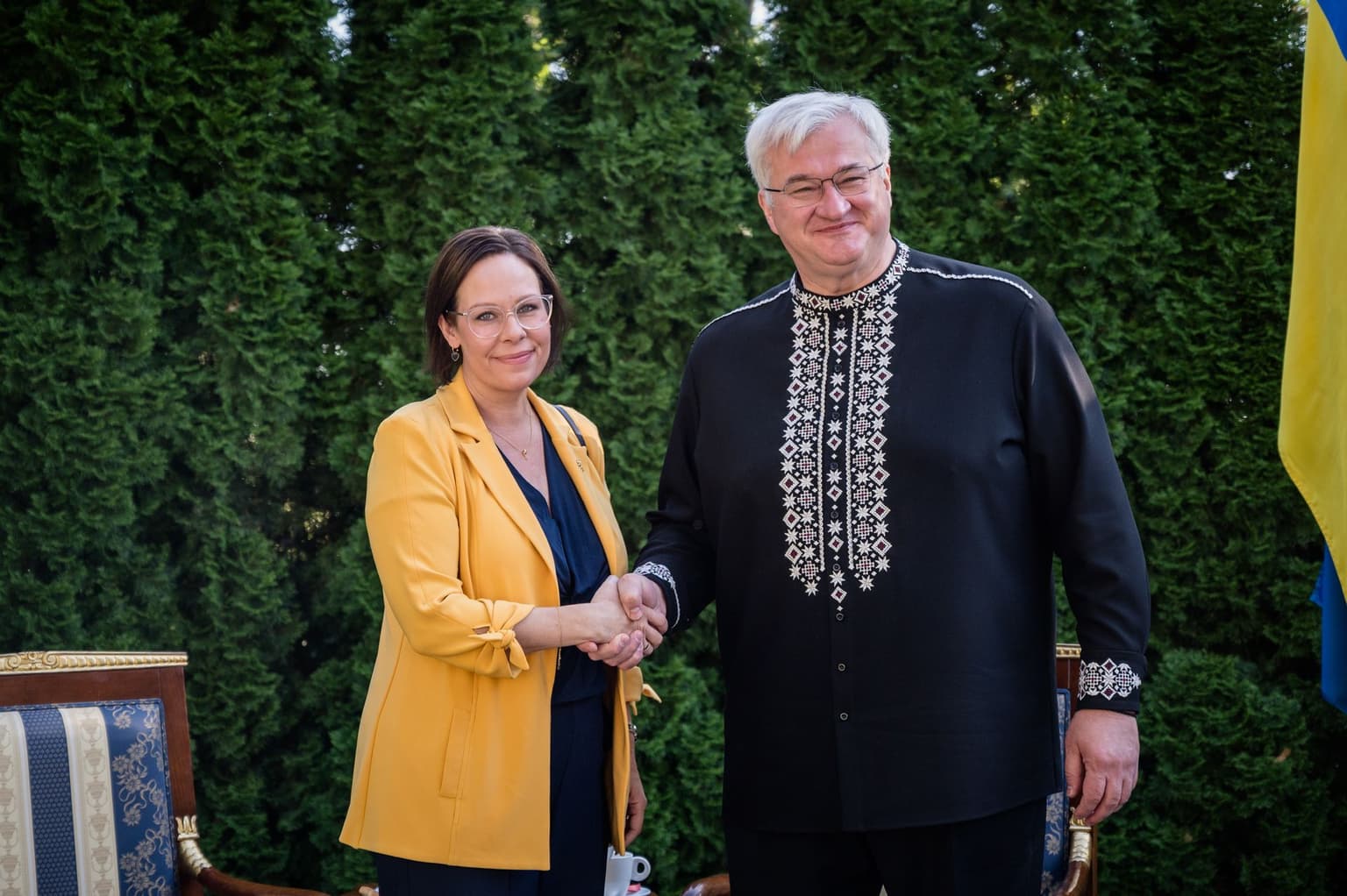
Swedish Foreign Minister Maria Malmer Stenergard on Sept. 2 pointed to Russia's escalating hybrid warfare against Europe when explaining the reasons for her country's renewed push to use Russian assets to support Ukraine.
The week before, Stenergard joined her Polish, Dutch, and Spanish counterparts in an open letter calling on foreign ministers to discuss the issue for the first time since talks fell apart in December 2025, and on the European Commission to come up with a workable compromise.
Tabling the frozen assets discussion is "the right thing to do, the fair thing to do," Stenergard told journalists from Wicklow, Ireland, where the foreign ministers' meeting is taking place.
When asked what is different now from when talks failed in December, Stenergard pointed at Russia.
"What has changed is Russian behavior. We see how they are becoming even more aggressive; we also see the hybrid attacks aimed at dividing us."
Her comments come after Germany, for the first time, identified Russia as being responsible for hybrid attacks against the country, and specifically the appearance of explosives-laden drones at Leipzig Airport on Aug. 4.
"The most fair thing to do, also for taxpayers, is to take the frozen assets and give them to Ukraine," Stenergard said.
Sweden is among the EU's so-called "frugal" countries and has voiced concerns about the size of the bloc's next seven-year budget, set to kick in from 2028 and being hotly debated in Brussels.
The latest draft of that budget contains some 131 billion euros ($152 billion) for defense and 89 billion euros ($103 billion) for direct support for Ukraine.
Some countries, notably Belgium, are concerned about using the Russian frozen assets to support Ukraine, because the vast majority, some 200 billion euros ($231 billion), is held with Euroclear, a clearing house based in Belgium.
If there are legal challenges against any use of the assets, Belgium would risk losing, and the government fears it would then have to find a spare 200 billion euros to reimburse Euroclear on its own.
Belgium has since signaled that it would be open to discussing the issue, but emphasized that risks have to be shared.
Luxembourg's Foreign Minister Xavier Bettel also appears sympathetic to that position, telling journalists at the same meeting, "I am still waiting for the solidarity mechanism."
"If there's a decision that someone has to pay... I want solidarity from the 26 (other member states)," he said.
Bettel quipped that when the discussion of solidarity surfaces, he finds some leaders "burying their heads in the sand, like ostriches."
Even so, Bettel said he remained "constructive and open to all pragmatic solutions."
"The key here is to split the risk between all member states," Stenergard told journalists.
"I urge the (European) Commission to come back with such a proposal... I hope as soon as possible, because Ukraine cannot wait."