Russia's escalating port attacks choke Ukraine's grain exports as industry nears crisis
 on Google
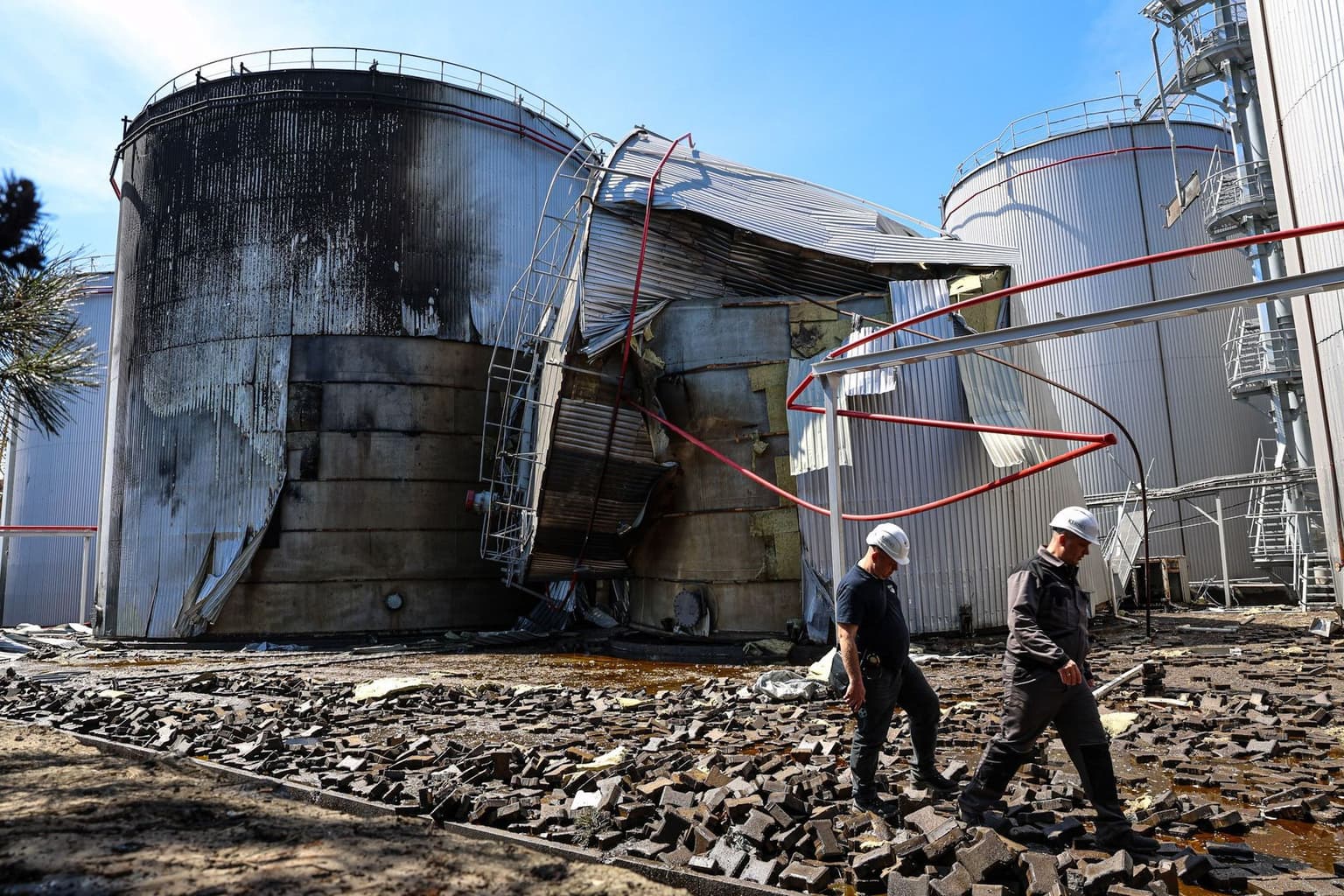
Ukrainian farmers are bearing the brunt of Russia’s intensified bombing campaign targeting seaports, terminals, and cargo ships as agricultural exports decline, freight costs rise, and vessels avoid docking at Ukrainian ports.
While the grain corridor — a Black Sea shipping route that handles 90% of Ukraine’s agricultural exports — has not been officially closed, it is under enormous strain as Russia steps up missile attacks on the southern Odesa Oblast, Oleh Khomenko, CEO of the Ukrainian Agribusiness Club (UCAB), told the Kyiv Independent on July 24.
"Many shipowners are no longer authorizing their vessels to enter Ukrainian ports because of security risks," he said.
"Only vessels that entered the ports before the latest escalation remain there for loading, while new arrivals are very limited. This is creating a de facto slowdown of the maritime export corridor rather than a formal closure."
Freight rates have doubled over the past week, with the cost of shipping grain rising from about $24 per metric ton to about $47 per metric ton. As a result, agricultural producers should expect their earnings to decline in the short term, Khomenko said.
Exports are likely to decline over the coming months until Ukraine expands alternative logistics routes by road, rail, and the Danube River, he added. But those routes are more expensive and cannot match the efficiency of the Black Sea corridor.
Russia’s intensified campaign comes as Ukraine successfully strikes the Kremlin’s oil industry, Moscow’s primary source of revenue. In response, Russia appears to be targeting one of Ukraine’s most important economic sectors: agricultural exports, which generated $22 billion last year.
Farmers were already operating in survival mode earlier this year after Iran blocked ships through the Strait of Hormuz following U.S. and Israeli strikes on Tehran on Feb. 28, throttling roughly one-third of global seaborne fertilizer trade. Soaring fertilizer prices forced farmers either to pay more or to reduce spring planting.
The grain corridor has been a lifeline for Ukraine’s agriculture sector since Russia initially blocked Black Sea exports during the first year of its full-scale invasion. After the Black Sea grain deal collapsed in 2023, Kyiv established its own shipping corridor to allow commercial vessels to sail safely.
Now, Russia is stepping up attacks in an effort to choke the corridor, President Volodymyr Zelensky said on July 23. He said Russia targeted every vessel approaching Ukraine on July 22, preventing ships from entering port.
Between June 20 and July 20 alone, Russia attacked 28 civilian vessels in the ports of Greater Odesa, killing 21 people and injuring 34, Inna Verba, spokeswoman for the Odesa Regional Prosecutor’s Office, told Radio Free Europe on July 22. Missile strikes are also becoming more frequent, she said.
Ukrainian agribusinesses have been sounding the alarm for weeks, but the country faces a shortage of critical air defense systems. The government also lacks effective mechanisms to quickly restore damaged port infrastructure, according to port operators. They warn the consequences could be catastrophic for the industry.
"The situation in the ports of Odesa Oblast has reached a critical point. Systematic Russian shelling is destroying the logistical heart of Ukraine," the All-Ukrainian Agrarian Council (VAR), a farmers’ union, said in a public statement on July 10.
"If the terminals lose their ability to recover quickly, exports will collapse, storage facilities will overflow, and farmers will be left without the working capital needed to finance the next planting season. That would threaten the food security of both Ukraine and the world."