Stray Ukrainian naval drone explodes at Romania's Black Sea port
 on Google
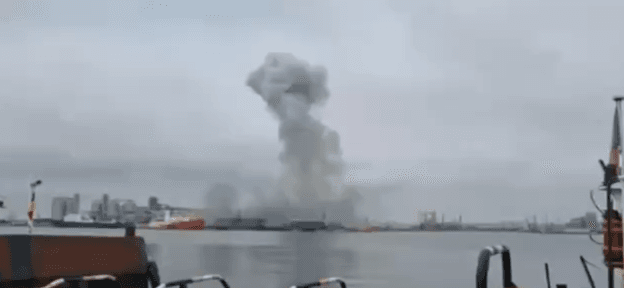
A Ukrainian naval drone exploded in the Romanian Black Sea port of Constanta on June 5 after it was allegedly hit by electronic warfare interference.
The Ukrainian Navy confirmed that it lost control of the drone in the Black Sea due to jamming, causing it to drift toward the Romanian coast.
"The Ukrainian Naval Forces provided the necessary information to the Romanian Navy in order to prevent any civilian casualties," the Ukrainian Navy said.
The drone was spotted in the early morning hours and self-detonated at around 10:30 a.m. local time. Authorities evacuated the area, and no casualties were reported.
The drone was one of four unmanned Ukrainian vessels that had gone out of control during a military operation against Russia, Romanian President Nicusor Dan said.
"In addition to the drone that self-destructed in the Port of Constanta, a second one self-detonated offshore near the port under the monitoring of the Coast Guard, while two other drones exploded approximately 145 kilometers (90 miles) east of Constanta," Dan said.
"None of these drones caused casualties or significant damage," the Romanian president said, adding that Romanian authorities have maintained contact with Kyiv, as well as EU and NATO partners.
He stressed that the "entry of this drone into Romanian sovereign territory is a direct consequence of Russia's war against Ukraine."
The case follows numerous cases of both Russian and Ukrainian drones straying into the territory of NATO countries amid the ongoing all-out war, sometimes as a result of air defense fire or jamming.
According to Bucharest, a stray Russian Shahed-type aerial drone struck a residential building in the Romanian city of Galati on May 29, injuring two people. Greece, in turn, protested to Kyiv over what it says was a Ukrainian naval drone armed with explosives recently found near a Greek island.
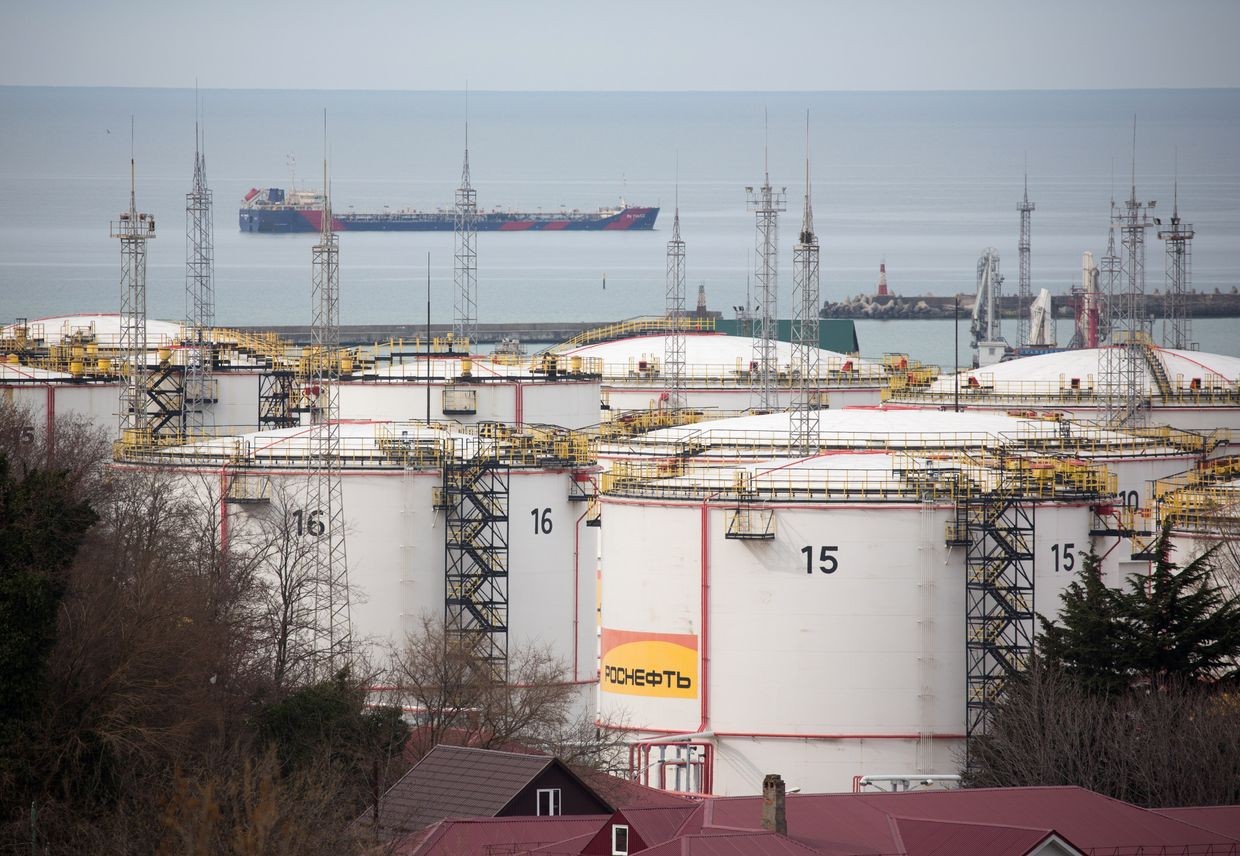
Romanian news outlet Digi24 wrote that the exploded naval drone became stranded a few hundred meters from an oil terminal at Constanta Port.
Some European officials have speculated that Ukrainian drones may use automated targeting systems designed to strike Russian energy infrastructure, meaning they inadvertently target such sites even on NATO territory when they stray off course.
Ukraine has previously accused Moscow of using electronic warfare to divert Ukrainian drones into NATO countries to drive a wedge between Kyiv and its allies.
European officials have described the latest incident in Romania as a result of Russian aggression against Ukraine.
"Full solidarity and support to Romania following the drone explosion in the port of Constanta this morning," European Council President Antonio Costa said in reaction to the latest incident.
"These incidents are a direct consequence of Russia's war of aggression against Ukraine."
The Ukrainian Foreign Ministry stressed that this "incident shows once again that Russia's ongoing full-scale aggression poses a threat not only to Ukraine, but to the entire region."
"Effective coordination is key to mitigate its consequences to neighboring countries," said Herohii Tykhyi, the ministry's spokesperson.