Fertilizers: End the free pass for the merchants of death
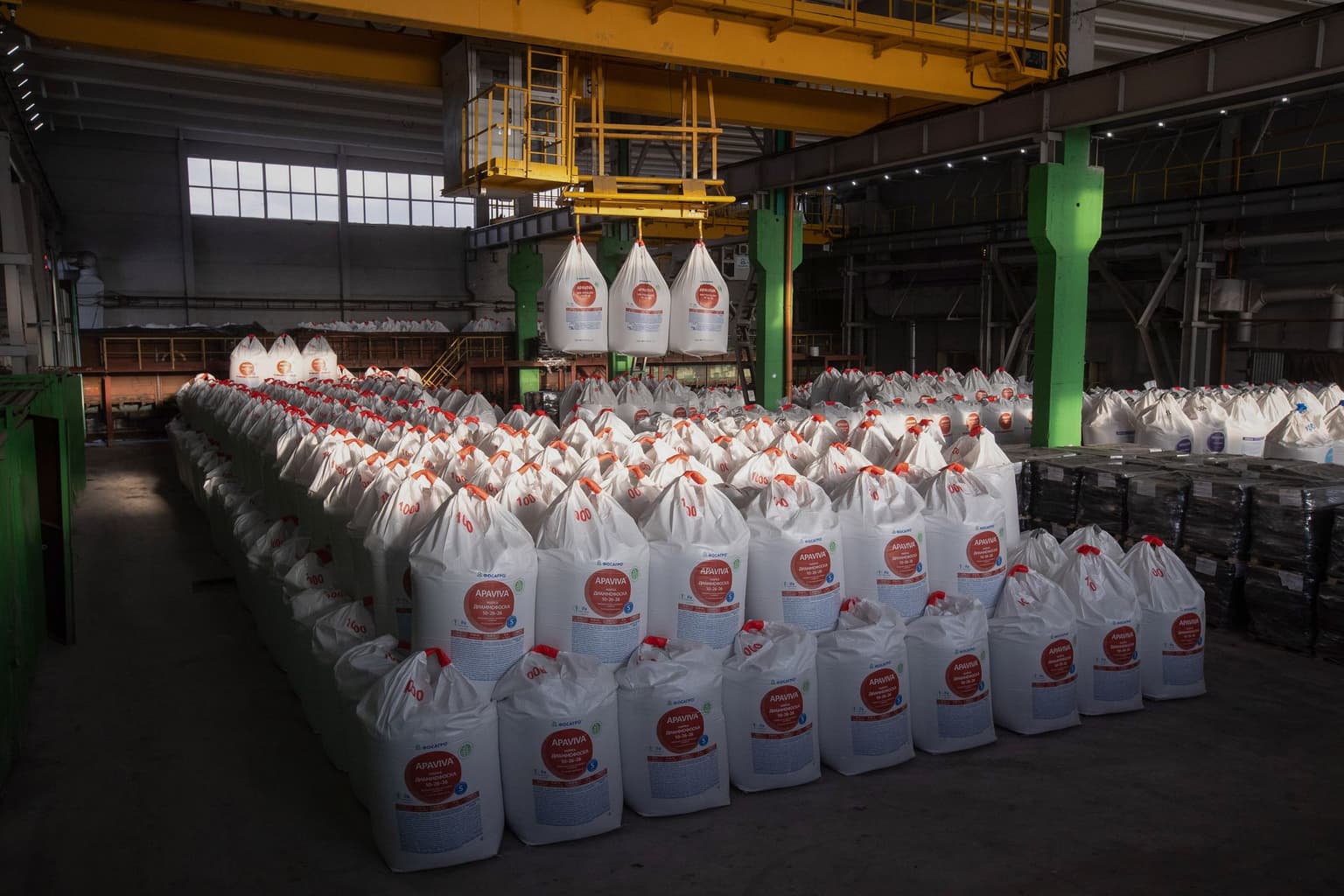
A worker operates a crane to lift sacks of Apaviva NPK(S) phosphate fertilizer at the PhosAgro-Cherepovets fertilizer plant, operated by PhosAgro PJSC, in Cherepovets, Russia, on Dec. 2, 2021. (Andrey Rudakov / Bloomberg via Getty Images)
 on Google
Alan Riley
Visiting Professor at the College of Europe
Ever since the full-scale invasion of Ukraine in February 2022, the Russian fertilizer industry has had a sanctions-free pass.
One can see why such a free pass was granted. When it came to Russian fertilizer exports, both the U.S. and the EU prioritized food security. They did not want to increase food prices and reduce food security by banning Russian fertilizer.
While that was an understandable reaction, it overlooked the role that fertilizer plays in munitions production.
Fertilizer production is inherently dual-use, and in wartime it is critical. As a result, that food security free pass has enabled and enriched the Russian fertilizer industry and Russia's financial capacity to wage war.
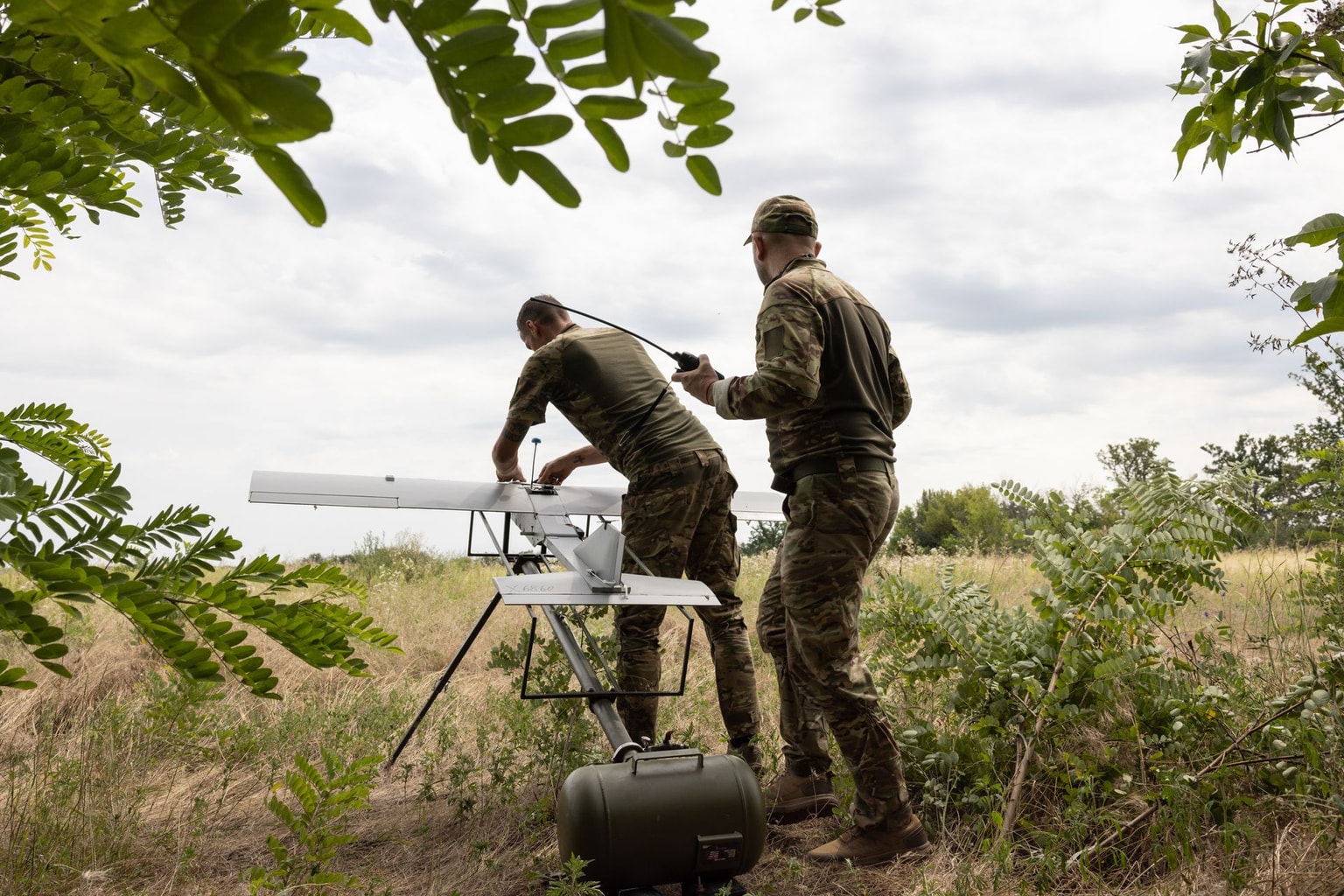
In addition, it has provided the Russian military with the explosives it needs to continue its attacks against Ukraine. The only truly significant sanctions that have fallen on the Russian fertilizer industry are those that fall from the sky in the shape of Ukrainian drones.
The EU has only belatedly begun to limit Russian fertilizer imports, and the U.S. has no tariff or sanction regime at all on the sector.
The most significant part of the fertilizer industry, and that which makes up approximately 75% of globally traded fertilizers, is a nitrogen-based one. The ultimate source of nitrogen fertilizer is a fossil fuel, usually natural gas, which is used to produce ammonia, the base product for all nitrogen fertilizers.
However, in addition to producing fertilizers to assist food production, the ammonia-based product can be used to produce downstream chemical precursor products vital for explosives, such as nitric acid and ammonium nitrate.
During the war, these downstream products vital for explosives production have been produced in large quantities by the Russian fertilizer industry.
The two principal producers are Eurochem and Uralchecm. We know, for instance, from Reuters and Bloomberg reports that Eurochem shipped 5000 tonnes of nitric acid from its Nevinnomyssk Azot plant to the Russian munitions industry between 2022 and 2024.
To give some sense of the impact of 5000 tonnes of nitric acid, it can provide the key explosive filling ingredient for 500,000 large caliber shells.

Uralchem provided 27,000 tonnes of ammonium nitrate and 6000 tonnes of nitric acid from its Bereznki plant in the same 2022-2024 period.
Toaz, which is also controlled by Uralchem, is one of the world's largest producers of ammonia, the base chemical for most explosives, and therefore, from the point of view of the Russian state, is a critical chokepoint in its explosives production supply chain.
The food security focus of European and U.S. policymakers has, until recently, led them to wholly ignore the security threat posed by the Russian fertilizer sector.
Even now, the EU has only imposed limited progressive tariffs on Russian fertilizers, which began to be imposed in mid-2025.
The U.S. situation is worse. There are still no tariffs or sanctions whatsoever on Russian fertilizers entering the U.S. While Brussels and Washington have taken a long time to recognize the security threat posed by the Russian fertilizer industry, this is not the case in Kyiv. Ukrainian drones have hit the Nevinnomyssk plant at least seven times, and the main Togliattiazot ammonia production facility controlled by Mazepin at least three times.
The sanctions regime on both Russian fertilizer executives and their companies remains fragmented to non-existent to being shot through with loopholes.
There are no corporate sanctions on the Russian fertilizer sector, and only a limited tariff regime for fertilizers entering the EU; personal sanctions remain fragmented.
It is true that various Russian actors sought to avoid sanctions. If we take the two principal owners of Eurochem and Uralchem at the onset of the war, like other owners in the sector, they had tried to reduce their nominal control of their companies to avoid sanctions.
Andrey Melnichenko at Eurochem handed his wife control of his companies via a trust, and Dmitry Mazepin at Uralchem nominally reduced his shareholding of Uralchem to 48% from 100%.

Western courts, however, have not been convinced by such mechanisms. For example, in North-West 2 v. Societe Generale, the English High Court was not particularly impressed by this "trust maneuver" and held that Melnichenko still owned and controlled Eurochem.
Still, their corporate entities have not been subject to sanctions.
It is true that both Mazepin and Melnichenko have been subject to personal sanctions. Nevertheless, those sanctions have been fragmented. So while Melnichenko is subject to U.S. and EU sanctions from a number of third states, Mazepin has been sanctioned by the EU, not the U.S.
Given their role and that of their companies in underpinning the Russian war effort, there is a compelling justification for comprehensive Western sanctions both on the individuals who ultimately control and run these companies and the companies themselves.
This argument is reinforced by their proximity to the Russian leadership. The de facto owners of Eurochem and Uralchem were at the meeting of business leaders at the Kremlin on the first day of the war, and have both been condemned by the EU courts as close to the Russian leadership.
That proximity in respect of Melnichenko is underlined by his recent article in the Economist, in which he pleaded for the West to understand Russia's legitimate concerns. An article that could not have been written and published without the highest level of clearance from within the Kremlin.
Equally, Mazepin, in his long-running ‘corporate raid’ to control and then sustain his control over the ammonia firm Togliattiazot, was only possible due to his proximity to power, which gave Mazepin his capacity to deploy state resources to carry out and sustain that raid.
It should be possible for the Western allies to ensure that comprehensive personal sanctions are imposed on the de facto owners, shareholders, board members, and managers of the Russian fertilizer sector. After all, they are collectively benefiting from the death and suffering being inflicted on Ukrainian civilians in this war.
It is admittedly more difficult to just cut off Russian fertilizer flows. However, it is possible for the West to develop alternatives both for itself and the wider world.
Critically, the key source feedstock, natural gas, exists in enormous quantities in the United States. Yet the U.S. remains a significant importer of fertilizer. The U.S. could transform fertilizer production rather like the way it went from being a net importer of liquid natural gas (LNG) to being the world's largest exporter of LNG; it has the resource base to become the world's largest fertilizer exporter.
In so doing, it would secure food supplies and push the merchants of death in the Russian fertilizer industry out of global markets.
Editor's note: The opinions expressed in the op-ed section are those of the authors and do not purport to reflect the views of the Kyiv Independent.