News Feed

Russian drones force Kyiv children to hide in metro as school year begins

2 min read
Russian drones force Kyiv children to hide in metro as school year begins
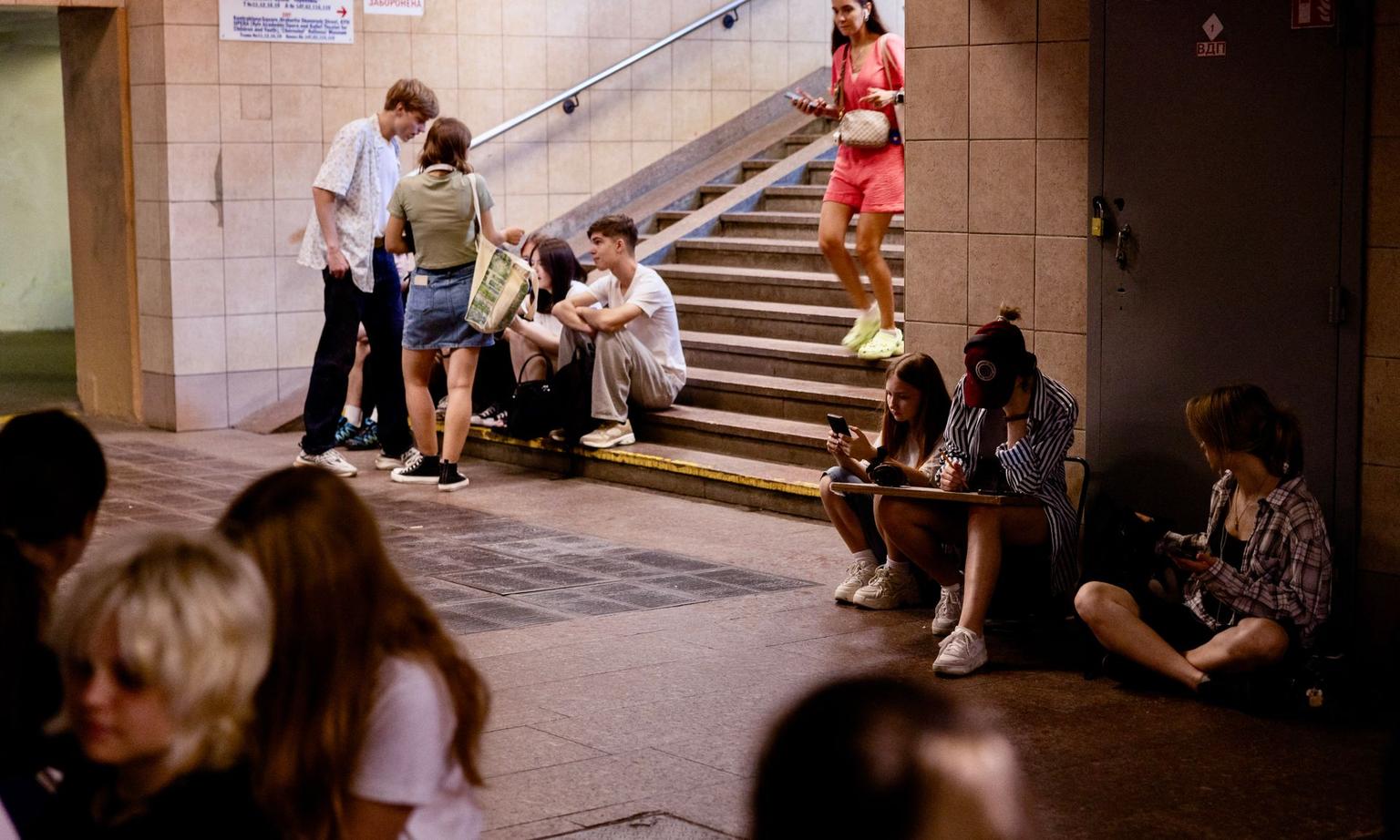
Local residents wait for the end of an air alarm at one of the subway stations in central Kyiv, on Sept. 2, 2025. (Tetiana Dzhafarova / AFP)

Kyiv schoolchildren were forced to hide in the subway on Sept. 2 as Russian drones triggered air raid sirens across the capital, disrupting the start of the new school year.

Ukraine's academic year officially began on Sept. 1, but air alerts regularly interrupt classes nationwide. Students and teachers have adapted by moving lessons to underground shelters or switching to online instruction when possible.

The Sept. 2 air alert, triggered by Russian drones, began at 9:20 a.m. local time and lasted over three hours, catching many children on their way to school before classes could start.

The disruptions have become part of daily life for Ukraine's students. According to the Save the Children NGO, air raid sirens forced children to miss an average of one in every five lessons during the 2024–25 school year, with far greater disruptions in front-line regions.

Kharkiv, located near the Russian border, has responded by opening seven newly built underground schools for 17,000 pupils.

Some are situated three stories below ground, offering classrooms designed to withstand missile and drone attacks.

Despite the resilience of students and teachers, Ukraine's education system has been severely strained by the war.

At the start of the 2024–25 school year, the State Statistics Service recorded just 3.74 million students across all forms of education — the lowest figure in three decades.

Recent months saw Russia once again ramp up aerial strikes against Kyiv and other cities, despite U.S. President Donald Trump's push for a peace deal and threats of sanctions.


Avatar
Tim Zadorozhnyy

Reporter

Tim Zadorozhnyy is a reporter at the Kyiv Independent covering foreign policy, U.S.-Ukraine relations, and political developments across Europe and Russia. He studied International Relations and European Studies at Lazarski University and Coventry University. Tim began his journalism career in Odesa in 2022 as a reporter for a local television channel. He later spent a year and a half at the Belarusian independent media outlet NEXTA, first as a news anchor and later as a managing editor. He is fluent in English, Ukrainian, and Russian.

Read more
News Feed

During a meeting with Energy Minister Denys Shmyhal on July 12, President Volodymyr Zelensky stressed the need to take additional "more decisive" steps to protect Ukraine's energy infrastructure and emphasized the importance of robust winter preparedness plans for communities and regions.

 (Updated:  )

Yulia Svyrydenko, who replaced former Prime Minister Denys Shmyhal in July 2025, will now take on a new role leading cooperation with Ukraine’s key partners, Zelensky announced on social media.

Video

Once promoted by the Kremlin as a symbol of Russia’s resurgence and a premier tourist destination, the peninsula now faces mounting pressure from Ukrainian drone strikes targeting military infrastructure, logistics, and supply routes.

President Volodymyr Zelensky said on July 11 that he is preparing changes to Ukraine’s “diplomatic efforts” to accelerate weapons deliveries from allies, as Ukraine's stockpile of Patriot air defense missiles has run dry.

Show More