German photo prize shortlists Kremlin media-linked photographer for occupied Mariupol series
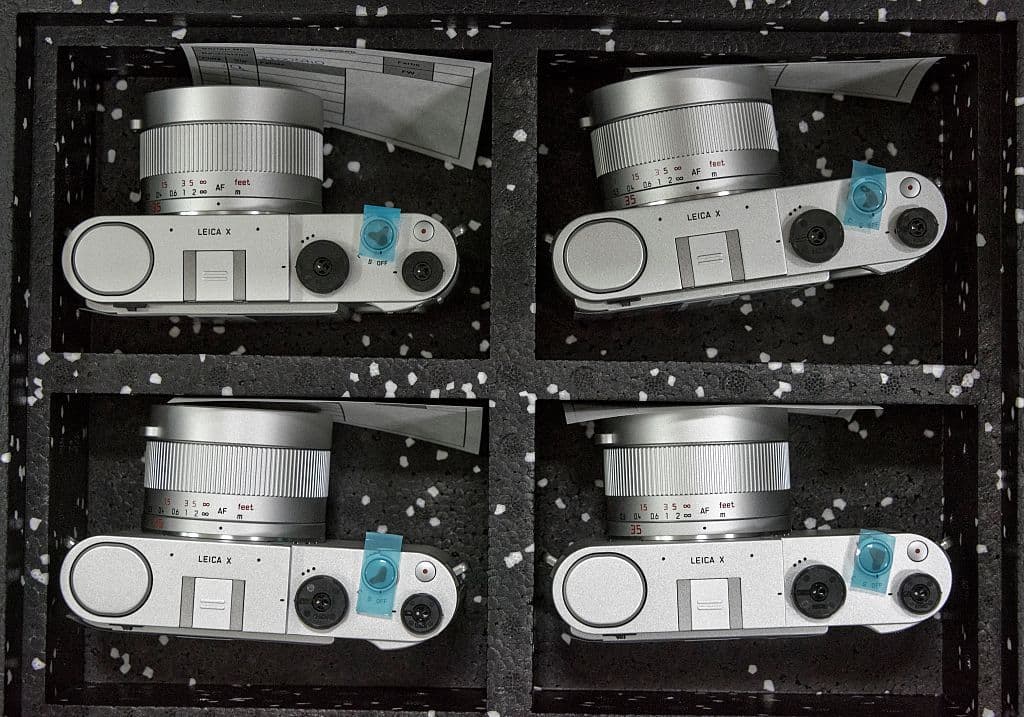
Leica X cameras, at Leica Camera AG complex in Wetzlar, Germany, Oct. 29, 2014. The first Leica was designed in 1913 by Oskar Barnack, a small camera that used 35mm film. (Horacio Villalobos/Corbis via Getty Images)
 on Google
A Russian photographer with ties to Kremlin-backed media has been shortlisted for one of Germany's leading photography awards for his series on occupied Mariupol, raising concerns about how Russian narratives are reaching Western audiences through major cultural institutions.
Since 1979, the Leica Oskar Barnack Award has honored photographers from all over the world whose work captures humanity's relationship with the environment.
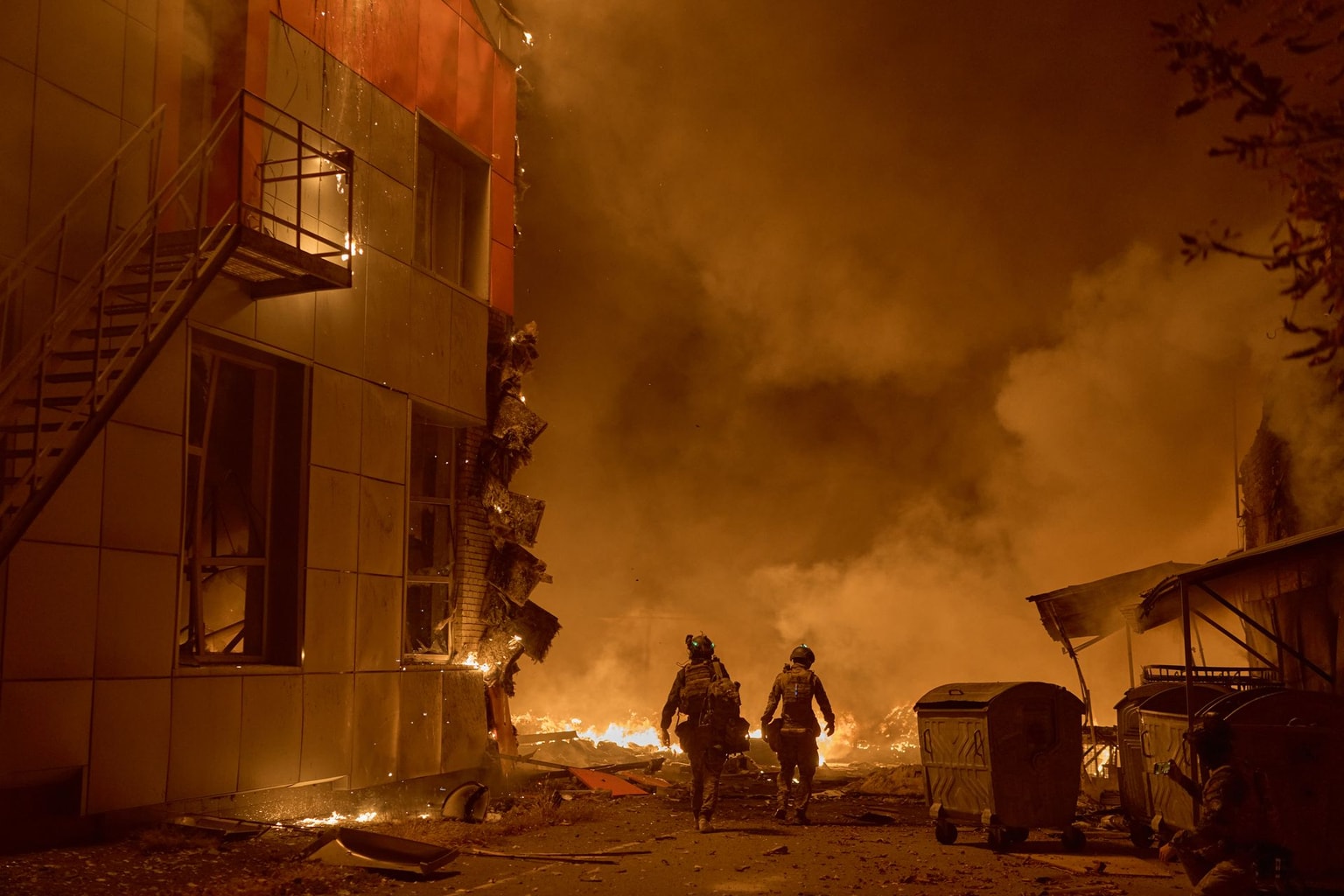
The photos in Valery Melnikov's series "Open Wounds" portray destroyed buildings and desolate people in the Ukrainian port city, which the Russian military besieged in 2022.
However, like much of Melnikov's work, he avoids condemning the Russian military, which blockaded, bombed, and ultimately occupied the city.
Melnikov has consistently showcased his work on the war in Ukraine to international audiences using neutral language.
In an artist statement on Melnikov's website, he says that he is most interested in the "third side" of the war — the side of "ordinary civilian people."
"Being 'neutral' when Russia wages a genocidal war against Ukraine means siding with perpetrators of crimes."
This deliberate choice of words not only lets him sidestep direct condemnation of Russia's crimes but also suggests, to a less-informed audience, that Ukraine shares some responsibility for the devastation.
"Being 'neutral' when Russia wages a genocidal war against Ukraine means siding with perpetrators of crimes," Ukrainian photo critic Dmytro Kyyan, who was the founding editor of Foto & Video Magazine in Moscow in the 1990s, told the Kyiv Independent.

"There is no doubt that Melnikov knows the definition of the word 'ethics' and so, it is also undoubtedly true that he has been positioning himself quite comfortably as unethical, taking into account his many illegal trips to the occupied parts of Ukraine since 2014."
Melnikov's previous series "Black Days of Ukraine," about the 2014 war in Donetsk and Luhansk oblasts, employs similarly deceptive language by presenting Russia's initial invasion as a conflict between Ukraine and so-called separatists.
There is no mention of Russian soldiers in the artist statement for "Black Days of Ukraine" on his website — just "self-proclaimed people's republics," the term Russian occupation authorities use to justify their narrative of "separatists" in Eastern Ukraine.
The description for his series "Gray Zone" also furthers this idea by subtle references to "the people of Donbas," as if those who live there do not fully belong to Ukraine.
While the description of the "Open Wounds" series on the Leica Oskar Barnack Award's website acknowledges that Mariupol is a Ukrainian city and was under siege by Russia at the start of the full-scale invasion in 2022, it makes no mention that it is currently under Russian occupation.
Instead, the description only emphasizes that Melnikov's work "focuses on residents who have remained in the city and suffer the unbearable humanitarian consequences of the war."
Given the extensive surveillance imposed by Russian authorities in Ukraine's occupied territories, it is highly unlikely Melnikov could have worked there without their knowledge — and, by extension, their approval.
"Seeing a series hypocritically titled 'Open Wounds,' taken by a Russian photographer in an occupied Ukrainian city, raises a serious question regarding the moral principles of the (Leica Oskar Barnack Award's) international jury."
Based on publicly available information, Melnikov has connections to Russian state media, making him part of one of the Kremlin's most influential propaganda tools.
His biography on the World Press Photo's website indicates that he has worked for Rossiya Segodnya (Russia Today), a Russian state-owned news agency, since 2009.
Rossiya Segodnya oversees several major media brands within Russia, including RIA Novosti and Sputnik.
Melnikov was listed as a judge for the 2025 Andrei Stenin Contest for young photojournalists, which is organized by the Rossiya Segodnya media group. The prize is named after a photographer who was killed in 2014 covering the war from Russia's side for RIA Novosti.

Although Melnikov claims to focus on the "humanitarian" side of the war in Ukraine, independent of politics, Russian state media coverage leaves no doubt that his work serves the Kremlin's narrative.
On RIA Novosti's website, an article from 2025 also details how Melnikov's work as a photojournalist is included in a Japanese historian's book about "the genocide committed by Ukraine in the Donbas" since 2014.
There is also a 2023 article on Rossiya Segodnya's website about Melnikov's photo exhibition "Returning Home," held at the Victory Museum in Moscow, which tells the "poignant stories" of families being "reunited" after Russia's "liberation" of Ukraine's Donetsk and Luhansk oblasts.
Melnikov's work with Russian state media — which openly pushes narratives justifying Russia's war against Ukraine — raises serious concerns about the extent of his international recognition, especially when respected Western institutions are the ones helping to elevate these narratives, according to Kyyan.
"Seeing a series hypocritically titled 'Open Wounds,' taken by a Russian photographer in an occupied Ukrainian city, raises a serious question regarding the moral principles of the (Leica Oskar Barnack Award's) international jury if they know that this photographer is associated with the Russian propaganda network that is nothing more than a 21st-century version of Die Deutsche Wochenschau in Nazi Germany," Kyyan said.

Ukrainian photographer Evgeniy Maloletka, who risked his life to document Russian war crimes in Mariupol at the start of the full-scale war, told the Kyiv Independent that the work of photographers like Melnikov is part of Russia's efforts to "use soft power to push their narrative to the world."
"War is always covered by media professionals from various angles. This has been the case in the past and will continue to be the case. But the visual context is unquestionable," Maloletka said.
"For us as Ukrainians, (Melnikov's ambiguous framing of the war) is absurd, and we feel anger because of this misinformation."