As Moldova races ahead of Ukraine on reforms, EU set to reveal verdict on Kyiv's progress
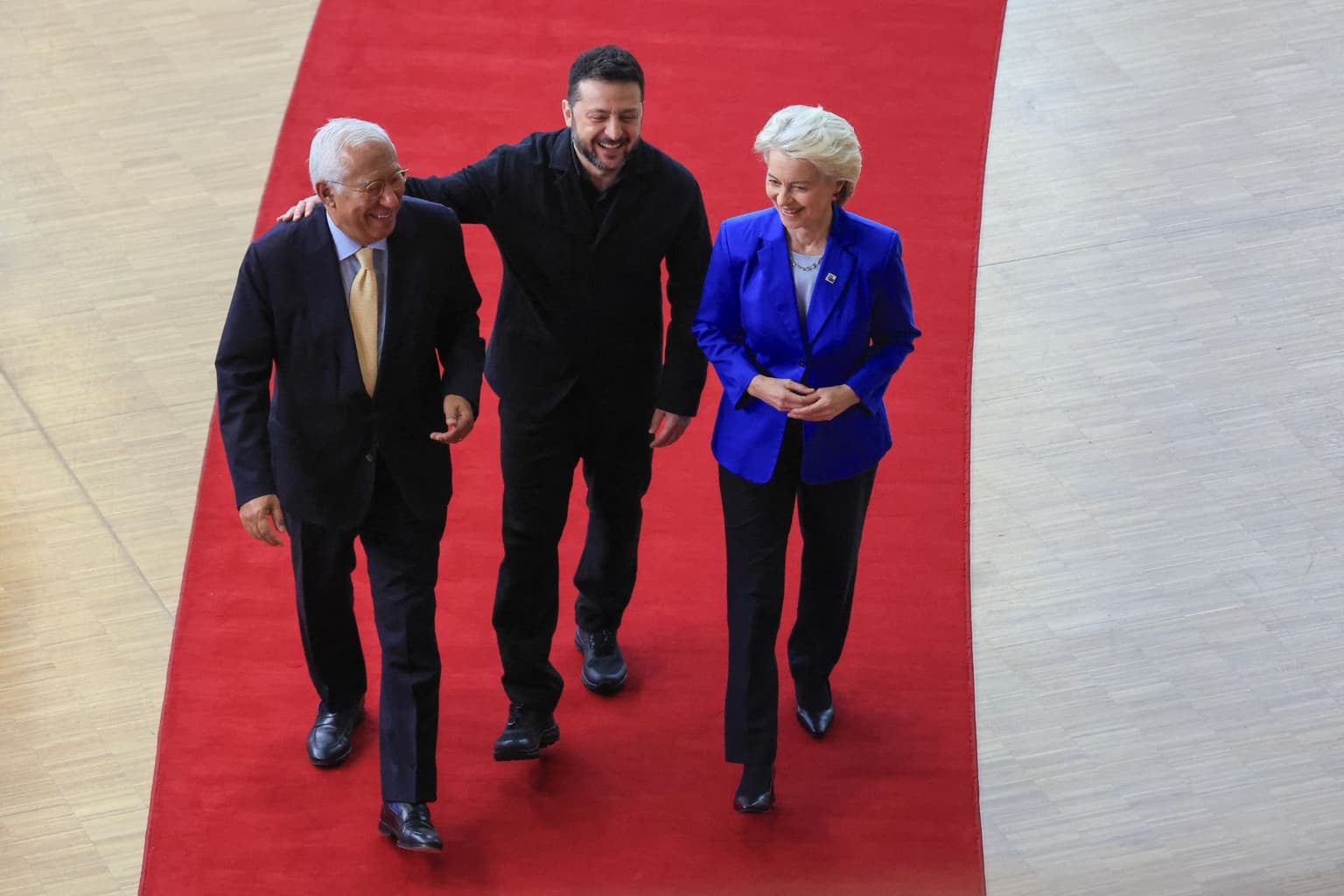
(L-R) European Council President Antonio Costa, President Volodymyr Zelensky, and European Commission President Ursula von der Leyen in Brussels, Belgium, on Oct. 16, 2026. (Ludovic Marin / AFP via Getty Images)
 on Google
BRUSSELS, Belgium — The European Commission is set to publish its hotly anticipated annual reports on how far potential EU members have progressed toward joining the bloc.
The so-called Enlargement Package, to be unveiled on Nov. 4, is expected to feature accession roadmaps for the most advanced candidates — Ukraine included.
For Kyiv, the stakes are high. The Commission is poised to give the country its first projected end date for accession talks, after a year in which Ukraine's reform efforts slowed while Moldova forged ahead.
As Brussels prepares to grade Kyiv's work and outline what still needs to be done, here are the main things to watch for.
Roadmaps
European Commission President Ursula von der Leyen promised in her annual State of the EU speech that the Commission will provide "roadmaps" for the four countries considered "frontrunners" in the membership process.
Ukraine, Moldova, Montenegro, and Albania are therefore all expected to have a roadmap outlining reforms to be enacted, estimates on when those reforms will be complete, and, critically, an end date by which the European Commission predicts each of the four countries will be technically ready to join the EU.
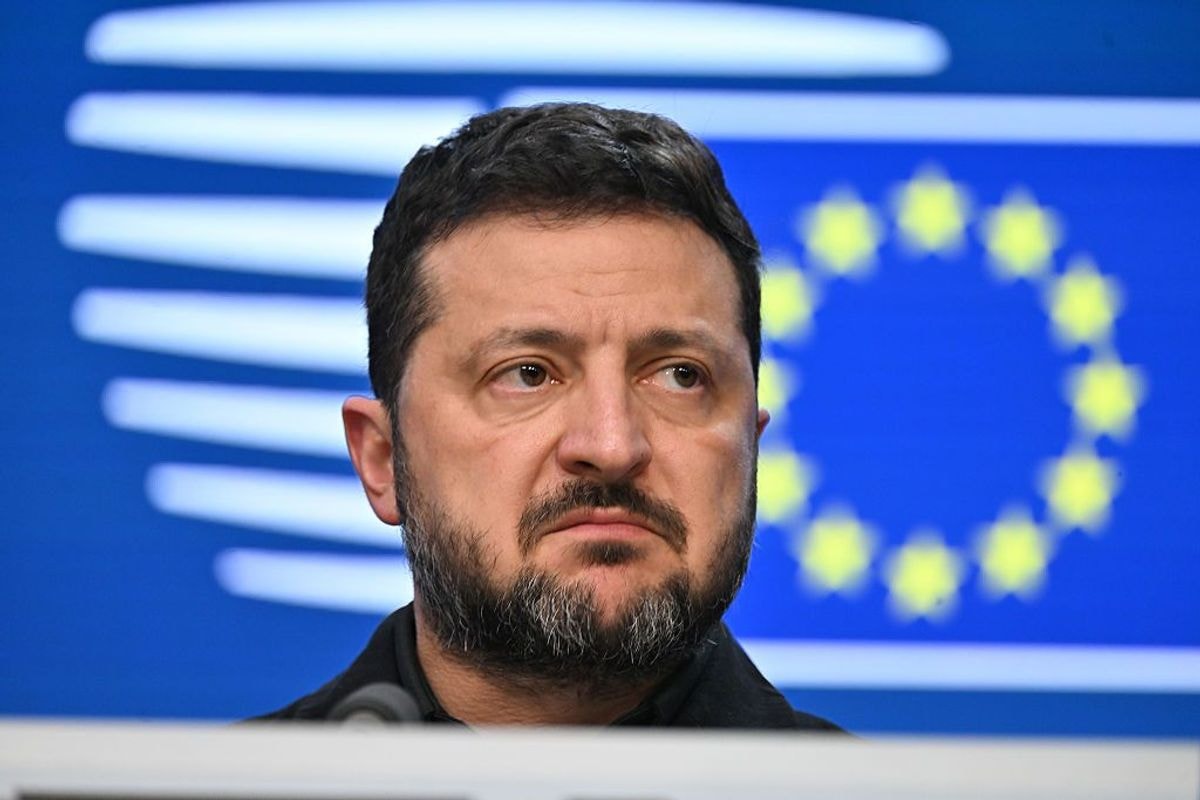
Of the four frontrunners, Ukraine is expected to have the latest end date as it has the most work yet to do. However, that will be a difficult point for Kyiv to accept, given President Volodymyr Zelensky's insistence that star-reformer Moldova should not be allowed to move ahead of Ukraine.
The EU has politically linked Ukraine's and Moldova's accession processes, meaning both countries have been opening enlargement clusters in tandem, even as Chisinau has advanced faster in its reform efforts.
Reforms progress
The report on Ukraine will comprehensively cover all the EU accession criteria Ukraine must meet, spanning 33 chapters, and assess how far Kyiv has advanced since last year's report.
The European Commission will likely recognize the reforms Ukraine has enacted since last year, which have unlocked over 8 billion euros ($8.9 billion) in tied financial support, as well as Kyiv's successful unlocking of four of the six enlargement clusters.
However, reform progress slowed down for much of 2026, mostly due to Ukraine's Parliament blocking or slow-walking the passing of key legislation.
This will need to be addressed in the report, both in relation to the roadmap for Ukraine and to the billions of euros set aside for Kyiv to pass reforms within a set timeline.
The European Commission may also mention its new task force co-chaired by the EU's Enlargement Commissioner Marta Kos and Prime Minister Serhii Koretskyi, which will focus on rule of law reforms.
Once Ukraine unlocks the final two enlargement clusters, expected in December, the next requirement will be to meet a set of so-called interim benchmarks related to rule of law and anti-corruption topics.
The Kos-Koretskyi task force meets online twice a week and aims to complete the work over the next four months. It is made up of representatives from Ukraine's European integration ministry, the Parliament, and technical experts from the European Commission.

European diplomats have confirmed to the Kyiv Independent that Moldova has already gone through a similar exercise and is therefore ready to get sign-off on those benchmarks, which by definition means it is significantly ahead of Ukraine in the reform process.
One EU official who has worked on enlargement for over 20 years told the Kyiv Independent that Moldova's pace of reform is essentially unmatched in the bloc's history, recalling only Hungary in 2002 as reforming with anything close to that level of enthusiasm.
This raises another question that may be addressed by the Commission report: just how far ahead of Ukraine Moldova is.
Digging into the details
Aside from Ukraine's overall integration progress, the Commission's report may also address more specific issues regarding the country's current state of affairs, such as press freedom.
In Reporters Without Borders' press freedom ranking, Ukraine is faring relatively well, better than the U.S. or several EU members.
But despite Ukraine's vibrant independent media sphere, journalists investigating corruption among top officials or abuses in the military have complained of pressure, including lawsuits, controversial court rulings, threats, and smear campaigns on social media.

Likewise, anti-corruption activists tend to count on the EU as an ally in their efforts to steer Ukraine's reforms.
This includes the selection process for Ukraine's prosecutor general, where the EU wants to see changes.
In Ukraine, the prosecutor general is appointed by the president, with the approval of the Parliament. The EU wants to see the selection become more merit-based, for example, by seeking input from international experts.
The role was cast in the spotlight in September when the previous officeholder, Ruslan Kravchenko, fled to Austria following his dismissal amid a corruption probe.
The EU has tended to be more flexible with Ukraine in implementing certain reforms, such as environmental standards, due to the ongoing war.
Learning how much the EU will factor in the war also in 2027 will help businesses understand which practices they need to change and when.
And finally, agriculture remains the elephant in the room in Ukraine's EU accession process.
Kyiv has already begun implementing some reforms in this area. However, there is now an ongoing reflection in Brussels and EU capitals about how to integrate Ukraine's gigantic — and structurally very different — agricultural sector into an uncompetitive EU whose rural communities depend heavily on subsidies.
The outcome of those reflections could change the work required by Ukraine, and when it ought to be completed.
The report is not a binding document, but rather a snapshot of where Ukraine stands in its EU accession process at the time of publication. There is therefore nothing to stop EU countries from changing their stance on Ukrainian agriculture or introducing additional requirements if they feel the need to do so.
read also
Note from the author:
Hi, this is Chris Powers. Thanks for reading this article. The EU is a famously complicated beast to understand, but for Ukraine, it has also never been so important.
Whether it's Russia sanctions, fighting corruption, keeping Ukraine's finances in the black, or the process of joining the EU itself, many Kyivan roads eventually pass through Brussels.
If you like reading about these fiendishly complex topics and want to support journalists in Kyiv and Brussels to shine a light on it all, please consider supporting The Kyiv Independent.