Ukraine risks billions in international funding amid stalled legislation, growing budget shortfall
 on Google
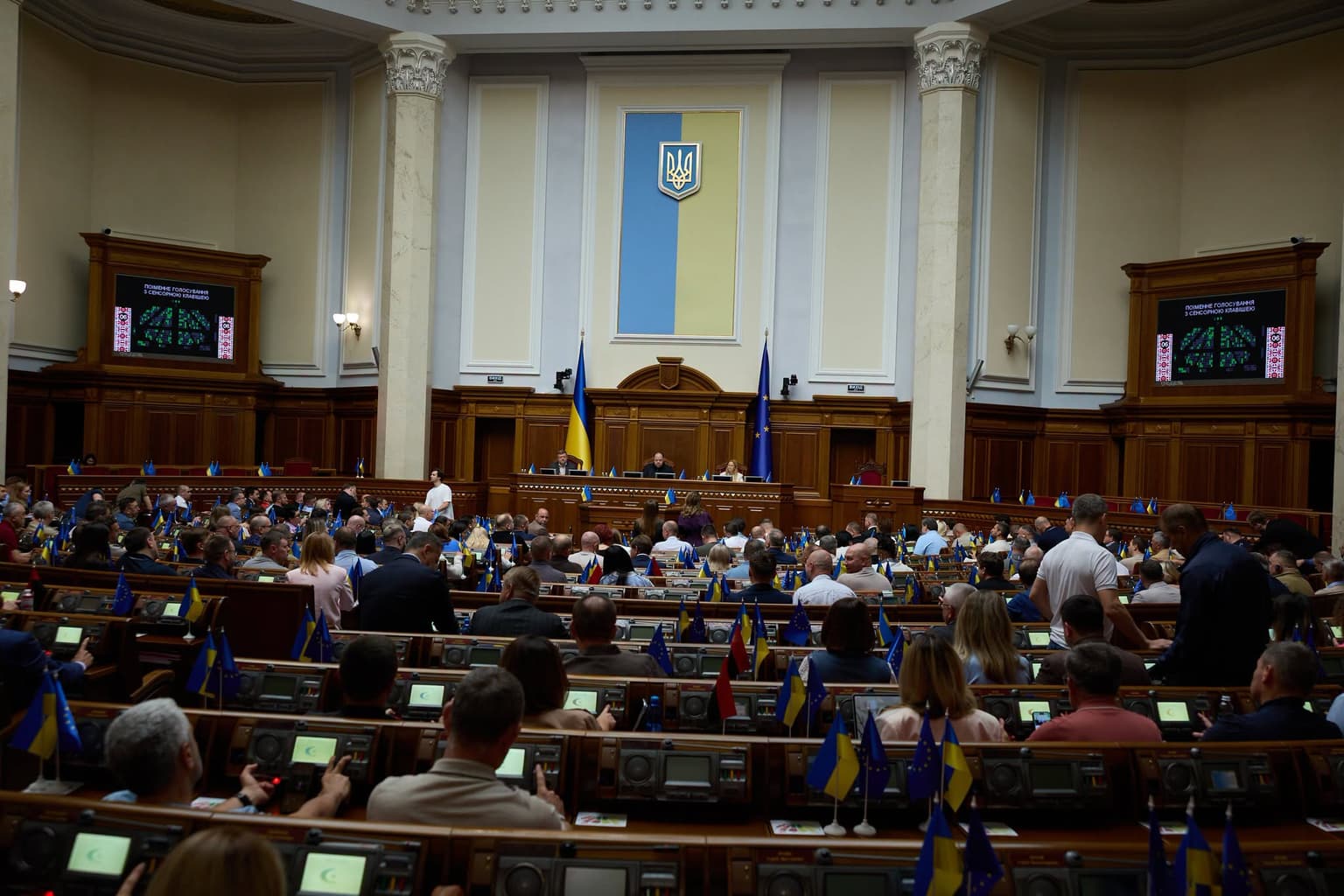
Ukraine risks losing billions of dollars in international funding after the parliament's latest attempt to advance legislation required under its commitments to the International Monetary Fund (IMF) failed.
Lawmakers failed to advance bills tied to Ukraine's commitments to the IMF on Sept. 1, despite Prime Minister Serhii Koretskyi's warning that failure to meet commitments to international partners could pose a "significant financial risk" as the war "becomes increasingly expensive."
The stalled bills include measures to impose levies on parcels and establish an advisory group to select candidates for vacant positions at the Accounting Chamber.
The parcel tax is a condition for Ukraine to receive an IMF tranche of about $700 million and and a 3.7 billion euros ($4.3 billion) tranche from the EU under its Macro-Financial Assistance program. The fund says the tax would improve Kyiv's ability to raise more revenue for the state and support itself financially.
A lawmaker from the governing Servant of the People party told the Kyiv Independent its leadership had not secured the votes needed for the key bills ahead of the vote.
"It’s better not to put it to a vote, knowing it will fail, than to be humiliated like this," they said. "Perhaps they want to show the Europeans that the parliament is against it and nothing can be done."
The vote came as an IMF mission was in Kyiv, underscoring the urgency of Ukraine’s commitments to the lender.
Before the vote, Koretskyi told lawmakers that a government audit found a $27 billion shortfall in defense financing, while Ukraine could receive $30 billion from international partners this year if it fulfills its commitments.
He cited the Defense Ministry's early use of part of its second-half funding as a factor complicating the situation and contributing to the gap.
Koretskyi said Ukraine must adopt 44 government decisions, 26 bills already submitted to the parliament, and 17 more bills that need to be submitted as soon as possible to receive the funds. The government, in turn, must implement all 44 decisions by Nov. 1.
The stakes are particularly high for Ukraine's IMF program.
Parliamentary Budget Committee Chair Roksolana Pidlasa said the parliament had failed on Sept. 1 to approve bills required for the $4.26 billion macro-financial assistance tranche. After meeting with the IMF mission, she said Ukraine risks not receiving its next $1.66 billion IMF tranche by the end of the year.
President Volodymyr Zelensky also lashed out at lawmakers, urging them to back draft laws.
"Bills needed for relations with the EU must be supported by all factions and groups that support the EU. Voting against them or talking a lot about Europe while not voting for Europe is dishonest," Zelensky said in his evening address on Sept. 1.
"And besides being dishonest, it is now also against the state — against the Ukrainian state."
The parliament made limited progress over the following two days.
Lawmakers on Sept. 2 backed three bills required under the $58 billion Ukraine Facility — an EU financial assistance program launched in 2024 — potentially unlocking 411 million euros ($478 million).
One of the bills aligns Ukraine's renewable energy laws with EU rules, a requirement for opening the energy cluster of EU accession talks. The other bills cover state aid reform and rules governing special obligations in the public sector. The latter was approved in the first reading.
But multiple other key bills remain stalled, underscoring the broader difficulty the government has faced in securing parliamentary support for legislation linked to Western funding.
The parliament has struggled to pass such bills since March. Observers and opposition lawmakers have described the problem as a sign of dysfunction within Zelensky’s fragile parliamentary majority, which de facto exists only on paper, rather than a broader crisis in the parliament.
Zelensky previously rejected these claims, saying parliament operates in its own "microclimate."
Some pro-government lawmakers have blamed opposition parties for withholding support. Opposition lawmakers, meanwhile, argue that securing enough votes is the responsibility of the governing party.
Volodymyr Ariev, an opposition lawmaker from the European Solidarity party, said the government negotiated with the IMF and prepared the parcel bill without consulting the opposition or considering its proposals. According to him, the bill "does not meet European standards."
"(The authorities) have made a habit of making decisions on their own, without consulting anyone else. Well, then you won't have our votes," Ariev said. "If you want this to pass, take our proposals into account."