What to expect on Ukraine in the EU's big yearly roundup
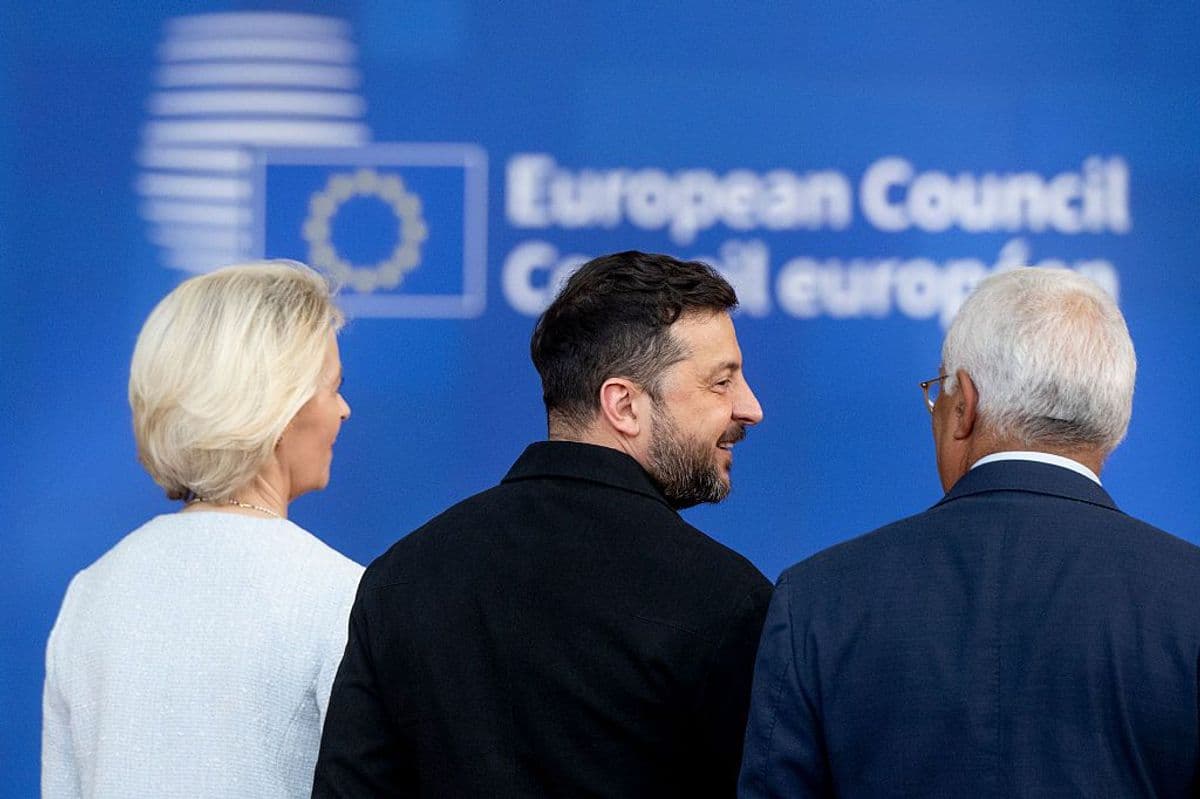
European Commission President Ursula von der Leyen and European Council President Antonio Costa walk with President Volodymyr Zelensky as he arrives at a European Union leaders summit in Brussels, Belgium, on June 18, 2026. (Daniel Gnap/NurPhoto via Getty Images)
 on Google
European Commission President Ursula von der Leyen will deliver her annual State of the EU speech on Sept 16, usually a celebration of last year's wins and previewing the agenda for the next year, with Ukraine likely to feature strongly.
The speech itself is a closely guarded secret, and the subject of much speculation across Brussels in the weeks leading up to the event. However, there are hints of how Ukraine may and may not feature this time.
Last year, von der Leyen's speech led with Ukraine, discussing the country in several contexts: energy security, EU integration, defense collaboration — especially on drones, security guarantees, and the plan to use Russian assets to bankroll Kyiv.
One topic guaranteed to return: bringing back Ukrainian children abducted by Russia.
Von der Leyen posted on social media on Sept. 13 that she would "talk about a story that profoundly moved me," on how Ukrainian children are a "powerful example" of "courage and strength."
The Commission president identifies strongly with the topic, regularly commenting on it. Brussels also hosted a summit on the return of Ukrainian children in May, with a follow-up to take place in Canada on Sept. 28.
Celebrating the wins
Other likely talking points can be found in the European Commission's recently published State of the Union report, and heard along the corridors of power in Brussels.
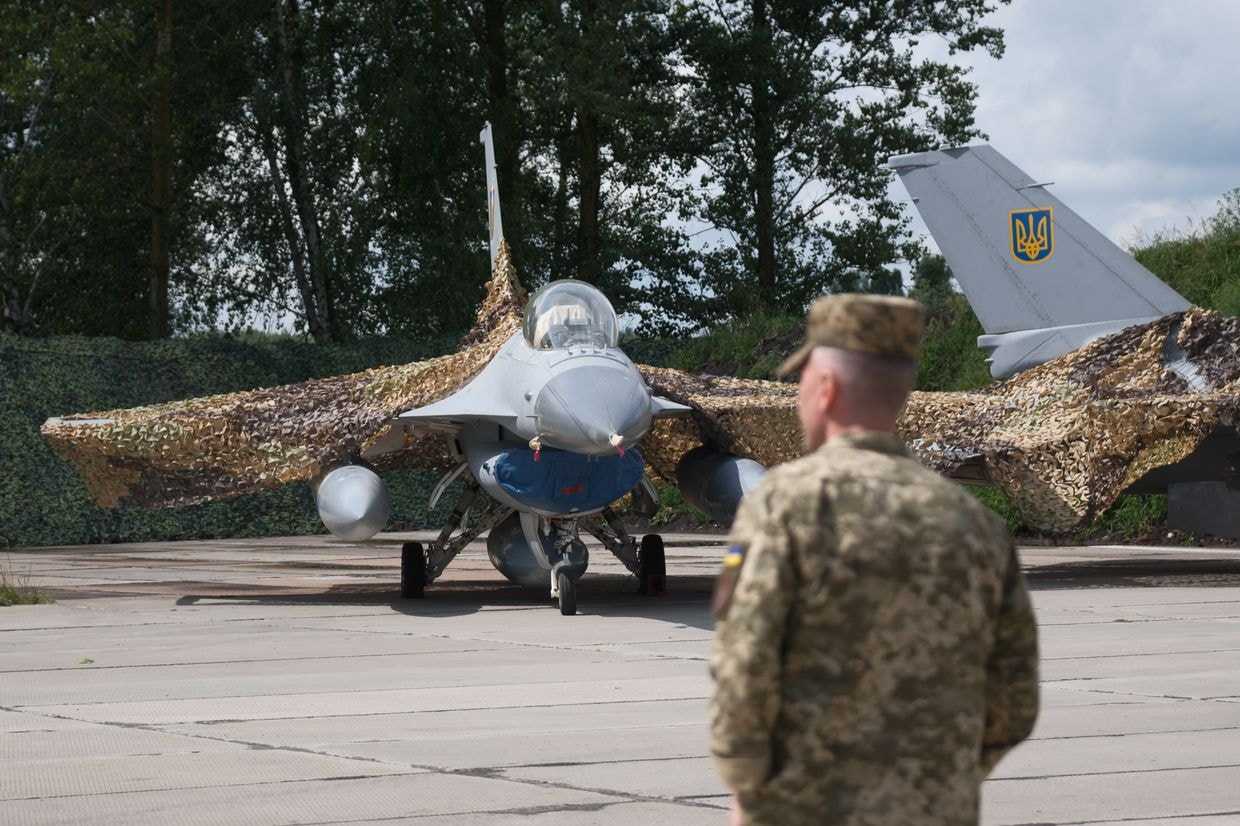
Having floated a drone alliance between EU and Ukrainian manufacturers in her previous speech, she will likely celebrate its Sept. 11 kick-off meeting.
EU diplomats suggested to the Kyiv Independent that von der Leyen will briefly mention the announcement facilitating Ukraine's ability to source Patriot interceptor missiles, as well as another disbursement of defense funding.
One senior EU official said they expect an amount smaller than the 4.7 billion euros ($5.4 billion) previously mentioned to be announced, due to delays in processing Ukrainian receipts for defense equipment.
Von der Leyen is also expected to comment on EU integration, revisiting how Ukraine opened two of the six so-called enlargement clusters this year, and perhaps reiterating her earlier calls to reopen the remaining four by year's end.
She will likely adopt the line recently and repeatedly deployed by Enlargement Commissioner Marta Kos — that "2026 is a record year of progress" — while avoiding criticism of Ukraine's reform pace.
One EU official said they would be surprised if von der Leyen mentions making use of Russian assets, after her proposal last year failed to advance.
"We need the conversation to mature among the member states before the Commission will stick its neck out again," they told the Kyiv Independent.
She might reflect on how the EU passed the 90 billion euro ($104 billion) support loan in April, and use the podium and her Canadian guest of honor, Prime Minister Mark Carney, to call on third countries to fill the remaining third of Ukraine's expected budget shortfall.
Teasing at the new
Predicting the future is not a science, but it would nonetheless be surprising if von der Leyen skipped the EU's discussions over its 22nd sanctions package, set to be the largest ever.
Even if watered down, the package will likely constrain Moscow's ability to wage war and target numerous third-country entities helping Russia evade sanctions.
In January, EU diplomats told the Kyiv Independent the bloc will review its visa rules — long considered a chance to restrict Russians' access, and to put protections for Ukrainian refugees on a longer-term footing. Von der Leyen could tease at how she would like that process to go.
She might also announce support for Ukraine's two main winter challenges: protecting energy infrastructure and reopening the Black Sea for agricultural exports.

EU officials said talks are ongoing to bolster the so-called "solidarity lanes," and increase food exports leaving Ukraine via Poland and Romania.
Kyiv asked the EU for financial support for its energy sector, but that is unlikely to be agreed to, given the ongoing disbursement of the 90 billion euro loan. In-kind contributions could be an option, though, with one notable gap last winter being the shortage of experts on the ground to install generators and other equipment.
For the EU this fall and winter, though, the biggest topic remains the need to unanimously agree on the bloc's budget for the years 2028-2034.
The Commission originally allocated 100 billion euros ($115 billion) specifically for Ukraine — a figure EU countries have since haggled down to 89 billion ($103 billion) — along with 131 billion euros ($151 billion) for defense and space.
In that context, von der Leyen could renew her case for spending big on both fronts, or equally, she may position herself less assertively, waiting to see which way the political winds blow.
The Canada question
Canadian Prime Minister Mark Carney will be among those watching von der Leyen's speech from inside the European Parliament in Strasbourg, where he is expected to address Europe with a speech of his own.
That follows his recent pitch for "associate EU membership" for Canada — a concept that does not exist, and which he may therefore explain.

EU diplomats told the Kyiv Independent that Canada is negotiating to participate in the bloc's 90 billion loan to Ukraine on terms similar to the U.K., which could already be announced on Sept. 16.
However, there is mounting pressure on non-EU countries to make sizable pledges of their own, with President Volodymyr Zelensky claiming a $27 billion hole in Ukraine's 2026 budget.
Norway recently pledged $9 billion for Ukraine in 2027, and hopes are high in Brussels that Canada will make a separate announcement of its own.
The State of the EU speech will be broadcast on Sept.16 at 10:00 Kyiv time (09:00 CET).
Note from the author:
Hi, this is Chris Powers. Thanks for reading this article. The EU is a famously complicated beast to understand, but for Ukraine, it has never been as important.
Whether it's Russia sanctions, fighting corruption, keeping Ukraine's finances in the black, or the process of joining the EU itself, many Kyiv roads eventually pass through Brussels.
If you like reading about these fiendishly complex topics and want to support journalists in Kyiv and Brussels to shine a light on it all, please consider supporting the Kyiv Independent.