A new defense for Ukraine's corruption suspects: Anti-Graft probes help Russia at the negotiating table
 on Google
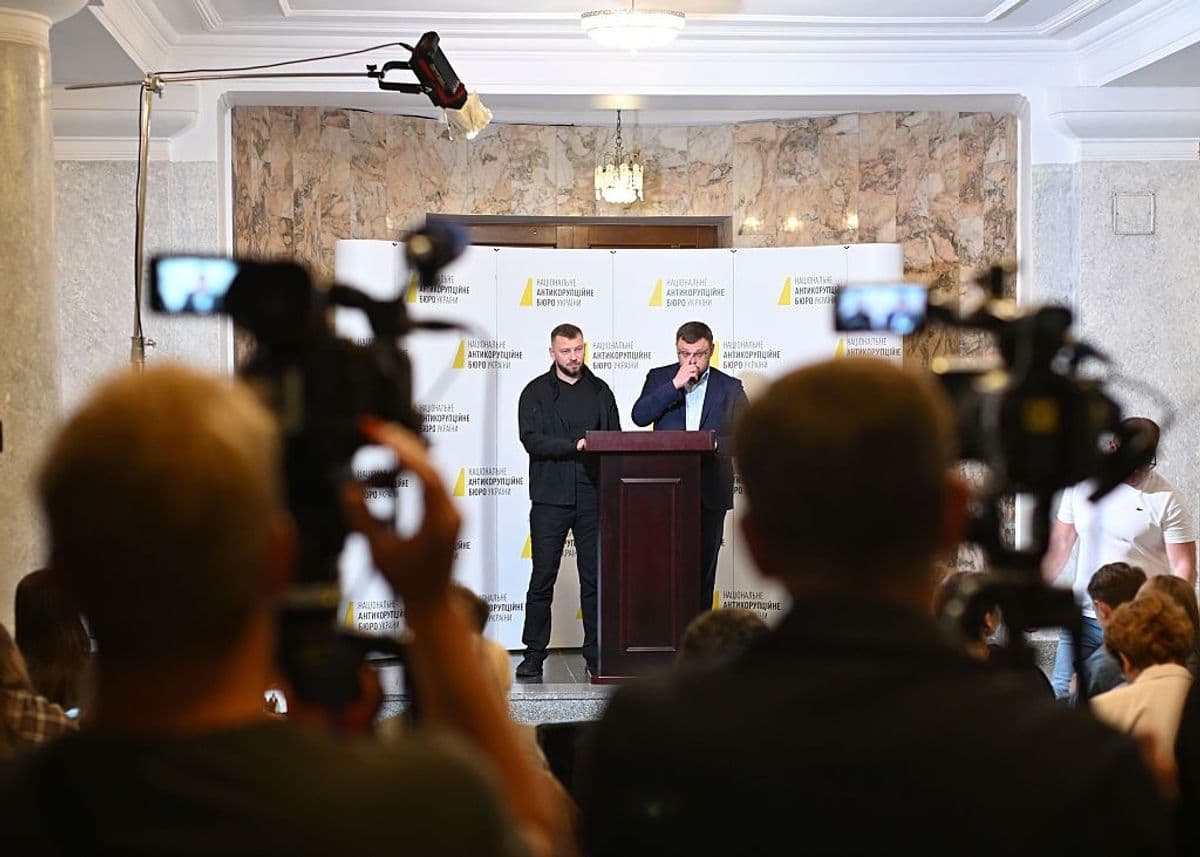
Several former and current senior Ukrainian officials facing corruption investigations have promoted a similar narrative over the past week.
They have accused the agencies investigating their alleged wrongdoing — the National Anti-Corruption Bureau (NABU) and the Specialized Anti-Corruption Prosecutor’s Office (SAPO) — of seeking to influence peace negotiations involving Ukraine, the U.S. and Russia.
According to these officials, the investigations are intended to pressure Kyiv into accepting an unfavorable deal with Moscow.
The narrative is not new. The establishment of the two anti-corruption agencies in 2015, with Western backing, has provided fertile ground for those seeking to portray them as instruments of Washington's influence.
"It is not the exposure of corruption that undermines efforts to achieve peace, but corruption itself and the collusion between organized crime and law enforcement agencies," Daria Kaleniuk, executive director of the Anti-Corruption Action Center, told the Kyiv Independent.
"These narratives are being spread by people under investigation by NABU to serve their own interests and divert attention from scrutiny of their activities."
A security official accused of organized crime
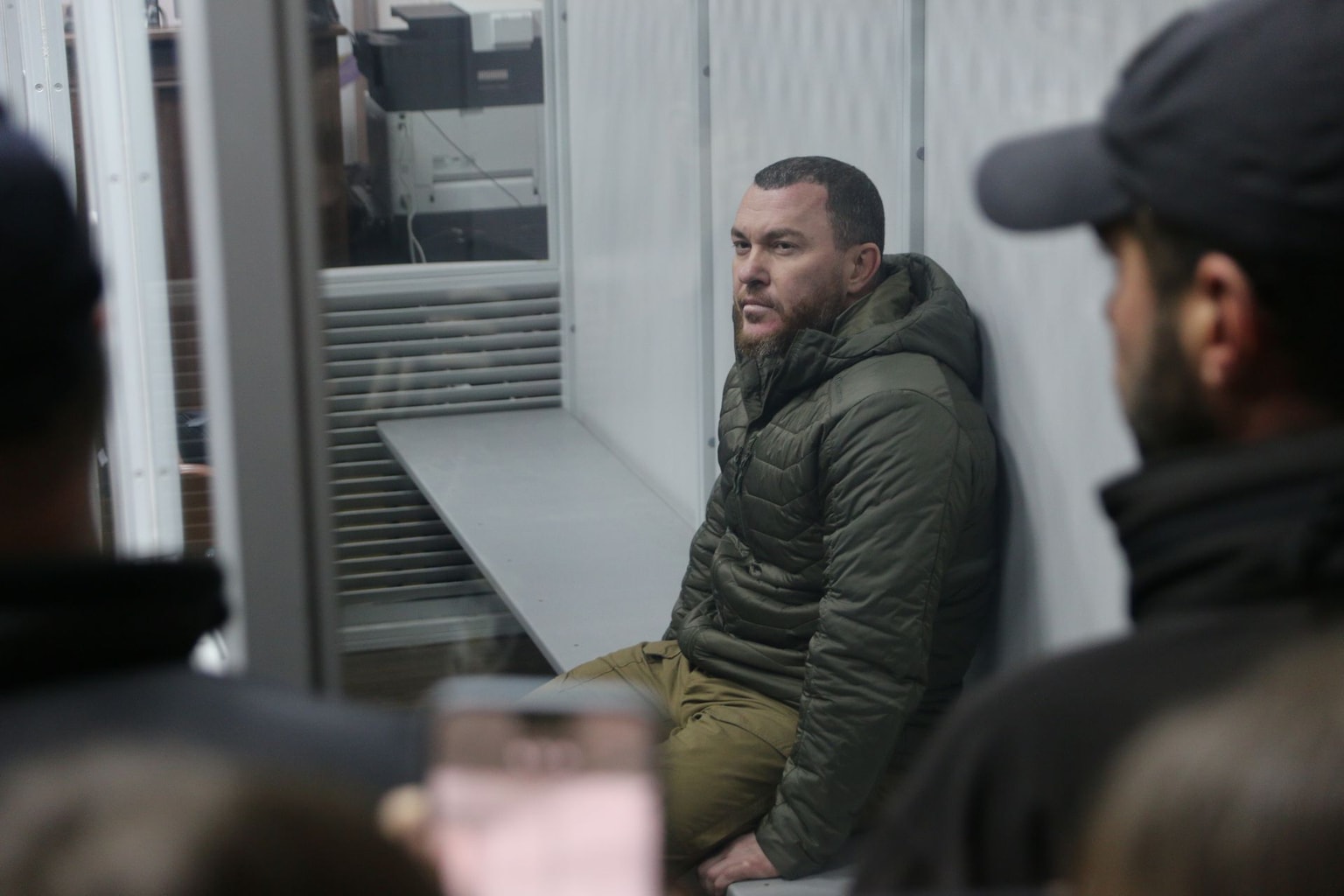
One of the officials involved is Serhiy Duka, first deputy head of the Security Service's (SBU) Department for the Protection of National Statehood.
Duka, who has been charged with complicity in an organized crime group, was released from detention on Nov. 13 after posting Hr 65 million ($1.43 million) in bail.
As he was released, he was met with a cheering crowd of masked and camouflaged Security Service officials. His bail was also collected by those employed by the Security Service.

“Open your eyes and look at what is happening in this country,” Duka harangued upon being released. “At a time when our country's leadership is heading into extremely difficult negotiations, anti-corruption officials are carrying out so-called major operations.”
Duka claimed that “these operations lead nowhere, undermine our negotiating position, and force us to make concessions on our territorial integrity and sovereignty.”
He is a suspect in a sweeping Anti-Corruption Bureau investigation into scam call centers.
The alleged criminal network extended far beyond call-center scams. According to Ukraine's anti-corruption agencies, the network also trafficked drugs, produced counterfeit currency, and used violence to intimidate critics and opponents.
Investigators say Duka advised Andrii Osipov, one of the alleged leaders of the criminal group, on how to evade detection and arranged contacts with senior officials at other law enforcement agencies, including the Prosecutor General's Office.
The criminal network was run by Osipov and Russian-born Yehor Burkin, reportedly the founder of the transnational drug trafficking ring known as Khimprom, according to the NABU. Recordings released by the bureau suggest that Burkin maintained contact with Russia's Federal Security Service (FSB) even during Russia's all-out war.
Duka also spearheaded the attack on the anti-corruption agencies as President Volodymyr Zelensky's team sought to strip them of their independence back in 2025.
Recordings released by the Anti-Corruption Bureau document an alleged effort by the Burkin-Osipov criminal group and an Security Service official to falsify evidence against a NABU detective in cooperation with Russia's Federal Security Service.
In 2024, the SBU's Department for the Protection of National Statehood, where Duka worked, illegally surveilled journalists from the investigative outlet Bihus.info.
Recordings published by the Anti-Corruption Bureau capture Burkin and Osipov discussing a possible acid attack on or kidnapping of Bihus.info founder Denys Bihus in retaliation for an investigation the outlet had published into their activities.
A fugitive prosecutor general
Former Prosecutor General Ruslan Kravchenko pushed a similar narrative in a Nov. 8 interview with the Washington Examiner.
Ukraine’s Western-backed anti-corruption authorities are being weaponized to weaken Zelensky and sabotage U.S. President Donald Trump’s peace efforts to Russia’s benefit, he claimed.
“We see that only Russia benefits from it,” Kravchenko said. “The main goal (of NABU and SAPO) is that Ukraine’s president and his team should achieve nothing, and that Trump’s team should not succeed either.”
In September, the Anti-Corruption Bureau searched Kravchenko’s office, and Serhii Kropyva, a Kravchenko confidant and top prosecutor who allegedly ran a scam call center protection racket, was charged with organized crime and laundering Hr 90 million ($2 million).

The bureau's recordings refer to a "boss" allegedly protecting the group, a figure whose patronymic, Andriiovych, and prior role as head of the State Tax Service correspond to Kravchenko. An earlier Telegram post by the Prosecutor General's Office confirms that the investigators understand the term "boss" as referring to Kravchenko.
Kravchenko was fired, fled Ukraine and moved to Austria in September amid speculation that he could face charges in the same corruption case.
As Kravchenko left Ukraine, he simultaneously approved charges against the head of the anti-corruption agency investigating him. The charges were later dropped as unfounded.
Head of Zelensky's faction in parliament
A similar line of argument was advanced on Nov. 6 by influential lawmaker David Arakhamia, head of President Volodymyr Zelensky’s Servant of the People parliamentary faction and a member of Ukraine’s peace negotiation delegation.
He was commenting on a mention of his name on tapes released by the bureau.
On the tapes, Osipov, one of the suspects in the call center racketeering case, wanted to meet Arakhamia to discuss potential legalization of marijuana in Ukraine.
But Burkin, the founder of the same criminal group, said in a Nov. 13 interview that no meeting with Arakhamia had taken place.
Arakhamia described the allegations against him as an information attack and claimed they were an attempt to sideline him from the negotiations.
“I believe that’s exactly why this was done — to push me out of the negotiations,” Arakhamia said.
Arakhamia said that he was not a suspect in the case and had not been involved in any corruption schemes.
Arakhamia is no stranger to the Anti-Corruption Bureau investigations.

The High Anti-Corruption Court on Nov. 4 ordered acting Prosecutor General Anton Kovalskyi to open a probe into an alleged vote buying scheme in parliament involving Arakhamia. The lawmaker has denied wrongdoing.
The Anti-Corruption Action Center, an independent watchdog, has lambasted Kovalskyi for refusing to open the investigation so far.
The Prosecutor General’s Office told the Kyiv Independent on Nov. 13 that it had received the court order. It is not clear, however, if and when the investigation will be opened.
Five lawmakers from Zelensky's Servant of the People party were charged as part of a vote buying scheme in December, including Yurii Kisel, head of the parliamentary transport committee and one of Arakhamia's deputies.
The same month, the bureau searched the premises of an Arakhamia aide, a law enforcement source told the Kyiv Independent in April.
The media outlet Ukrainska Pravda also reported in July, citing its sources, that the NABU had obtained court orders allowing it to collect biological samples from the Arakhamia aide in the case involving alleged cash payments to lawmakers.
"If the prosecutor general fails to open a criminal case following a court ruling, he is committing a crime," Kaleniuk told the Kyiv Independent. "If (Kovalskyi) fails to comply with the ruling, we will file a criminal complaint against him."
The Kyiv Independent has requested comment from the Prosecutor General's Office and will publish its response once it is received.