'I haven't heard that' — Trump on Starshield restrictions after Zelensky's repeated warnings
 on Google

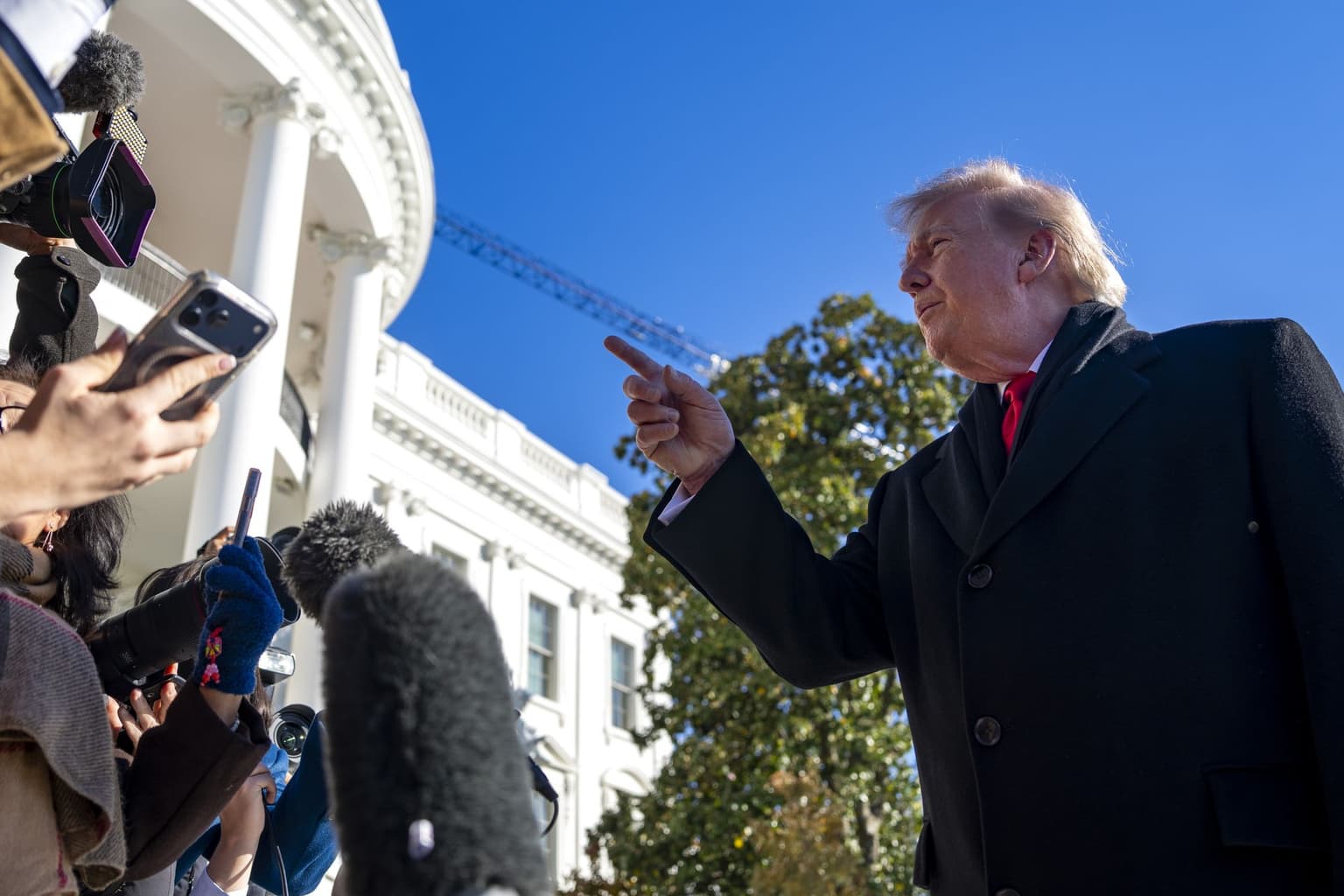
U.S. President Donald Trump told reporters on Nov. 16 that he was unaware of any renewed limitations on the Starshield satellite communications system, the militarized version of Starlink, for Ukraine.
"I don't know that they are. I haven't heard that," Trump responded to a journalist's question on renewed restrictions on the satellite system in Ukraine.
The statement comes four days after President Volodymyr Zelensky first raised the issue on Nov. 12, saying that Ukraine's military was once again experiencing significant disruptions to the Starshield system.
The systematic speed restrictions affect the military's operation across the front line and in Russian-occupied territories.
The new restrictions limit Starshield's operating speed to 161 kilometers per hour (100 miles per hour), limiting Ukraine's ability to shoot down Russian strike drones, which are usually intercepted over occupied territory before they reach government-controlled areas.
Zelensky said that some Russian strikes had already succeeded because Ukrainian interceptor systems could not reach the necessary speed to catch the targets in time. He also linked the restrictions to successful Russian strikes on Ukrainian energy infrastructure.
"Russian forces are targeting substations with Shahed drones. And many of these strikes get through precisely because speed restrictions remain in place for Starshield terminals along the front line and in temporarily occupied territories," Zelensky said on Nov. 15 on Telegram.
Zelensky said Russia had launched more than 2,300 attack drones, 1,590 glide bombs, and 15 missiles of various types against Ukraine over the past week.
Russian forces attacked energy infrastructure in Zaporizhzhia, Sumy, Odesa, Zhytomyr, and Kirovohrad oblasts overnight and on the morning of Nov. 15 alone. Railway infrastructure in Dnipropetrovsk, Kharkiv, and Zaporizhzhia oblasts was also targeted.
Zelensky said on Nov. 14 that the Defense Ministry had spoken with SpaceX, the producer of the Starshield system, and the company replied that it was "not imposing any restrictions" and called the problem a technical issue.
"We do not believe that is the case," Zelensky said. "Every day, we get the same confirmation. So these are not isolated cases; they are widespread."
SpaceX has publicly denied the reports. "This is false. There has been no change," the company told Axios.
Zelensky also said that U.S. Secretary of State Marco Rubio had told him in an earlier conversation that Starshield was "more under the control of the U.S. government than of SpaceX."
"The current Starshield restrictions suggest that SpaceX imposed them. That's what our team is telling me. So this doesn't quite line up with what we heard earlier," Zelensky said.
Ukraine widely uses both commercial Starlink terminals and their militarized version, Starshield. This year's mid-range strike campaign has allowed Ukraine to strangle Russian logistics, hampering Russia's ability to advance on the front lines.
In the U.S., the Congressional Ukraine Caucus, a bipartisan support group for Ukraine, demanded a full explanation from the Trump administration and SpaceX and called for the immediate restoration of full Starshield access for Ukraine.
"Congress has been clear that Ukraine's ability to defend itself and the rest of Europe is a vital national interest of the United States," the group's statement said.