Ukraine war latest: Kyiv recaptures more territory than it loses in May, Syrskyi says
 on Google
Key developments on June 8:
- Russia rejects Ukrainian, European peace initiatives, says battlefield will decide war
- NATO jets shoot down drone over Latvia in 1st such interception, military says
- Ukraine strikes Russian oil depot, radar station, other military targets, General Staff confirms
- Ukraine foils Russian plot to assassinate senior military intelligence official, police say
- At least 8 killed, 52 injured in Russian attacks across Ukraine over past day
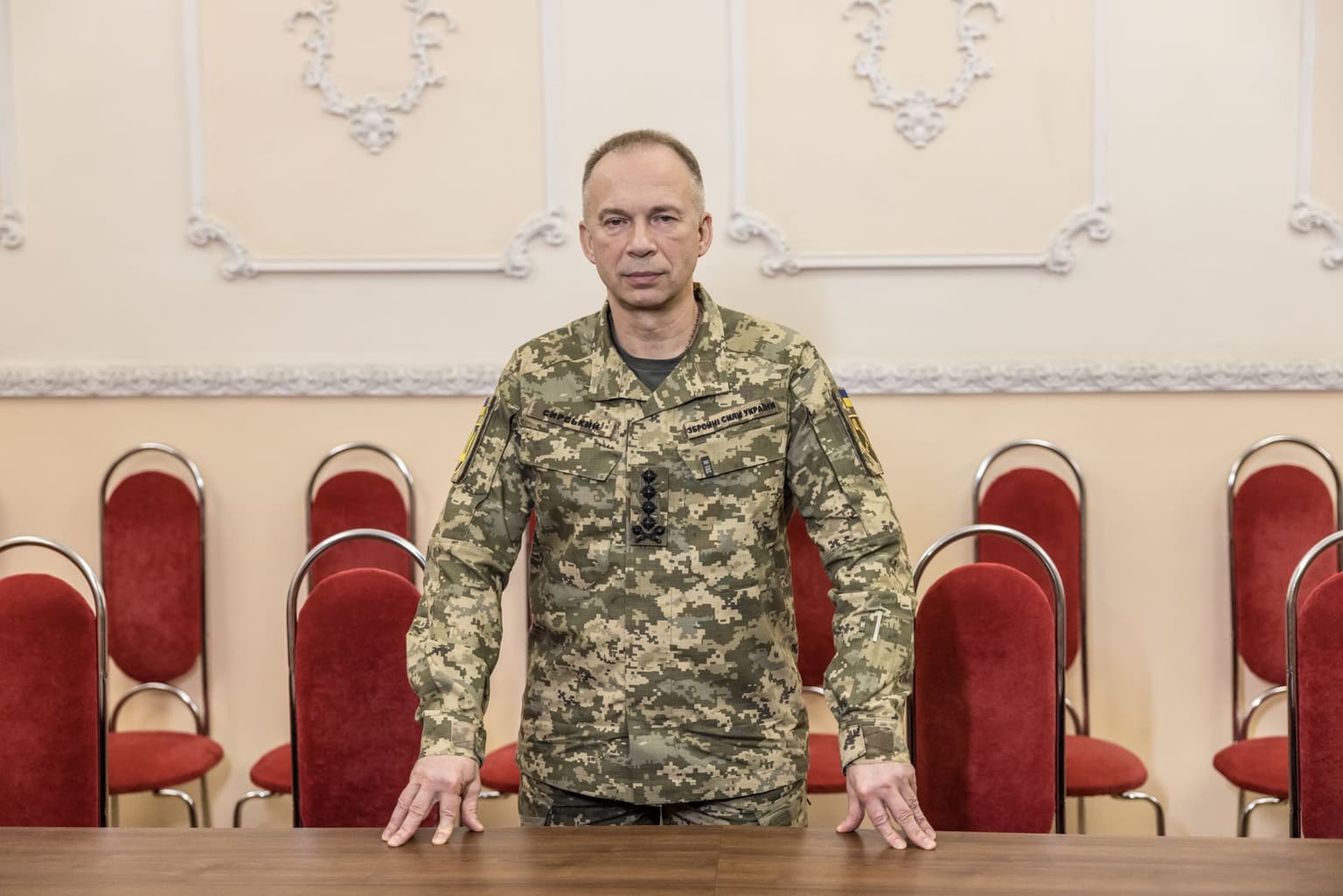
Ukrainian forces recaptured nearly 100 square kilometers (39 square miles) more territory than they lost along the front line in May, bringing total gains since the start of 2026 to more than 600 square kilometers (232 square miles), Commander-in-Chief Oleksandr Syrskyi said on June 8.
Syrskyi did not specify how much territory was liberated from Russian occupation in May.
Earlier, in an assessment published on June 1, Ukrainian monitoring group DeepState said that Ukraine had gained more territory than Russia occupied in May, marking the first monthly net decline in Russian advances since 2023.
The situation along the front line remains complex and fluid, with Russian forces continuing attempts to advance in eastern and southern Ukraine amid a significant increase in combat activity, Syrskyi said on Facebook.
The heaviest fighting is taking place in the Pokrovsk sector in Donetsk Oblast, the Oleksandrivka sector, which lies at the junction of Donetsk, Zaporizhzhia, and Dnipropetrovsk oblasts, and the Huliaipole sector in Zaporizhzhia Oblast, the commander-in-chief said.
Ukrainian forces retain the initiative in "certain areas" of the front, though Syrskyi did not specify their locations.
Ukrainian forces struck more than 88,000 Russian military targets and killed or wounded over 30,500 Russian troops over the past month. Ukrainian deep-strike operations also targeted 111 Russian military-industrial, energy, and oil infrastructure facilities, causing an estimated $1.058 billion in damage, according to Syrskyi.
In May, the Ukrainian Navy conducted about 1,500 operations to secure civilian shipping in the combat zone, allowing 633 vessels to reach ports in Odesa and along the Danube River, Syrskyi added.
Russia has not been able to gain "any real momentum" in its spring offensive and has failed to capture as much territory in recent months as it occupied over the same period in previous years, retired Australian Army Maj. Gen. Mick Ryan said.
But he stressed that the second half of the year, particularly the fall months, would show how much Ukraine has improved its military effectiveness in 2026, as that period tends to see the fiercest fighting.
"I would say that there's a glimmer that a turning point might be coming because the most deadly parts of the year in the ground war are generally in the second half of the year, not in the first half," Ryan told the Kyiv Independent in May.
Russia's setbacks in May came as Ukraine stepped up efforts to disrupt Russian supply lines. Under its "logistical lockdown" campaign, Ukrainian forces have targeted and destroyed hundreds of Russian supply trucks using an expanding fleet of medium-range drones.
"Our goal is to increase the pressure on the Russians in the rear even further and prevent them from carrying out active assault operations," Defense Minister Mykhailo Fedorov said on May 27.
read also
Russia rejects Ukrainian, European peace initiatives, says battlefield will decide war
Senior Russian officials on June 8 effectively rejected recent Ukrainian and European proposals aimed at restarting negotiations to end Russia's full-scale war, signaling that Moscow remains focused on battlefield gains rather than diplomacy.
The remarks came after President Volodymyr Zelensky called for renewed talks with Russia and European leaders outlined a framework for a future settlement.
In an open letter, Zelensky urged Russian President Vladimir Putin to continue bilateral negotiations and proposed a meeting between the two leaders.
The initiative was later echoed by the leaders of France, Germany, the United Kingdom, and Ukraine, who issued a joint statement on June 7 outlining five conditions they said were necessary for a "just and lasting peace."
Among them were an immediate and comprehensive ceasefire and negotiations based on the current line of contact.
The proposals received a cold response from Moscow.
Russian Foreign Minister Sergey Lavrov suggested that developments on the battlefield, rather than diplomacy, would determine the course of the war.
"I don't know how we can even talk about negotiations against this backdrop," Lavrov said during a press conference on June 8. "Right now, everything depends not on negotiations, but on the actions of our heroes on the front lines."
His comments reinforced a position he has repeatedly articulated: that Moscow sees military pressure as its primary tool for achieving its objectives in Ukraine.
Kyiv maintains that freezing the current front line represents the most realistic basis for a ceasefire, while Russia demands that Ukrainian forces withdraw from parts of Donbas as a precondition for any agreement — a proposal Ukraine has rejected.
Kremlin spokesperson Dmitry Peskov also dismissed the European initiative during his briefing on June 8, arguing that European leaders were undermining their own calls for peace by continuing military support for Ukraine.
"I would like to point out that Macron, Starmer, and Merz are all trying to talk about peace. At the same time, they are emphasizing their intention to assist (Ukraine) in producing new types of weapons," he said. "Is this not a contradiction in their rhetoric?"
The remarks come as U.S.-mediated peace efforts have effectively remained frozen since February, with Washington's attention consumed by the war with Iran.
NATO jets shoot down drone over Latvia in 1st such interception, military says
French fighter jets participating in NATO's Baltic Air Policing mission "successfully" shot down a drone that entered Latvian airspace, Latvia's military reported on June 8.
The interception marks the first time a drone has been shot down in Latvian airspace by NATO forces and comes amid growing concerns in the Baltic states over repeated drone incursions.
According to the Latvian military, the drone entered the country after being diverted by Russian electronic warfare systems. In response, NATO aircraft were scrambled to neutralize the threat.
The interception followed the issuance of air raid alerts in several northeastern and eastern regions of Latvia, where authorities warned residents about a potential aerial threat.
The incident is the latest in a series of drone incursions that have heightened security concerns across the Baltic region. It is at least the fifth such case recorded in Latvia since the beginning of May.
The issue gained prominence after a Ukrainian drone crashed into an oil facility in eastern Latvia on May 7 after it was diverted from its intended course by Russian countermeasures.
Similar incursions were reported across the Baltic states on May 19, 20, and 21, though none of those aerial targets were intercepted.
The repeated incidents have fueled political debate in Latvia over the country's air defense readiness and border security. The controversy contributed to a political crisis that culminated in then-Latvian Prime Minister Evika Silina's May 14 announcement that she would resign.
Ukraine strikes Russian oil depot, radar station, other military targets, General Staff confirms
Ukrainian forces struck a Russian oil depot, an oil transmission and control facility, and several other military targets overnight on June 8, Ukraine's General Staff confirmed.
Ukraine hit the Grushevaya oil depot near the settlement of Grushevaya Balka in Krasnodar Krai, causing a fire at the facility. The extent of the damage is still being assessed, according to the General Staff.
The depot forms part of the Sheskharis transshipment complex, a key hub in Russia's southern oil export network and the final destination of several major oil pipelines. The facility handles the reception, storage, and shipment of crude oil and petroleum products through the port of Novorossiysk and has a storage capacity of approximately 1.4 million cubic meters.
Photos and video posted to social media by local residents earlier on June 8 purport to show thick black smoke billowing from the area of the Grushevaya Balka oil depot in the Russian city of Novorossiysk.
Ukrainian forces also struck the Krasny Yar Line Production Dispatch Station (LPDS) in Russia's Volgograd Oblast. A fire was reported at the site following the attack, while damage assessments remain ongoing, the General Staff said.
The facility serves as a critical node in Russia's oil transportation network, directing supplies toward the Volgograd refinery and the Sheskharis export terminal in Novorossiysk via the Kuibyshev–Tikhoretsk pipeline.
The General Staff additionally confirmed a strike against a Russian radar station near Kabardinka in Krasnodar Krai.
Beyond targets inside Russia, Ukrainian forces reported successful strikes against Russian drone command posts near Novobohdanivka and Novoivanivka in Zaporizhzhia Oblast, Voskresenka in Donetsk Oblast, and Cherkaska Konopelka in Russia's Kursk Oblast.
A drone unit workshop operated by Russian forces was also struck near Burchak in Zaporizhzhia Oblast, while logistics depots were hit near Vasylivka in Zaporizhzhia Oblast and Zelene Pole in Donetsk Oblast.
The military further reported strikes on concentrations of Russian personnel near Berestok in Donetsk Oblast, Stepnohirsk in Zaporizhzhia Oblast, and Basivka in Sumy Oblast.
Ukraine's military also released updated battle damage assessments from a June 6 strike on the Ust-Labinskaya oil depot in Krasnodar Krai. According to the General Staff, the attack damaged a fuel loading rack, storage tanks, and two fuel tankers containing petroleum products.
The Russian Defense Ministry claimed its air defenses shot down 310 Ukrainian drones overnight across several Russian regions, Russian-occupied Crimea, and the Black Sea and the Sea of Azov.
The latest strikes follow multiple strikes throughout the day on June 7, with Ukraine's Unmanned Systems Forces reporting several attacks on military infrastructure and air defense systems across all of the Russian-occupied territories of Ukraine.
read also
Ukraine foils Russian plot to assassinate senior military intelligence official, police say
Ukrainian law enforcement has detained a 38-year-old man who was allegedly planning to use a first-person-view (FPV) drone to assassinate a senior official with Ukraine's military intelligence agency (HUR), Ukraine's National Police said on June 8.
The target was Andrii Yusov, spokesperson for HUR and deputy head of Ukraine's Coordination Headquarters for the Treatment of Prisoners of War, Yusov confirmed later in the day.
"Russia is brutal and treacherous," Yusov said on Facebook.
"Any Ukrainian could become its target today: from the soldier on the front line who risks his life every day defending the country, to the ordinary resident of a Ukrainian city living under the threat of terrorist missile and drone attacks," Yusov added.
The case marks the second publicly known Russian-linked assassination plot targeting Yusov in recent months. In February, Ukrainian and Moldovan authorities announced the disruption of a Russian operation "Enigma 2.0," that sought to assassinate several prominent Ukrainians, including journalists, civic activists, military intelligence personnel, and Yusov.
"This latest attempt can also be seen as an assessment of my work at Ukraine's millitary intelligence and the Coordination Headquarters for Prisoners of War. It means we're doing everything right, and that's getting under the Russian occupiers' skin," Yusov said.
The operation is the latest in a series of Russian operations targeting Ukrainian officials, military personnel, and public figures since the start of the full-scale invasion.
Russia's special services recruited a 38-year-old Kyiv resident and former soldier with combat and reconnaissance experience, offering him $100,000 to organize the killing of a senior HUR official, according to investigators. The suspect received a $10,000 advance payment, according to the National Police.
Police said the suspect, who had previous convictions for property-related crimes, was tasked with arranging the contract killing and gathering intelligence on the official's daily movements, residence, vehicles, and routines.
After collecting information, the man allegedly planned to carry out the attack using an FPV drone and began looking for an operator with the required piloting skills
The suspect was detained before the plot could be executed during a joint operation involving criminal investigators from the National Police, special police units, and HUR's internal security department. If convicted, the suspect faces up to life imprisonment.
At least 8 killed, 52 injured in Russian attacks across Ukraine over past day
Russian attacks killed eight people and injured 52 others across eight Ukrainian regions over the past day, local authorities said.
Civilian casualties were reported after Russia carried out another overnight drone attack against Ukraine. According to the Air Force, Russian forces launched 155 drones, 124 of which were intercepted. Twenty drones evaded Ukraine's air defenses and struck targets at 17 locations, while debris from intercepted drones was found at six sites.
In Zaporizhzhia Oblast, five people were killed and 14 injured in Russian attacks on the regional center of Zaporizhzhia and the surrounding district, Governor Ivan Fedorov said. Russian forces launched 949 strikes against 51 settlements across the region.
In Sumy Oblast, one person was killed and 15 were injured, including an 8-year-old boy, as Russian forces continued attacks on border communities, local authorities said. Civilian infrastructure, homes, and vehicles were damaged.
In Donetsk Oblast, Russian attacks killed one resident in Yasnohirka and injured four others, Governor Vadym Filashkin said.
Russian forces also struck Odesa Oblast, injuring three people in Odesa, local authorities said. A drone hit a residential building in Chornomorsk, while attacks on energy infrastructure left more than 1,000 consumers without electricity.
In Dnipropetrovsk Oblast, four people were injured after Russian forces launched around 40 drone and artillery attacks across four districts overnight on June 8, the local authorities said. A Russian attack on the Nikopol district on the evening of June 7 killed a 40-year-old man, Governor Oleksandr Hanzha said.