Ukraine war latest: Zelensky sends Trump urgent letter warning of Ukraine's critical missile defense shortages
 on Google
Key developments on May 27:
- Zelensky sends Trump urgent letter warning of Ukraine's critical missile defense shortages
- Ukraine fails to pass IMF-backed reforms, despite millions of dollars on the line
- Ukraine to intensify middle strike drone campaign as Fedorov unveils 'logistical lockdown' against Russia
- Pope Leo condemns Russian strikes on Ukraine, calls for end to 'sharp intensification' of war
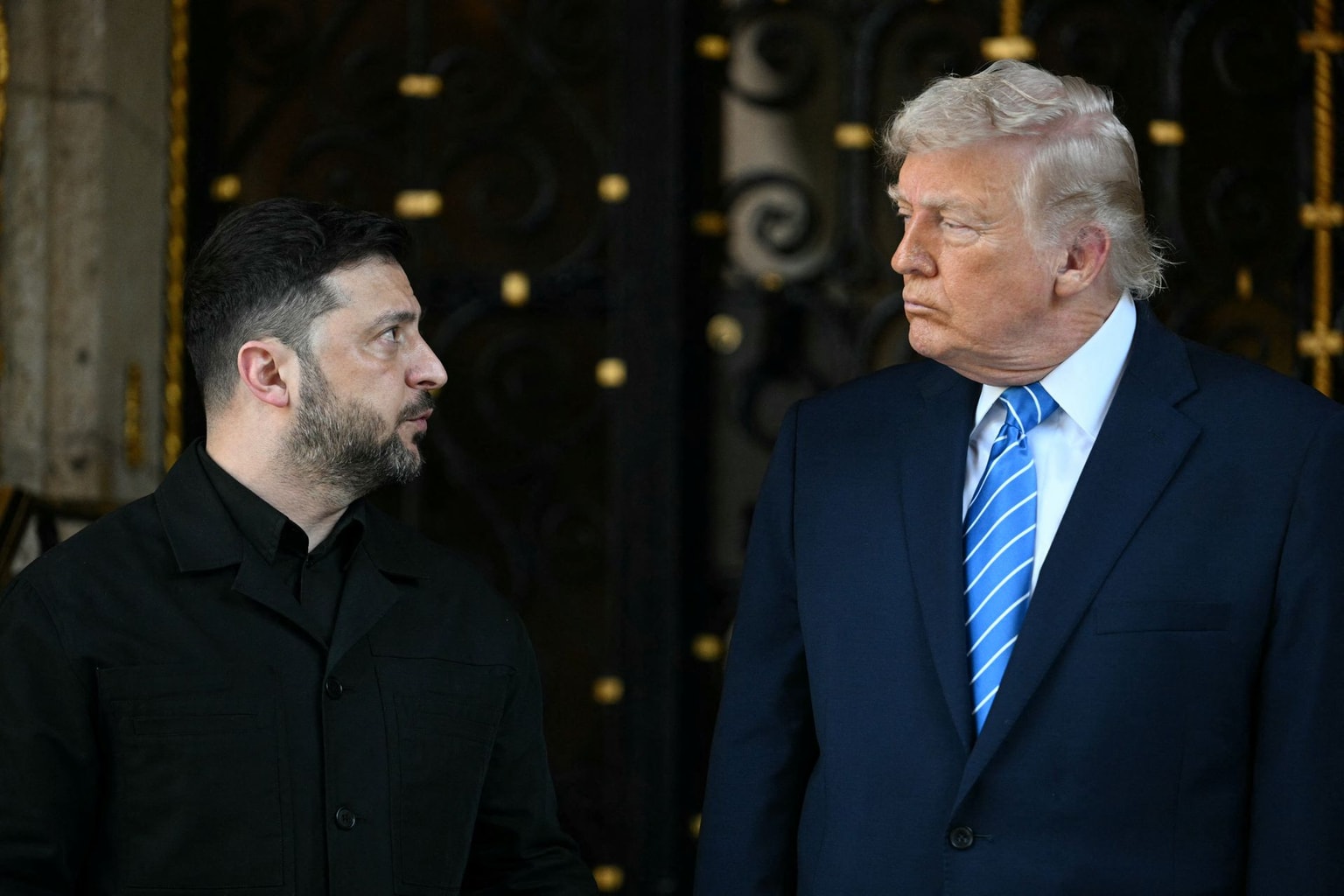
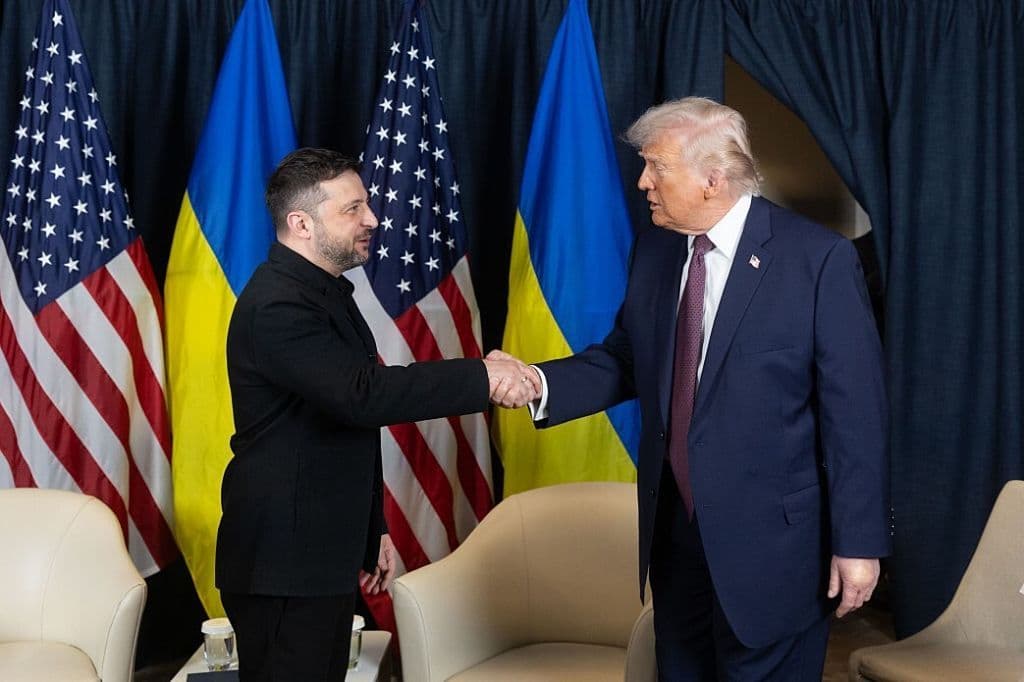
President Volodymyr Zelensky sent a letter to U.S. President Donald Trump warning about Ukraine's worsening shortage of air defense systems, particularly anti-ballistic missile capabilities, the Kyiv Independent has learned.
The appeal comes as Russia intensifies mass aerial attacks on Ukraine and publicly threatens a new wave of long-range strikes on Kyiv, including attacks on what Moscow described as Ukraine's "decision-making centers."
"When it comes to air defense against missiles, we rely on our friends," the letter, seen by the Kyiv Independent, reads. "When it comes to defending against ballistic missiles, we rely almost exclusively on the United States."
Ukrainian officials fear the country's limited supply of Patriot interceptors and other Western-provided systems may struggle to withstand bombardments.
"It's really tough when it comes to anti-ballistic defense," one person familiar with the matter told the Kyiv Independent.
According to the official, Ukraine's ambassador to the United States, Olha Stefanishyna, has been distributing the letter to the White House, House Speaker Mike Johnson, and other members of Congress.
The message also reflects Kyiv's growing concern over difficulties securing weapons through the Prioritized Ukraine Requirements List (PURL) program, which allows NATO allies to finance the purchase of U.S. weapons for Ukraine.
"The current pace of deliveries through the PURL program is no longer keeping up with the reality of the threat we face," the letter says. "I ask for your help in protecting Ukraine's skies from Russian missiles."
Ukraine fails to pass IMF-backed reforms, despite millions of dollars on the line
Ukraine's access to billions in much-needed cash is once again hanging in the balance as lawmakers stumble on reforms.
Having already missed deadlines on a long list of legislation required by the European Union, World Bank, and International Monetary Fund, Ukraine's parliament made limited progress during a plenary session on May 26 and 27 — failing to pass a new IMF tax and withdrawing other bills at the last minute for fear of a lack of votes, said lawmakers who spoke with the Kyiv Independent.
The impasse comes despite an IMF mission arriving on the morning of May 27 to assess the country's progress on reforms — and decide the fate of a $685 million tranche to the country next month.
Ukraine relies in large part on cash from its allies, particularly the European Union, to fund its war effort and keep the state and economy afloat.
But the cash is conditional on Kyiv working its way through a long list of wide-ranging reforms, which encourage the country to reduce corruption, modernize its economy, and align with European and international practices and norms.
During the first day of a plenary session on May 26, parliamentarians failed to pass 11 amendments to a bill introducing a new tax on small imported parcels — one of the IMF's demands, which had a deadline of March 31. The fund says the tax would improve Kyiv's ability to raise more revenue for the state and support itself financially.
After failing to pass the amendments a day earlier, lawmakers on May 27 withdrew some bills after realizing they did not have enough support for them to pass — and to save face as IMF representatives arrived in Kyiv, a lawmaker from President Volodymyr Zelensky’s ruling Servant of the People party told the Kyiv Independent on condition of anonymity to discuss sensitive matters.
The only bill brought to the floor on May 27 that marked tangible progress was a public procurement law tied to a $3.35 billion World Bank loan. Lawmakers passed and approved the final version on May 27, though Kyiv must still pass two other laws related to World Bank funding before the bank will disburse the cash, according to the original conditions.
An official familiar with the matter told the Kyiv Independent that today's progress could be enough to unlock the cash, and the World Bank could postpone the two outstanding conditions to a future loan. Negotiations might follow in the coming days.
Although Ukraine started strong with passing funding-related changes, progress deteriorated in 2025 and 2026 — risking billions of dollars in aid. Tougher reforms, gridlock in the country's parliament, and low prioritization from the government are key factors behind the delays.
Ukraine to intensify middle strike drone campaign as Fedorov unveils 'logistical lockdown' against Russia
Defense Minister Mykhailo Fedorov announced on May 27 that Ukraine was launching a "logistical lockdown" program against Russia by intensifying its medium-range strike campaign.
"Our goal is to increase the pressure on the Russians in the rear even further and prevent them from carrying out active assault operations," the minister said on Telegram.
Ukrainian forces have significantly expanded their medium-range strike capabilities, regularly hitting Russian military targets 20 to 300 kilometers (10 to 180 miles) behind the front line, both inside Russia and in occupied Ukrainian territories.
Targets have included high-value air defense systems, command centers, and facilities belonging to Russia's Federal Security Service (FSB).
The Defense Ministry's new program aims to expand Ukraine's middle strike capacity and "systematically" degrade Russian capabilities at operational depth.
Fedorov added that Ukraine is gradually regaining the initiative on the front lines, while the "cost" of Russian advances continues to rise.
"Russia is suffering record losses: over 35,000 soldiers killed or seriously wounded every month — and we continue to pick up the pace," he added.
Ukrainian forces have also quadrupled the destruction of Russian logistics, warehouses, equipment, command posts, and supply routes through medium-range strikes, according to the minister.
Pope Leo condemns Russian strikes on Ukraine, calls for end to 'sharp intensification' of war
Pope Leo XIV on May 27 expressed solidarity with Ukraine and victims of recent Russian attacks, condemning what he described as a "sharp intensification" of Moscow's war.
The remarks came days after a mass Russian missile and drone attack on the Ukrainian capital on May 24 that killed two people and injured 87 others, including three children.
"I am following with concern the war in Ukraine, which faced... a strong attack," the pope said.
"War does not solve problems, but aggravates them. I express my solidarity with those who have suffered from these recent attacks, also against civilians."
"Where missiles and drones fall, hopes also fall, homes and places of worship are destroyed, and innocent lives are shattered," he added.
The statement also followed Russia's announcement that it plans a new wave of long-range strikes on Kyiv, including attacks on what Moscow called Ukraine's "decision-making centers."
Russia presented the threat as retaliation for a Ukrainian strike in occupied Luhansk Oblast. Moscow claimed the attack hit a dormitory, while Ukraine said it targeted a Russian drone command facility.
President Volodymyr Zelensky and Pope Leo XIV previously discussed Russia's escalating attacks during a phone call in April focused on peace talks and Kyiv's proposal for a ceasefire.
Since becoming pope last year, Leo XIV has repeatedly called for "a just and lasting peace" in Ukraine and offered to host negotiations at the Vatican.
Zelensky has backed the proposal, while Russian officials have rejected the initiative.
Before becoming pope, Leo XIV — then known as Robert Prevost — publicly criticized Russia's full-scale invasion of Ukraine. As pontiff, he has continued to call for peace in Ukraine and the Middle East.