Ukraine fails to pass IMF-backed reforms, despite millions of dollars on the line
 on Google

Ukraine's access to billions in much-needed cash is once again hanging in the balance as lawmakers stumble on reforms.
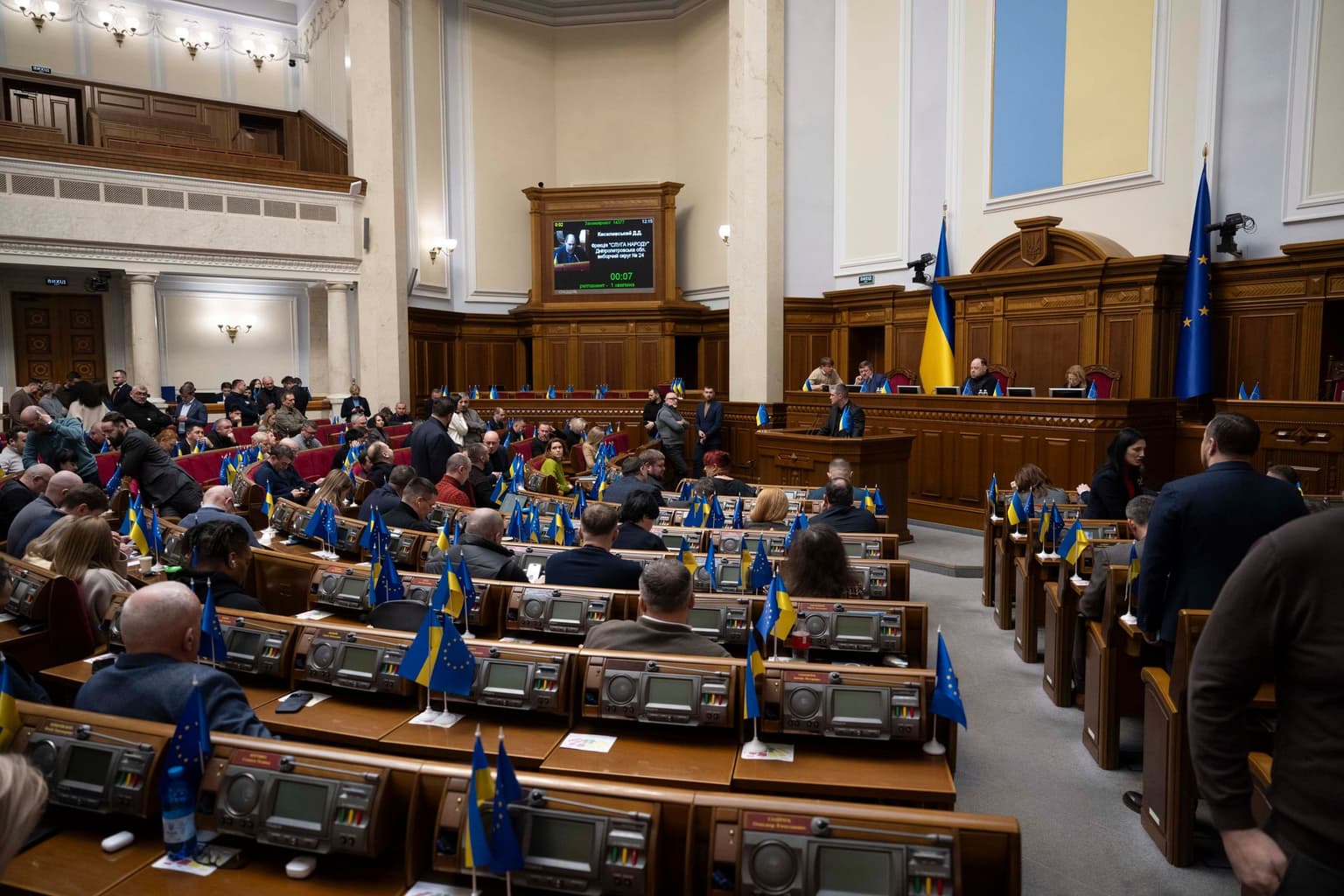
Having already missed deadlines on a long list of legislation required by the European Union, World Bank, and International Monetary Fund, Ukraine's parliament made limited progress during a plenary session on May 26 and 27 — failing to pass a new IMF tax and withdrawing other bills at the last minute for fear of a lack of votes, said lawmakers who spoke with the Kyiv Independent.
The impasse comes despite an IMF mission arriving on the morning of May 27 to assess the country's progress on reforms — and decide the fate of a $685 million tranche to the country next month.
Ukraine relies in large part on cash from its allies, particularly the European Union, to fund its war effort and keep the state and economy afloat.
But the cash is conditional on Kyiv working its way through a long list of wide-ranging reforms, which encourage the country to reduce corruption, modernize its economy, and align with European and international practices and norms.
During the first day of a plenary session on May 26, parliamentarians failed to pass 11 amendments to a bill introducing a new tax on small imported parcels — one of the IMF's demands, which had a deadline of March 31. The fund says the tax would improve Kyiv's ability to raise more revenue for the state and support itself financially.
After failing to pass the amendments a day earlier, lawmakers on May 27 withdrew some bills after realizing they did not have enough support for them to pass — and to save face as IMF representatives arrived in Kyiv, a lawmaker from President Volodymyr Zelensky’s ruling Servant of the People party told the Kyiv Independent on condition of anonymity to discuss sensitive matters.
Two other taxes on self-employed entrepreneurs, called FOPs in Ukraine, and income from digital platforms remain outstanding, both of which had deadlines on March 31.
The only bill brought to the floor on May 27 that marked tangible progress was a public procurement law tied to a $3.35 billion World Bank loan. Lawmakers passed the final version on May 27.
Lawmakers approved the final version, though Kyiv must still pass two other laws related to World Bank funding — on railways and joining the European Single Payments Area — before the bank will disburse the cash, according to the original conditions.
But an official familiar with the matter told the Kyiv Independent that today's progress could be enough to unlock the cash, and the World Bank could postpone the two outstanding conditions to a future loan. Negotiations might follow in the coming days.
Although Ukraine started strong with passing funding-related changes, progress deteriorated in 2025 and 2026 — risking billions of dollars in aid. Tougher reforms, gridlock in the country's parliament, and low prioritization from the government are key factors behind the delays.
Over the past months, Prime Minister Yulia Svyrydenko and Finance Minister Serhii Marchenko have held several meetings with lawmakers to secure support for unpopular bills. A day before the vote on May 25, Zelensky held a closed-door meeting with members of his party.
While the meeting focused largely on war-related issues, Zelensky also pointed to the importance of passing bills tied to foreign financing.
"The president didn't pressure us," said Mykyta Poturaiev, a lawmaker from Zelensky's party. "He reminded us that the IMF mission is coming, and it is important to show that we are making progress, that we are not ignoring their recommendations."
Despite broad recognition and buzz around the problem, progress is yet to be seen.
"There is rather a growing sense that without the adoption of these laws, the funding will not come through," another lawmaker from Servant of the People party told the Kyiv Independent.
"It feels like a certain group of lawmakers, by refusing to vote, is holding the entire country hostage. And frankly, I haven't really heard any rational arguments from those opposing these laws."
The IMF agreed to unlock a new $8.1 billion loan program for Ukraine in February after allowing Kyiv to delay a series of unpopular tax reforms as the country grappled with a severe energy crisis over the winter. IMF programs are crucial in sending positive signals to other donors on lending to Ukraine.
The European Union agreed on a 90-billion-euro loan to Kyiv in December 2025, which is designed to cover two-thirds of Ukraine's needs in 2026 and 2027.
The EU bears the majority of the burden for financing Ukraine. The U.S. used to be a key supporter, but aid has all but evaporated under President Donald Trump's second term.