Ukraine targets Russian crypto, virtual assets in updated sanctions against Moscow's finance sector
 on Google
Ukraine has updated its sanctions against the Russian financial sector, curbing Moscow's ability to evade sanctions via modern technology, according to a decree signed by President Volodymyr Zelensky on June 15.
The new amendments build on sanctions first imposed against Russia's banking and finance sector in February 2023. The original restrictions applied to all Russian banks, credit unions, payment system operators, stock market participants, insurance companies, and investment funds for a period of 50 years.
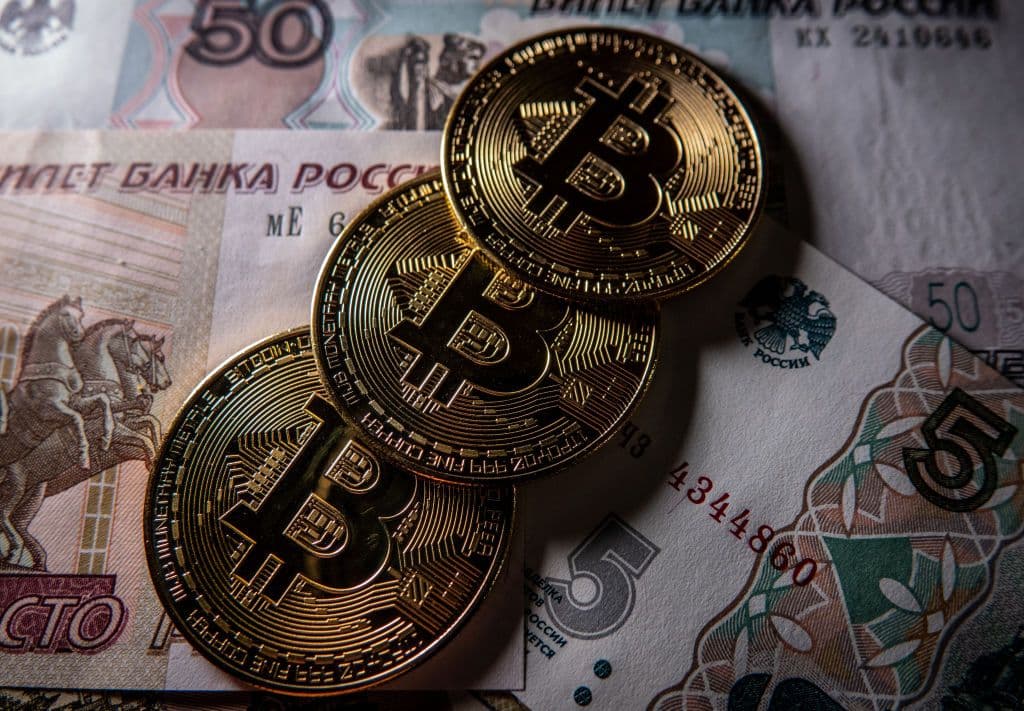
The new measures, adopted based on proposals from Ukraine's National Bank, aim to stop Russia from using modern financial instruments, such as cryptocurrency, to circumvent these sanctions.
Ukraine's sectoral sanctions now apply to operators of digital financial asset platforms, cryptocurrency services, and clearing organizations, according to the Presidential Office. The sanctions prohibit transactions with virtual assets and the use of any platforms, products, or services that enable transactions with virtual assets.
Russia uses these systems and platforms to make international payments in violation of sanctions, according to Ukraine's chief sanctions officer, Vladyslav Vlasiuk.
read also
"Russia is increasingly using cryptocurrency infrastructure, ruble-pegged stablecoins, and specialized payment platforms for international settlements," Vlasiuk told reporters.
One of the most prominent digital assets used in sanctions evasion schemes is the ruble-pegged stablecoin A7A5, which has already been sanctioned by the European Union, Vlasiuk said.
"It is used to pay for shipments, including electronic components and other dual-use goods," he said. "According to available estimates, the monthly volume of such transactions exceeds $5 billion. At the same time, A7 is just one element of the new financial infrastructure that Russia is building to circumvent sanctions."
The so-called "A7 network" was created in 2024 and is led and majority owned by Israeli-Moldovan Ilan Shor, one of the masterminds behind the 2014 Moldovan bank fraud scandal, which saw $1 billion stolen from three Moldovan banks. Promsvyazbank, a Russian state-owned bank that supports Russia's military-industrial complex, is a minority owner of the A7 network.
In February 2026, the Ukrainian government described the A7 network as enabling payments "for the supply of components used in the production of Russian missiles."
The updated sanctions regime brings Ukraine in line with the EU's recent sanctions packages and "makes it possible to block new schemes and increase pressure on the aggressor state's financial system," Vlasiuk told reporters.
Russia has increasingly used cryptocurrencies to bypass Western financial restrictions. The EU's 20th package of sanctions against Russia included a sectoral ban on Russia-based crypto platforms, a transaction ban on the ruble-backed RUBx token, and targeted a Kyrgyzstan-based entity trading A7A5.
Ukraine's measures also take the EU's restrictions a step farther, extending sanctions to Russia's entire financial sector rather than targeting specific platforms or cryptoassets.