Turkey complains Russian gas too expensive in possible discount bid
 on Google

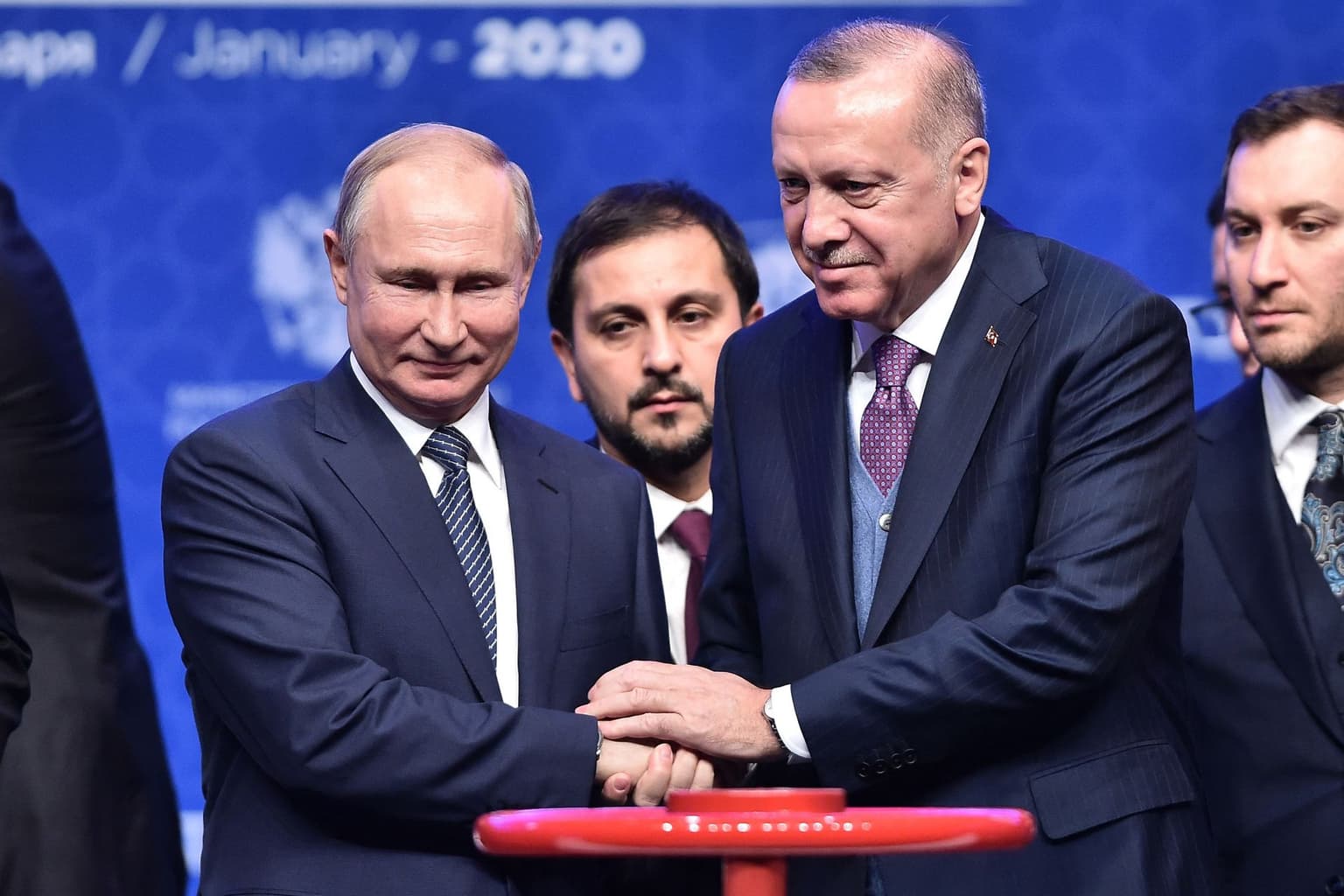
Turkey plans to wind down its reliance on Russian gas, but for cost reasons rather than geopolitical concerns, the country's Energy Minister Alparslan Bayraktar said on Nov. 5, according to media reports.
"The reason we are buying less gas from Russia and more gas from the U.S. has a very simple answer: not politics, but price. Russia is extremely expensive," Bayraktar is reported to have told journalists when presenting Turkey's National Energy 2040 plan on Nov. 5, according to the pro-government Turkiye Today.
The price Ankara pays for Russian gas is not publicly available information, so it is impossible to verify Bayraktar's claim.
However, "this could also be a bargaining message to Moscow: offer a better price or lose more market share," Isaac Levi, an energy policy analyst with the Center for Research on Energy and Clean Air (CREA), told the Kyiv Independent.
"Highlighting American LNG (liquefied natural gas) purchases may simultaneously score points with Washington, while Ankara's insistence that it still needs Russian gas keeps the door open to both," Levi said.
An International Energy Agency (IEA) report on the state of Turkish energy in 2026 notes that in 2022, imported energy accounted for 11% of Turkish GDP.
And in 2027, Russia is set to lose one of its main clients as EU rules completely banning imports of both pipeline gas and LNG come into force.
"Losing its biggest LNG customer will put pressure on Russia to offer deeper discounts to attract buyers such as (Turkey). Ankara could find itself in a stronger position to demand a bargain," Levi said.
Turkey would not be the first country to take advantage of Russia's war to demand that Moscow sell its energy at a discount, with India and China the best-known examples.
Turkey's Russia dependence runs deep
Western countries are banning Russian fossil fuel imports to prevent Moscow from using energy dependence as leverage, but also to deprive Russia of a key source of income that bankrolls its war effort.
That is also why Ukraine has been targeting Russia's energy export infrastructure with drone attacks in recent months — successfully so, and on a near-daily basis.
However, Turkey has not imposed those same measures against Russia and has tended to position itself as a mediator between Moscow and the West, for example, in talks to de-escalate attacks in the Black Sea and in peace talks more generally.
On the contrary, the IEA report notes that Turkey has shackled itself to Russia for various energy sources.
Natural gas alone accounted for "over one quarter of total energy supply in 2024... largely imported from Russia," reads the report.
For oil, Russia accounted for less than one-sixth of Turkish imports in 2021, but accounted for over 50% in 2024.
And Russia has also been the largest supplier of coal to Turkey since 2022, the IEA report notes.
Ankara and Moscow have also teamed up to build the Akkuyu nuclear power plant, which creates a long-term dependency on the Russian state nuclear company Rosatom. The IEA says the plant will have an expected service life of 60-80 years.