Poland, Lithuania reject Merkel's claim they 'did not support' EU unity on Russia
 on Google
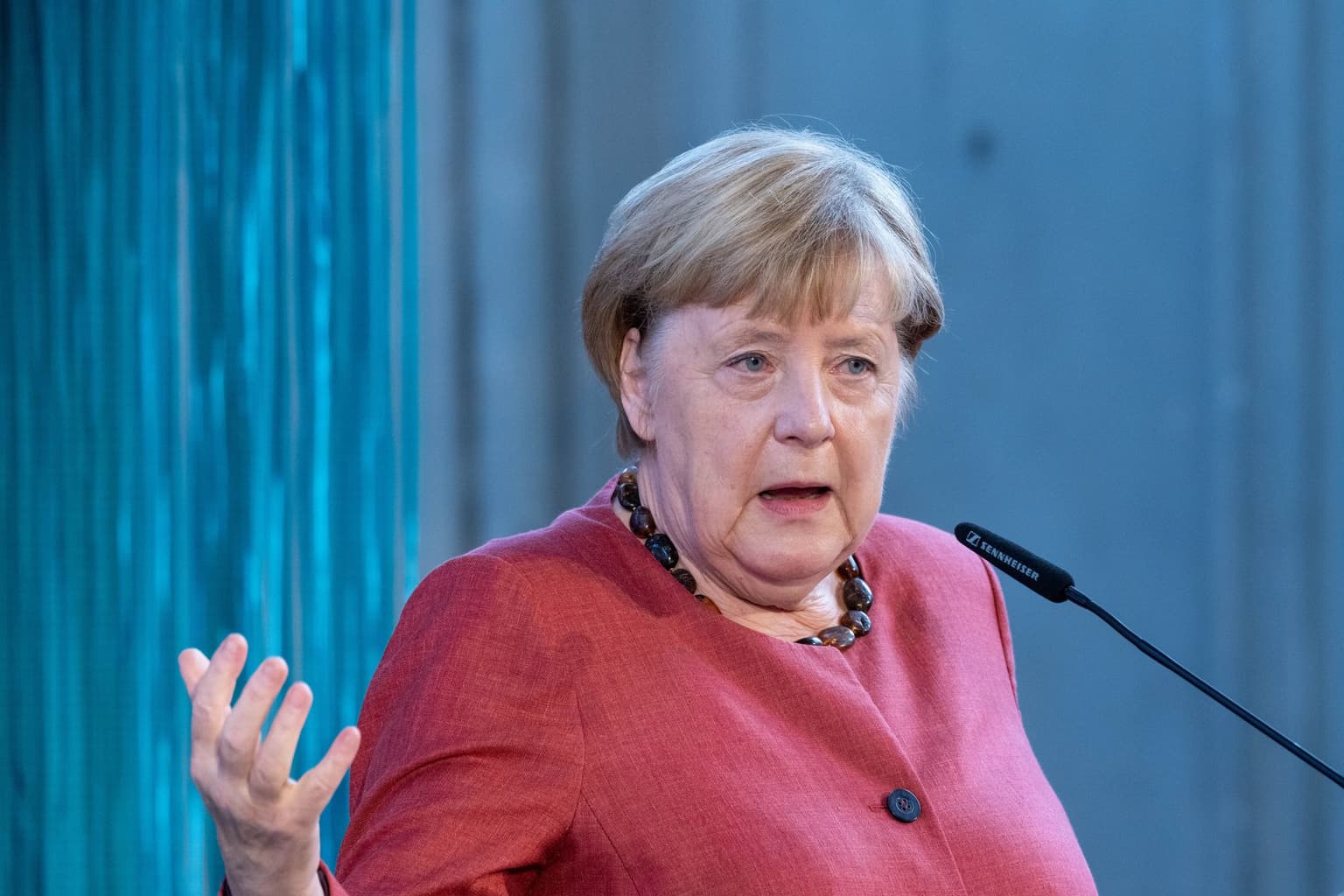
Poland and Lithuania pushed back against former German Chancellor Angela Merkel's comments on Oct. 3 that Warsaw and the Baltic states had undermined the European Union's policy toward Russia.
Merkel told the Hungarian media outlet Partizan that, in 2021, she aimed, together with French President Emmanuel Macron, to revive dialogue between the EU and Russian President Vladimir Putin.
Her proposal, she said, aimed to establish a "new format" that would allow the EU to speak directly with Moscow after she concluded that the Kremlin "no longer took the Minsk agreements seriously."
The proposal also came amid growing concern over a potential Russian invasion, as Moscow massed troops along Ukraine's borders — a precursor to its full-scale assault launched in February 2022.
The former chancellor mentioned that the proposal for a new EU-Russia summit — the first since 2014, when Moscow occupied and illegally annexed Crimea — was rejected at that time.
"Not everyone supported this, above all the Baltic states, but Poland was also against it," Merkel said, noting that these countries were concerend about a lack of common EU strategy on Russia.
"In any case, it did not happen, I left office, and then Putin’s aggression began," she said.
Some media interpreted the comments as Merkel laying partial blame on the start of the Russian invasion of Ukraine on Poland and the Baltics, though the former chancellor did not explicitly say this.
Polish Foreign Minister Radoslaw Sikorski, during a press conference, dismissed Merkel's version of events, saying she had "forgotten" how her government reacted to criticism.
"It's as true as when she said no one from Central Europe protested against Nord Stream," Sikorski said.
"Look at the German government's reaction to what I said in 2007 about how we dislike agreements made behind our backs. The chancellor must have forgotten how her own government responded."
The Nord Stream pipelines connect Russia to Germany under the Baltic Sea and were vital for Russian gas exports to Europe. Nord Stream 1 began operations in 2011, while Nord Stream 2 never operated.
Remigijus Motuzas, chair of the Lithuanian Parliament's Foreign Affairs Committee, also criticized Merkel's remarks, saying they reflected a long-standing policy of "appeasing" the Russian president.
"We do not in any way consider this to be Germany's position," he said. "Merkel represents a long tradition of appeasing Putin, thanks to which Russian tanks are now in Georgia and Ukraine.
"If this line continued, I fear they would end up on their way to Berlin and on our territory."
The former chancellor has maintained a cautious stance since leaving office, emphasizing diplomacy while defending her engagement policy with Moscow and supporting Ukraine's sovereignty.
Critics argue that Merkel's leadership strategy increased Germany's reliance on Russian energy and reduced its military readiness.
President Volodymyr Zelensky criticized her attempted outreach to Putin in 2021, calling it "unfair."