'Disappointing' — Russian Arctic LNG imports to EU rise despite ban as loophole persists
 on Google

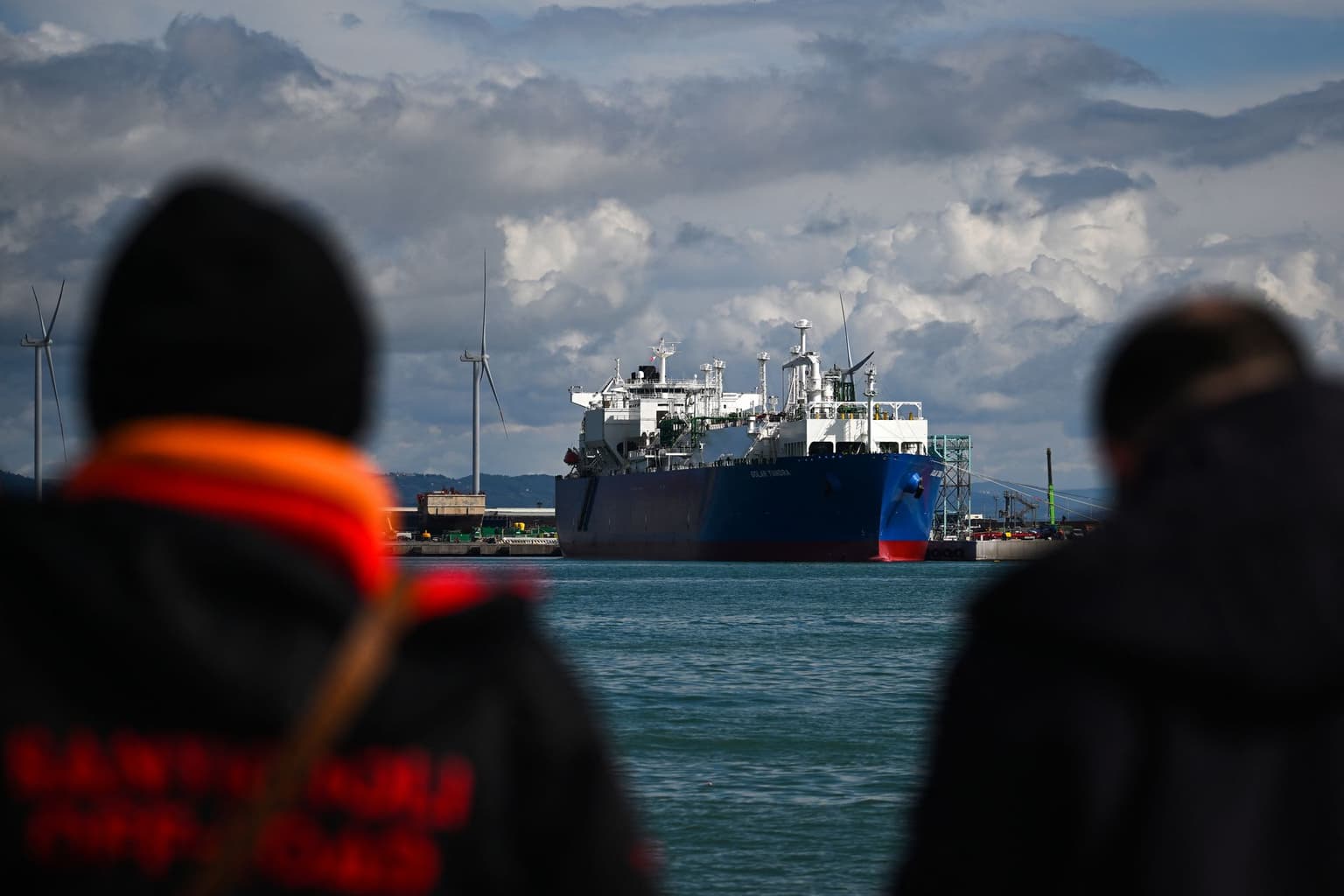
EU imports of Russian liquefied natural gas (LNG) from the Yamal project increased by nearly 18% in the first five months of 2026, according to a report by environmental and sanctions-monitoring NGO Urgewald shared with the Kyiv Independent.
The figures show the challenges facing EU's effort to end its dependency on Russian energy, despite the bloc's phased ban on Russian gas imports.
While Brussels has introduced restrictions on Russian LNG imports, loopholes in the current scheme have allowed shipments to continue flowing to European ports.
According to the report, which relies on Kpler data, EU ports received 8.37 million metric tons of LNG from Russia's Yamal LNG project between January and May 2026.
The trend accelerated in May. Of the project's 25 LNG cargoes exported that month, 23 were delivered to EU ports, totaling 1.7 million metric tons and accounting for 92% of all Yamal LNG exports. The volume was 20.7% higher than in May 2025.
The increase comes despite the EU's first phase of LNG restrictions taking effect on April 25. Short-term contracts signed before June 17, 2025, were prohibited.
New Russian LNG import contracts were subsequently banned on March 18, 2026, as part of the bloc's step-by-step plan to eliminate Russian gas imports.
Still, contracts signed between June 17, 2025, and March 18, 2026, remain valid, creating what analysts describe as a significant loophole.
"The short-term contract ban has had no visible effect so far, because the timing gap weakens its impact," Sebastian Rotters, a sanctions campaigner at Urgewald, said.
"That is disappointing, as the current circumstances seem favorable for ending the war by seriously increasing pressure on Russia."
What is Yamal project?
Yamal LNG, located on Russia's Arctic Yamal Peninsula, is one of the country's largest LNG projects. The facility exports LNG worldwide using a fleet of specialized ice-class tankers designed for extreme conditions.
It is operated by heavily sanctioned Russian gas producer Novatek.

Between January and May 2026, around 97% of Yamal LNG exports were shipped to the EU. China, by contrast, received only four cargoes during the same period.
Overall, 114 cargoes from Yamal LNG arrived at EU ports during the first five months of the year — roughly one tanker every 1.3 days. An average of 55,448 metric tons of Russian LNG entered the EU daily during that period.
Based on an average Dutch TTF gas price of approximately 38 euros ($44) per megawatt-hour, those deliveries were worth around 29 million euros ($33.5 million) daily.
Who's the main buyer?
Spain emerged as the EU's largest importer of Yamal LNG in May, the first time it has held that position since July 2024.
Spanish ports received eight cargoes totaling 586,279 metric tons during the month.
Between January and May, Spain imported 2.13 million metric tons across 29 shipments, a 45% increase compared with the same period last year.
Belgium's Zeebrugge LNG Terminal remained the project's key European hub.
The terminal received six Yamal LNG cargoes in May, totaling 439,766 metric tons. During the first five months of 2026, Zeebrugge handled 31 Yamal LNG shipments, compared with 25 during the same period in 2025.
A spokesperson for Belgium's Foreign Ministry said EU's agreement adopted last October sets out a legally binding roadmap to phase out Russian gas imports.
The problem is that the plan is not due to take full effect until Jan. 1, 2028.
"Belgium voted in favor of that agreement and is actively working towards that objective," the spokesperson told the Kyiv Independent. "Every European measure in this field is implemented strictly by Belgium."
Urgewald urged the EU to accelerate the phaseout and use additional measures to curb exports from Russia's Arctic gas projects.
"EU imports of LNG from the Russian Arctic are still rising," Rotters said.