Ukraine should not reject associate EU membership
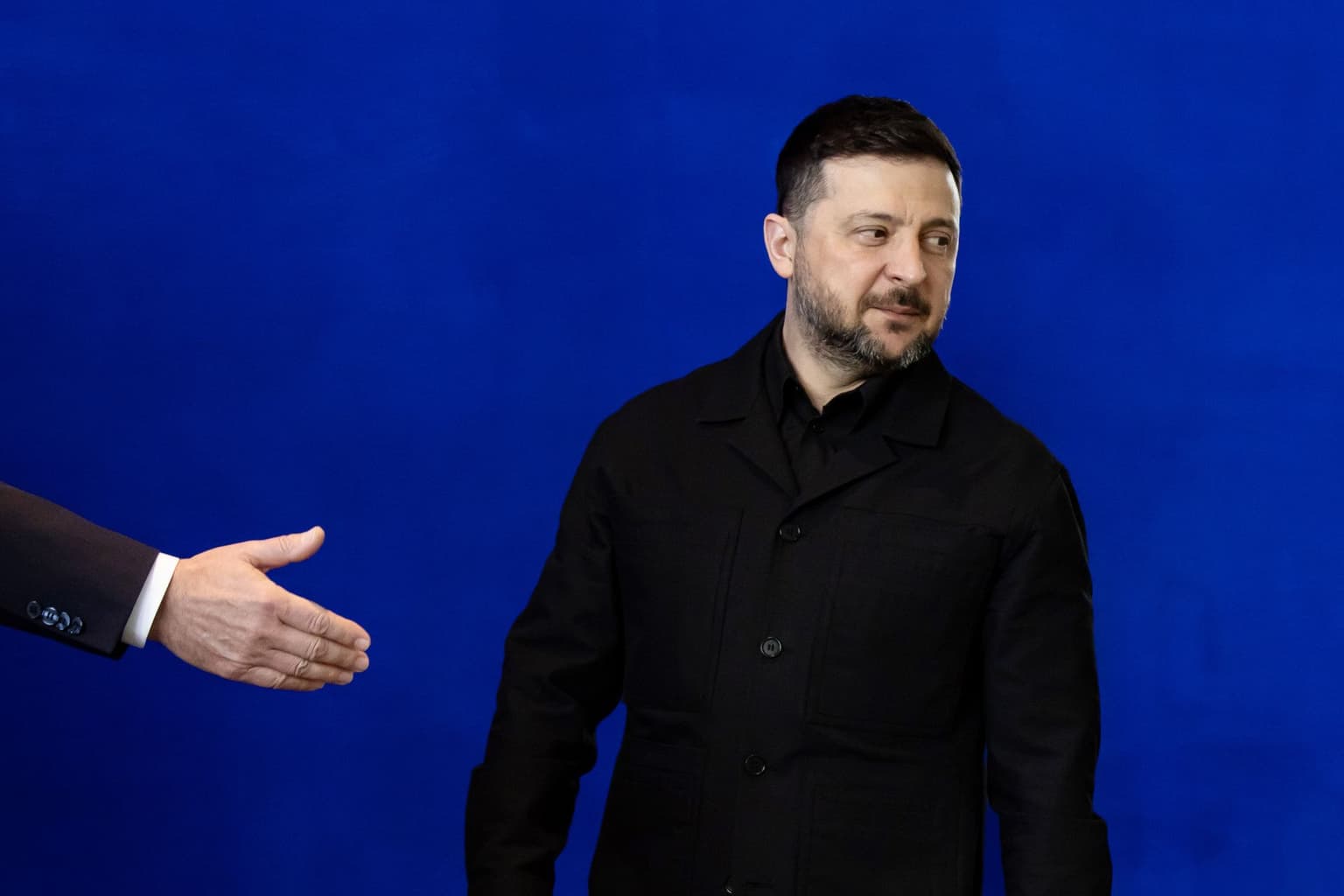
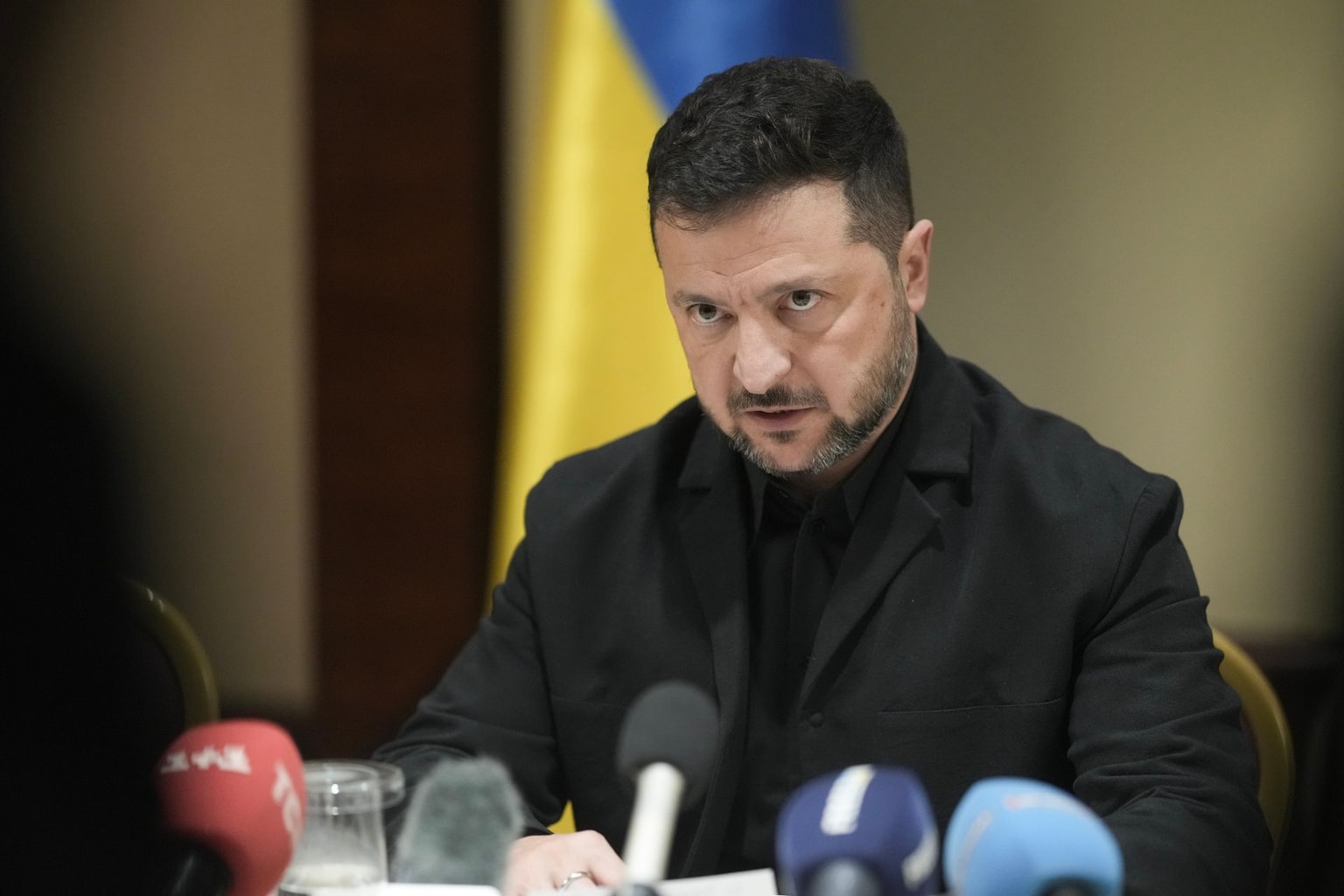
President Volodymyr Zelensky arrives for a press conference at the Chancellery in Berlin, Germany, on April 14, 2026. (Emmanuele Contini / NurPhoto / Getty Images)
 on Google
William Dixon
Senior associate fellow at the Royal United Services Institute
Volodymyr Zelensky made a rare misstep when German Chancellor Friedrich Merz proposed associate EU membership for Ukraine, offering institutional access, participation in Council meetings, gradual budget integration, and critically, Article 42(7) security guarantees.
Zelensky rejected it, insisting Ukraine deserves full and equal membership. In principle, most Europeans would agree. On politics, however, we can argue.
Ukraine's EU candidacy is not the problem Europe is currently trying to solve. Ukraine is the test that Europe's current enlargement model is failing, and has been failing for a while now.
No country has acceded to the EU since Croatia in 2013.
Serbia, Bosnia, Montenegro, Albania, Moldova, and Georgia remain stuck in a prolonged accession process that has imposed years of conditionality but yielded little real political progress. Not to mention Turkey, which has been trapped in this process since the early 1960s.
The gap between Europe's promises and its ability to deliver on enlargement is becoming increasingly apparent, especially when all the factors are added into the equation: American retrenchment, strategic competition with China, and a land war on European soil.
Associate membership should not be viewed as an institutional demotion, as it reflects a broader reality. Built in a different era and governed by unanimity and veto, the European accession system was designed for a trading bloc expanding into a stable post-Cold War neighborhood. It is not equipped for a continent that wants to become a strategically autonomous third pole, where enlargement has become a core instrument of geopolitical security.
Kyiv should therefore see the offer for what it actually is: a serious attempt to break a potential decade-long deadlock and to prioritize Ukraine as an anchor within European architecture.
Merz and his government know that under the current rules, hostage to unanimity and veto, full membership for Ukraine might never come. As EU leaders prepare to debate the proposal at the June European Council summit, Kyiv should accelerate efforts to shape this offer rather than reject it. That window might not stay open.

A new multi-speed Europe
Europe is facing a reality in which it no longer has the luxury of treating Ukraine's membership as a bureaucratic governance question. It knows the cold logic of new geopolitics has made one thing clear: Europe must act as a unified strategic pole or risk irrelevance.
In that context, Ukraine's ambiguous status, neither inside European architecture nor formally outside it, became the condition Russia has actively cultivated, exploited, and ultimately used for its war.
Ukrainian diplomacy must demand a hard legal lock to eventual full integration.
Caught in an ambiguous space between two worlds, Ukraine became easy prey for Kremlin pressure. Without a firm European anchor, Putin had room to destabilize — and ultimately to push Yanukovych to abandon the EU Association Agreement in 2013. Ukrainians answered on the Maidan, in their hundreds of thousands. Today, the price of that unresolved belonging is a full-scale invasion.
As long as Ukraine's European future remains unresolved, not guaranteed, and not delivered, Russia has both the motive and the narrative to keep fighting.
Associate membership, with binding security guarantees under Article 42(7), would place Ukraine within European architecture now, not at the end of a decades-long accession process.
Ukraine holds the cards
Multi-speed Europe is what Europe actually does when the stakes are finally high enough. Europe already accommodates varying degrees of integration. Wealthy, stable, and sovereign Norway and Switzerland are part of the single market, bound by European rules, yet have no say in the European Parliament.
And yet, nobody calls them second-tier. Since the war, both have been pulled deeper into EU defense frameworks as non-members.
Post-Brexit Britain is being pulled back into Europe, negotiating access to the SAFE defense procurement fund in arrangements that would have been politically toxic in Westminster three years ago. The coalition of the willing exists because NATO and EU frameworks couldn't move fast enough.
The Merz proposal belongs to that same logic.
The path to full membership is currently blocked by the accession framework, giving every member state an effective veto. This allows narrow, often very specific, domestic politics across Europe to shape a candidate country's future.
Russophile governments can still veto. Even among allies, Polish, French, and Dutch farmers, faced with Ukrainian agricultural exports, give Warsaw, Paris, and the Hague reason to hesitate.
Associate membership helps to bypass these issues altogether. Kyiv must use the upcoming June European Council summit to aggressively shape Merz's offer.
Ukrainian diplomacy must demand a hard legal lock to eventual full integration. The alternative for Brussels is a highly militarized, technologically advanced, battle-hardened Ukraine stranded permanently in Europe's grey zone.
It is a potential strategic catastrophe Europe cannot afford.
Editor's note: The opinions expressed in the op-ed section are those of the authors and do not purport to reflect the views of the Kyiv Independent. This op-ed was corrected on June 12, 2026. An earlier version incorrectly stated that Herbert Kickl leads Austria's government.