From Crimea to Kaliningrad — Do Ukraine's latest strikes signal a broader campaign?
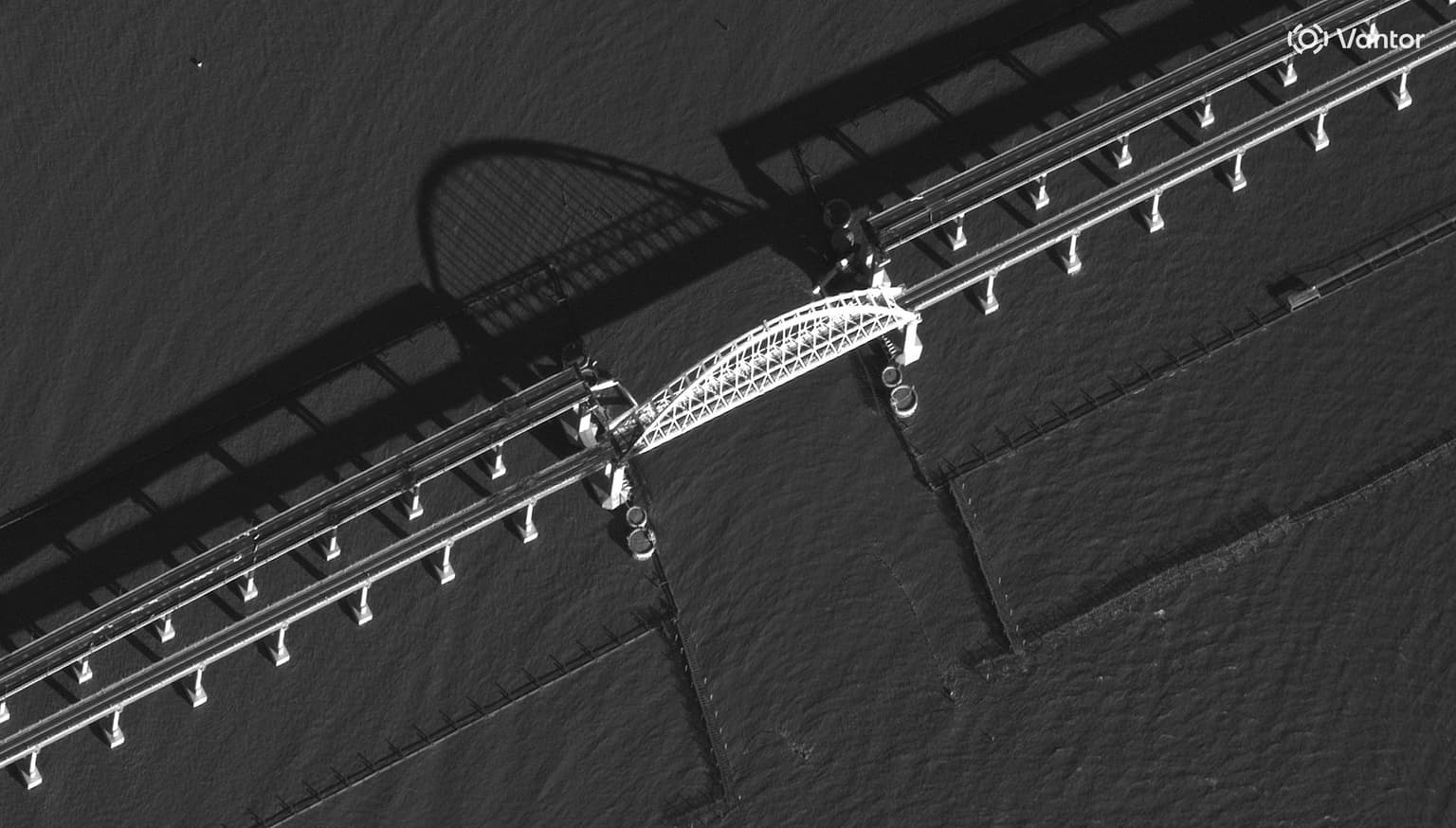
A satellite image shows a damaged section of the Crimean Bridge in the Kerch Strait, Russian-occupied Crimea, Ukraine, with a lattice truss span displaced across a gap between bridge sections above the water, on Nov. 19, 2026. (Satellite image / 2026 Vantor / Getty Images)
 on Google
In less than a week, Ukraine has destroyed a section of Russia's Crimean Bridge and sunk one of its newest warships off the coast of Libya, amid a series of reported attacks stretching from the Baltic to the Black and Mediterranean seas.
Since Russia started its full-scale invasion in February 2022, many have focused on managing or warning of a Russian escalation, given that the Kremlin holds the world's largest nuclear arsenal and Russian President Vladimir Putin is no stranger to threatening others with it. The latest talks between Trump and Putin in Abu Dhabi, meanwhile, reinforced concerns in Kyiv that Washington is increasingly focused on ending the war quickly, even if that requires significant Ukrainian concessions.
But Ukraine's latest strikes raise the question of what escalation dominance Kyiv holds over Moscow, and whether it is now playing out at an opportune moment.
"Kerch, Baltiysk, the Gulf of Finland, Benghazi: all of them are points on Russia's own military supply chain, and Ukraine has now shown it can hit every one of them within a single week."
"Even many people who sympathize with Ukraine assume that a nuclear Russia is effectively invincible and that it would be better to reach any agreement, even one at the expense of Ukrainian interest," Nona Mikhelidze, Senior Fellow for Russia, EU, and Eastern Neighborhood at the Istituto Affari Internazionali (IAI), told the Kyiv Independent.
"That assumption is becoming harder to defend."
On Nov. 17, a Ukrainian missile strike caused an entire section of the Crimean Bridge, a major supply route connecting Russia to occupied Crimea, to collapse into the Kerch Strait. The strike capped a weeks-long operation involving several Ukrainian-made weapons systems, in a significant blow to Russian military logistics and to one of Moscow's most prominent symbols of control over Crimea.

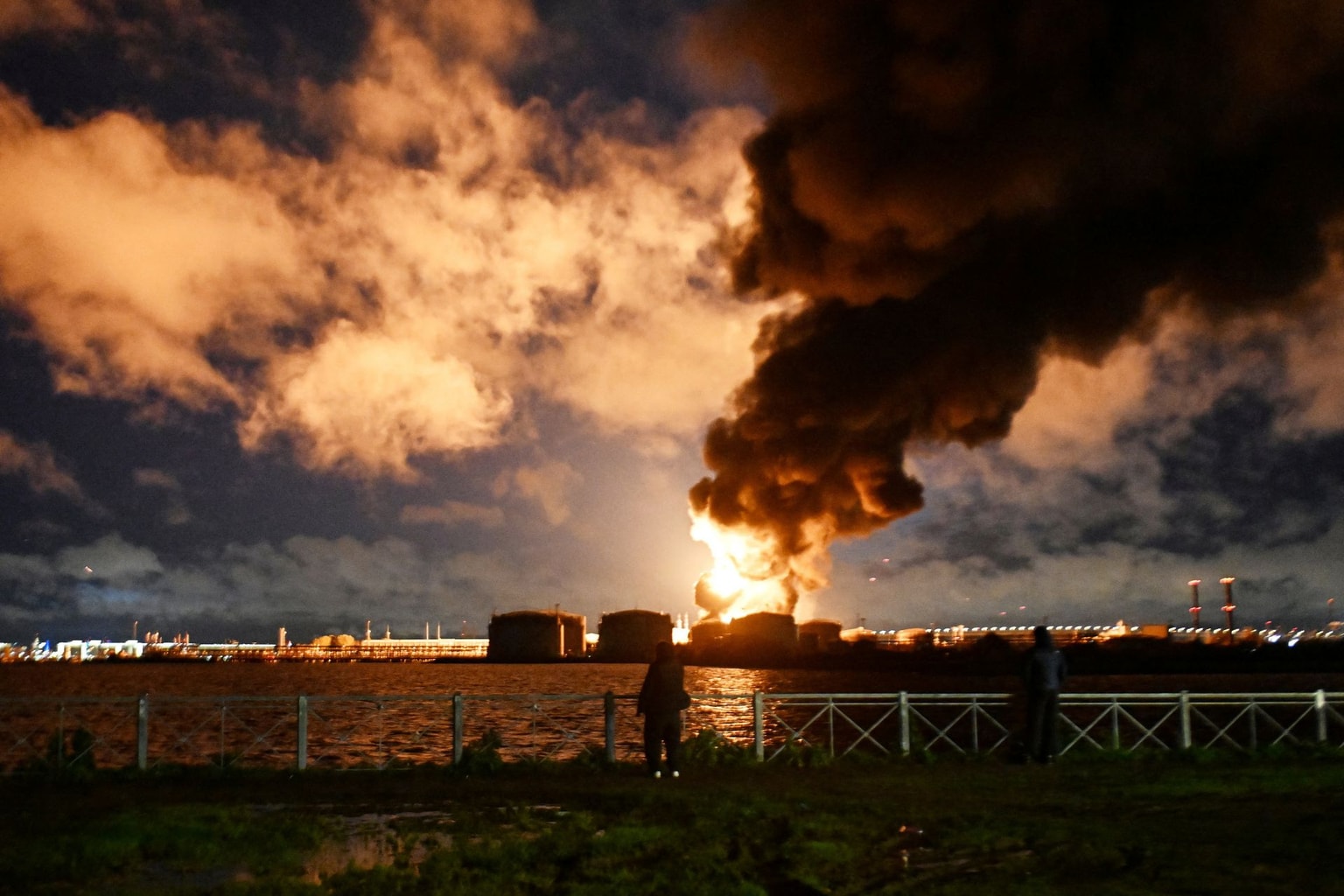
The next reports of attacks came from farther north, where explosions and suspected drone activity were reported on Nov. 21 near Russia's Baltic Fleet base in Kaliningrad — a heavily militarized Russian exclave separated from mainland Russia and wedged between NATO members Poland and Lithuania — while Ukrainian drones struck a sanctioned Russian cargo ship, the Sparta II, in the Gulf of Finland.
While Ukraine has so far confirmed responsibility only for the strike on the Sparta II, both incidents suggest growing threats to Russian assets in the Baltic Sea.
On Nov. 23, attention shifted thousands of kilometers south, to the Mediterranean, where Ukraine claimed responsibility for sinking the Russian Navy corvette Merkury off the Libyan coast.

Ukraine had previously struck a Russian shadow fleet tanker in the Mediterranean in December 2025, but this time targeted a Russian warship, bringing the threat directly to Moscow's military presence in the region.
"The Kremlin is betting that time is on its side. Ukraine is trying to show that another month of war also carries costs for Russia, including in places far removed from the front," Dr. Mykola Nazarov, Senior Analyst at the Sahaidachnyi Security Center and non-resident Research Fellow at the International Centre for Defense and Security (ICDS), told the Kyiv Independent.
New escalation or old patterns?
Catarina Buchatskyi, Director of Analytics at the Serpens Center for International Security, said that speaking of escalation was categorically wrong, given that a country defending itself cannot escalate a war.
"Escalation implies two parties climbing a ladder together. Here there is one aggressor, and it has set the terms of this war from the first day," she said.
Nazarov also advised using the word escalation carefully. Instead, he described Ukraine's latest strikes as widening the geography of risk for Russia's military system.
While Ukraine has been trying to disrupt the transport links that sustain Russian forces for several years, the distance from Ukraine at which such operations can be carried out has expanded, Nazarov said.
"The strategic logic is familiar," he said, but "the war is reaching places that Moscow could previously treat as relatively safe."

Buchatskyi also said it is primarily the range of Ukrainian attacks that has changed.
"Kerch, Baltiysk, the Gulf of Finland, Benghazi: all of them are points on Russia's own military supply chain, and Ukraine has now shown it can hit every one of them within a single week."
The strike on the Sparta II was the most recent attack in the Baltic Sea, but Nazarov pointed to Ukrainian sabotage aboard the Russian missile ship Serpukhov in Baltiysk on April 8, 2024, and Ukrainian strikes on the Russian corvette Boiky at Kronstadt this June, and the Russian missile ship Naro-Fominsk in the Gulf of Finland on Nov. 11.

"Taken together, those episodes challenge an assumption Moscow could once reasonably make about its Baltic Fleet: that keeping a ship far from the Black Sea offered it a considerable degree of protection."
"The logic is to make the occupation of Ukrainian territory unsustainable by cutting logistics and draining the resources that feed the war, rather than relying only on attrition along the front."
Mikhelidze said that these latest strikes are partly a continuation of previous Ukrainian long-range strike efforts, but on a new scale, with greater geographic reach and confidence.
While Ukraine is counterattacking across the front line, such as in Sumy and Donetsk oblasts, its forces are also striking targets that sustain the Russian war machine, from oil refineries to data centers deep inside Russia, she said.

But the recent strikes show that Ukraine is also striking Russian assets well beyond its own border, including in the Baltic and the Mediterranean seas.
"The logic is to make the occupation of Ukrainian territory unsustainable by cutting logistics and draining the resources that feed the war, rather than relying only on attrition along the front," she added.
An effective campaign?
Mikhelidze said that none of the recent strikes mean Russia is on the verge of collapse, but that the effectiveness of such strikes should be measured by whether Ukraine is dictating the terms of the war — something she argued is already happening.
"Beyond its concrete military goals, the offensive is a statement about Ukrainian agency — the principle that the future of Ukraine, including its domestic and foreign policy, is decided by Ukrainians," she said.
The effect of Ukraine's strikes also lies in challenging an old view of world order, in which great powers maintain the balance among themselves and small and medium states are subordinate to it, Mikhelidze told the Kyiv Independent.
"Since January 2025, for nearly two years, Ukraine has in effect resisted pressure from two nuclear-armed states at once: Russian military attacks and American political pressure."
Now, it seems rather unlikely that Ukraine will yield to pressure from some Western actors, or be weakened, should European unity fragment after elections in 2027, she added.
"In 2022, much of Europe expected Kyiv to fall in three days. In 2026, Ukraine is reportedly able to strike a Russian military vessel off the Libyan coast. For many Europeans, this is almost shocking, precisely because it contradicts the mental picture they had built of Ukraine as fragile and dependent," she said.

Buchatskyi told the Kyiv Independent that Ukrainian strikes now follow Russia's war machine wherever it goes.
"If the war's map looks bigger, that's because Russia's war machine was always this big, but now the ability to reach it has finally caught up," she said.
In the Baltic Sea, the effects of Ukraine's strikes may take longer to become visible, Nazarov said, and assessing the campaign's effectiveness may take different forms in the coming weeks.
"Does Russia begin escorting ships that previously sailed unescorted? Do deliveries become slower or less reliable? Does protecting ports and naval vessels tie up air defenses that are needed elsewhere?" he said.
But while the strike in the Baltic Sea may raise questions for Russia about the security of its supply route, it also raises questions for Ukraine's close partners Estonia and Finland, Nazarov said. For Tallinn and Helsinki, the immediate problem was a burning cargo ship that had been hit in international waters and then drifted into Finnish waters.
"How well Kyiv works with them on those consequences will help determine whether it can sustain political support for a campaign whose reach has grown this far," Nazarov said.
"A country that shows this much agency on the battlefield and in diplomacy will not be a passive party in any settlement."
Finland's defense minister already raised the risks to civilian shipping with Kyiv, and Ukraine has a direct interest in taking its partners' concerns seriously, Nazarov said. At the same time, Finnish Prime Minister Petteri Orpo commented on the Sparta II strike and emphasized that Ukraine has the right to defend itself against the aggressor.

The strikes also show that Ukraine has maintained an offensive posture even as partners, such as Washington, increase pressure on Kyiv to concede to Russia's demands, and seemingly limit critical assets, such as the Starshield satellite communications system.
"Since January 2025, for nearly two years, Ukraine has in effect resisted pressure from two nuclear-armed states at once: Russian military attacks and American political pressure," Mikhelidze said.
She believes the future of Ukrainian offensives will likely resemble recent strikes, albeit with growing intensity, including deeper strikes on Russian energy and logistics, sustained pressure on supply routes to Crimea, and operations far from Ukraine's borders, all supported by a domestic defense industry.
"A country that shows this much agency on the battlefield and in diplomacy will not be a passive party in any settlement," she said.