'Tough night' for Polish air defense as 'likely Russian' missile falls in Lublin region
 on Google
An object that crashed into a field in eastern Poland overnight on July 30 was probably a Russian missile, Polish Prime Minister Donald Tusk said.
"All the indications are that it was a Russian Kh-101 ballistic missile, but we want to be 100% certain about the type of missile and who launched it," Tusk said at the site of the incident near the village of Tarnawa-Kolonia in the Lublin region.
The Kh-101 is in fact a cruise missile, not a ballistic missile.
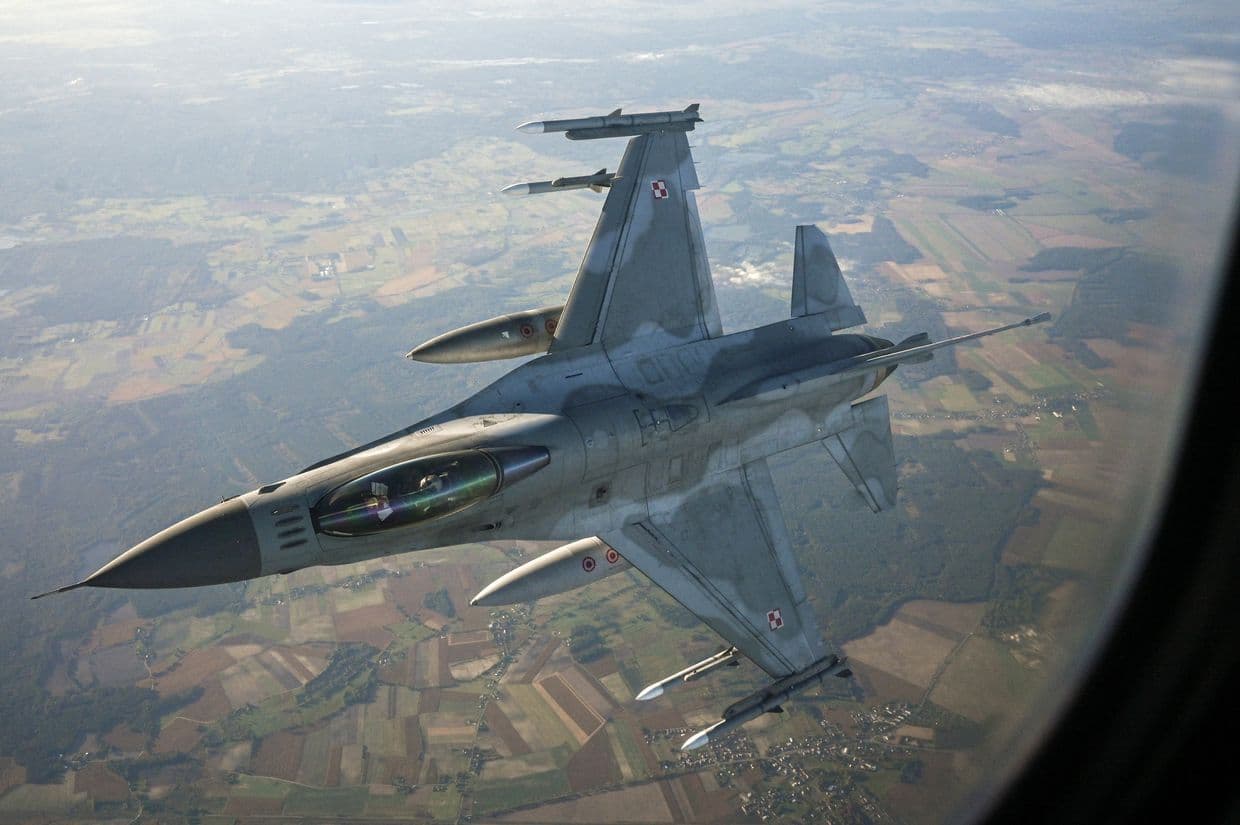
In the early hours of July 30, sirens blared in the Lublin region, F-16 fighter jets were scrambled, and an explosion was reported after an "unidentified object" strayed into Polish territory amid a larger Russian mass attack on Ukraine.
The missile threat made for an "extremely tough night" for Polish air defense, observation and threat detection systems, the country's defense minister Wladyslav Kosiniak-Kamysz said on social media the following morning.
Across the border, Ukraine's Air Force was responding to 74 cruise, ballistic, and hypersonic missiles, as well as 284 Shahed-type drones, in yet another large-scale Russian aerial assault, one of hundreds launched since the start of Russia's full-scale invasion.
At 3:40 a.m. local time, the Polish military's operational command reported, an "unidentified object" was detected in Polish airspace, while "at least a dozen" missiles were "operating over western Ukraine."
A Polish F-16 jet was deployed to identify and intercept the object, but six minutes later, the radar signal had disappeared.
Later, a helicopter crew located the impact site near the village of Tarnawa-Kolonia in Lublin Voivodeship, the military said.
Images soon emerged in local media of a crater in a field. Polish Prime Minister Donald Tusk is traveling to the site, a Polish government spokesperson said on July 30.
Tarnawa-Kolonia is located around 90 kilometers (56 miles) from the Polish-Ukrainian border and 150 kilometers (93 miles) northwest of Lviv, where at least 31 people were injured, including three children, after a Russian missile struck a residential building.
The attack on western Ukraine came as part of a larger Russian mass attack on the country, with at least six people killed — including three children — in the city of Kryvyi Rih in Dnipropetrovsk Oblast, and at least one in Kyiv.
Ukraine's Foreign Minister Andrii Sybiha on July 30 said in a social media post that it was a "Russian Kh-101 cruise missile (that) flew into the territory of Poland during Russia's large-scale strike on Ukraine, violating NATO airspace."
"This is yet another convincing evidence that strengthening Ukraine's air defense is now an urgent necessity and serves as a guarantee of protection for the entire Euro-Atlantic community," he added.
The reported incursion is not the first time Russian mass attacks on Ukraine have tested Polish air defenses.
On Dec. 29, 2023, a missile entered Polish airspace, putting the country's defenses on high alert.
In another incident on Nov. 15, 2022, a missile flew into Polish territory during a Russian mass strike, killing two civilians.
Polish investigators later concluded that it was a stray Ukrainian anti-air projectile launched to intercept the Russian attack.
In what was widely understood to be a deliberate provocation and test of NATO's response, 19 Russian drones entered Polish airspace in September 2025, triggering consultations under Article 4 of the North Atlantic Treaty.