Zelensky fires deputy chief of staff as anti-corruption bureau exposes alleged influence network
 on Google


Editor's note: Read the story about the NABU's corruption investigation against Mudra and other suspects here.
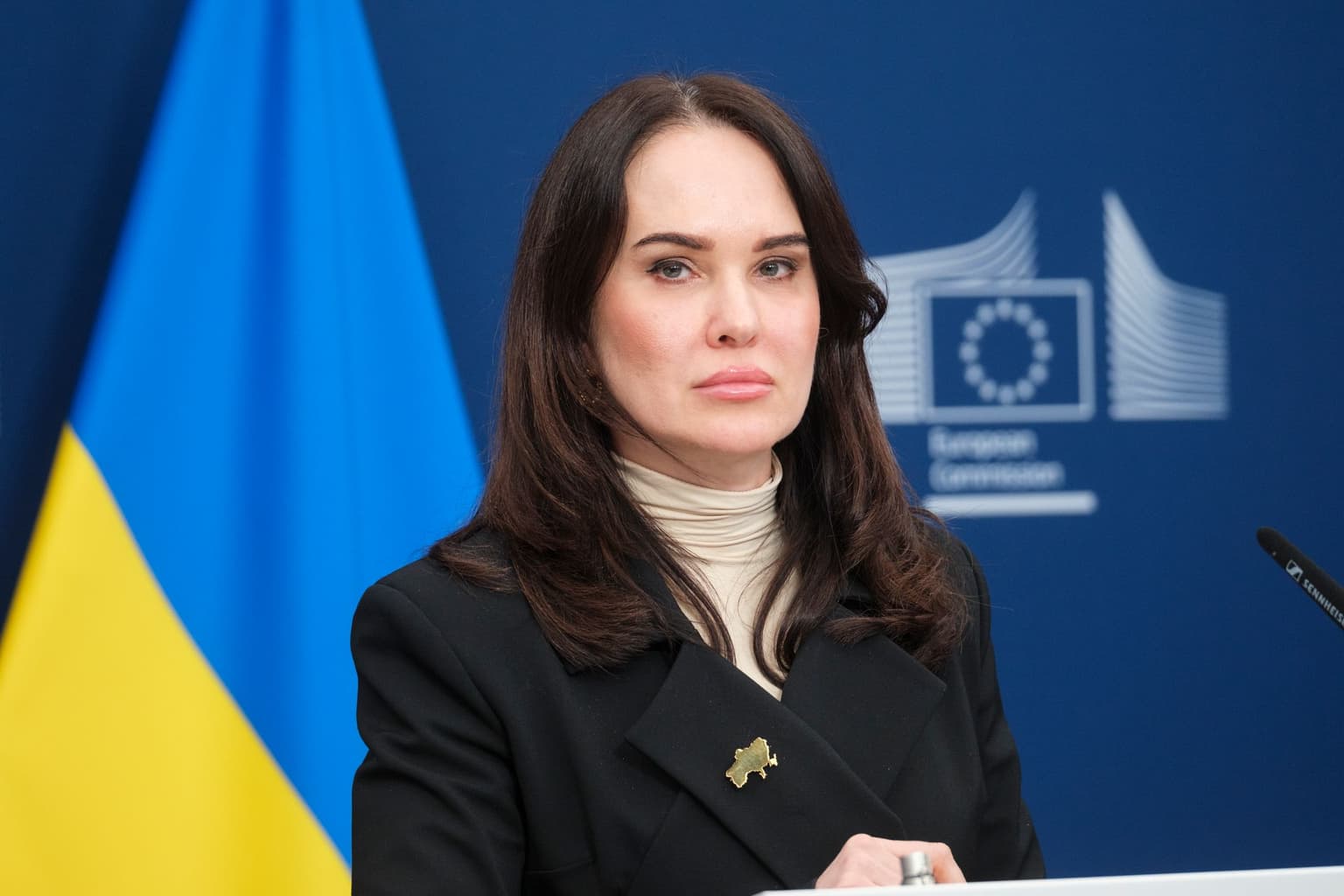
President Volodymyr Zelensky dismissed his Deputy Chief of Staff Iryna Mudra on Aug. 19, as the National Anti-Corruption Bureau (NABU) investigated a criminal organization allegedly involving senior officials from the President’s Office.
A law enforcement source familiar with the investigation told the Kyiv Independent on Aug. 19 that NABU searched Mudra’s premises. Mudra confirmed that she had been charged and served with a request for a preventive measure, but said she had not been detained.
The Kyiv Independent had sent Mudra a request to comment.
The Anti-Corruption Bureau said it was "conducting a special operation to expose a criminal organization led by a current and a former Ukrainian lawmaker and involving senior officials from the President’s Office."
The bureau later said the suspects were accused of laundering Hr 150 million ($3.4 million) in bail money through the state-owned Sense Bank for a suspect in a separate corruption case.
Mudra was responsible for judicial affairs and judicial reform at the President’s Office. Investigators allege that she was expected to help raise the funds needed to post bail for former Energy Minister Herman Halushchenko.
According to search warrants, unidentified individuals from the President’s Office also tasked Mudra with bringing Sense Bank under the President Office’s control to prevent other government bodies from taking control of the state-owned bank.
In June, Mudra said someone had summoned her and told her that Sense Bank’s CEO and supervisory board head would come to meet her, according to audio recordings later published by NABU.
She also said that a person named "David" and the head of a parliamentary committee were seeking to provide political cover for Sense Bank. It remains unclear whether "David" referred to David Arakhamia, head of Zelensky’s parliamentary faction.
"They will not crack down on Sense Bank, and Sense Bank must pay them," Mudra said, referring to David and the committee head.
Mudra also said that Timur, whom she described as an "Israeli refugee," had called her and asked her to take over Sense Bank. The reference appears to be to Timur Mindich, a suspect in the Energoatom corruption case and a close associate of Zelensky.
Over the past year, NABU has uncovered alleged influence by people close to the President’s Office over state-owned companies and government agencies, including Energoatom and the Energy Ministry.
The full extent of Mudra’s influence over government institutions remains unclear. However, the Kyiv Independent found that her sister, Lesya Romanivna Ulashli, holds a senior position at the National Securities and Stock Market Commission (NSSMC), where she oversees Ukraine’s cryptocurrency and virtual-asset regulation.
When asked by the Kyiv Independent whether she was Mudra’s sister, Ulashli declined to comment. Open-data sources indicate that Mudra has a sister named Lesya Romanivna Ulashli and that both women share a relative named Stefania Mudra, who is likely their mother.
Because the NSSMC is subordinate to the president, who appoints its members through a competitive selection process, the relationship could create a potential institutional conflict of interest, according to an expert in Ukraine’s cryptocurrency and virtual-asset regulation who spoke to the Kyiv Independent on condition of anonymity.
The expert said Ulashli’s position could potentially give the President’s Office influence over which companies receive cryptocurrency licenses. It may also have enabled the office to delay long-awaited virtual-asset legislation, which has been repeatedly postponed since 2022.
"After the law is adopted, there will be a transitional period to declare virtual assets and pay standard income tax on profits, bringing crypto holdings out of the shadows. I don’t think anyone from the President’s Office would want to do that," the expert said.
The delay in Ukraine’s cryptocurrency regulation has frustrated international partners, particularly the International Monetary Fund, which pressured Kyiv to finalize the legislation in 2024.
Cryptocurrency is frequently used to launder money in Ukraine, with illicit transactions estimated to cost the country billions of dollars annually. NABU has also alleged that suspects in Operation Midas laundered proceeds from corruption through cryptocurrency transactions.