Help us keep bringing the truth to light, even when Russia turns the lights out.

Shop and support
News Feed

'We are doubling the Ukraine Facility' — EU proposes 100 billion euros for Ukraine aid fund in 2028–2034 budget

• 2 min read
'We are doubling the Ukraine Facility' — EU proposes 100 billion euros for Ukraine aid fund in 2028–2034 budget
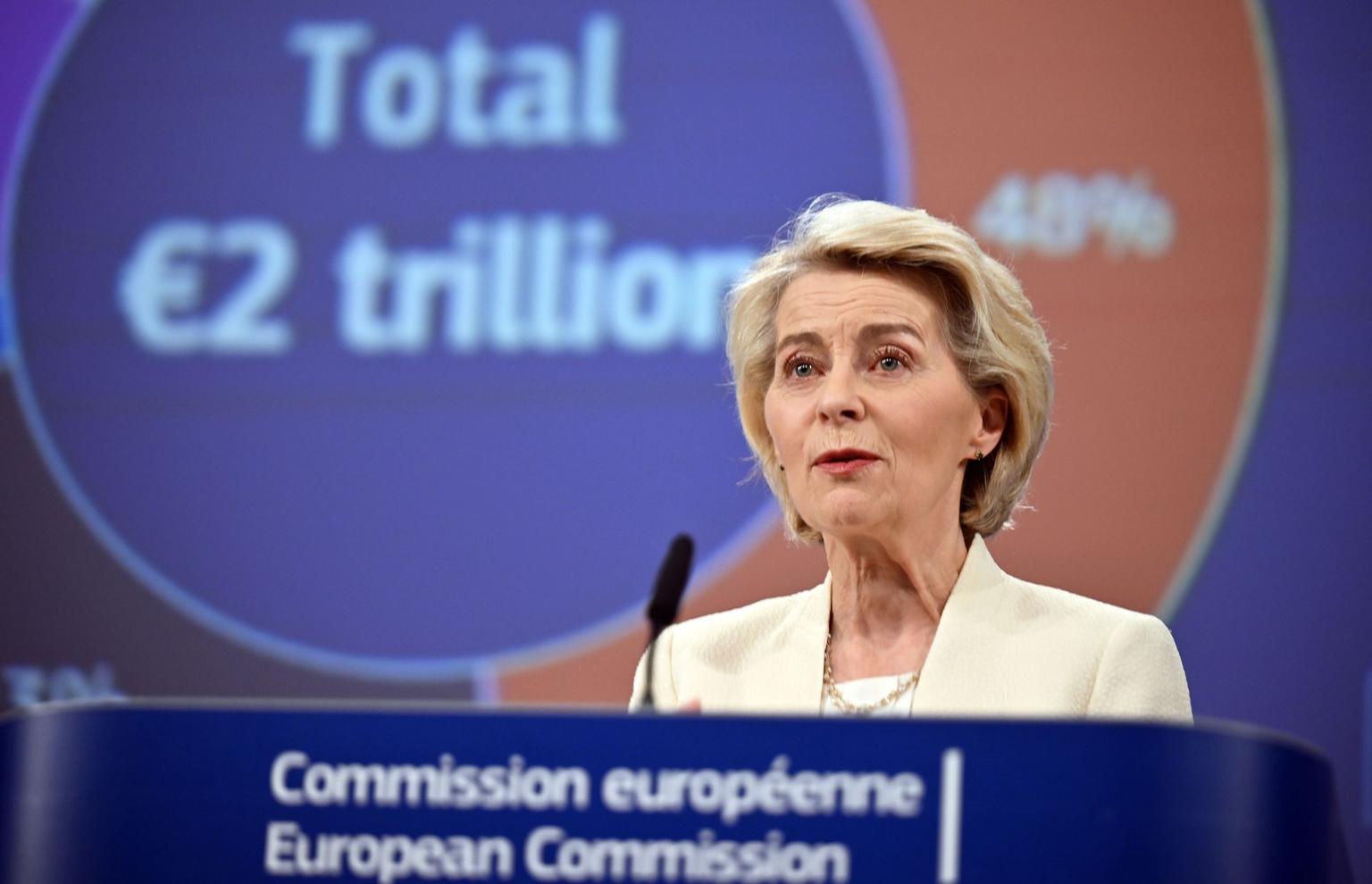
European Commission President Ursula von der Leyen holds a press conference on the 2028-2034 budget in Brussels, Belgium, on July 16, 2025. (Dursun Aydemir / Anadolu via Getty Images)

The European Commission has proposed allocating 100 billion euros ($115 billion) in aid to Ukraine from the European Union's long-term budget for 2028–2034, Commission President Ursula von der Leyen announced on July 16.  

The proposed package doubles the current Ukraine Facility budget of 50 billion euros, which was approved in February 2024 and runs through 2027. That fund includes 33 billion euros in loans and 17 billion euros in grants to support Ukraine's economy and reconstruction.

"We are doubling the Ukraine Facility — to support recovery, resilience, and their path to EU membership," von der Leyen said, calling the new aid package essential for long-term planning.

On a post on X, she described the broader EU budget proposal as "a budget for a new era, that matches Europe's ambition… that strengthens our independence."

"This is the most ambitious EU budget ever: more strategic, flexible, and transparent. We are investing more in our independence and in our capacity to respond," the statement reads.

The Commission's proposed overall EU budget for 2028–2034 totals 1.816 trillion euros, raising the bloc's budget ceiling from 1.1% to 1.26% of gross national income.

The new proposal must be approved unanimously by all 27 EU member states and passed by the European Parliament. Negotiations are expected to unfold over the next two years.

Avatar
Tim Zadorozhnyy

Reporter

Tim Zadorozhnyy is a reporter at the Kyiv Independent covering foreign policy, U.S.-Ukraine relations, and political developments across Europe and Russia. He studied International Relations and European Studies at Lazarski University and Coventry University. Tim began his journalism career in Odesa in 2022 as a reporter for a local television channel. He later spent a year and a half at the Belarusian independent media outlet NEXTA, first as a news anchor and later as a managing editor. He is fluent in English, Ukrainian, and Russian.

Read more
News Feed
Video

In May 2026, Ukraine’s 3rd Army Corps launched a secret counteroffensive now known as Operation Vivaldi, aiming to strengthen Ukraine’s defensive positions in the Lyman and Sviatohirsk sectors and disrupt Russia’s plans to encircle Ukraine’s key strongholds – the cities of Sloviansk and Kramatorsk.

"Russia is building the military-industrial capacity to continue waging wars even after the war in Ukraine ends. These are not the actions of a country preparing for lasting peace," Oleksandr Danylyuk, chairman of the Center for Defense Reforms and former chief adviser to Ukraine’s defense minister, told the Kyiv Independent.

 (Updated:  )

For almost two years, student-led demonstrations in Serbia rallied against Vucic's right-wing incumbent Serbian Progressive Party. Protesting against alleged corruption in the government, the movement was triggered when a train station canopy in the city of Novi Sad collapsed in 2024, killing 16 people.

Show More