Ukraine condemns inclusion of controversial Russian film in upcoming Venice Film Festival
 on Google
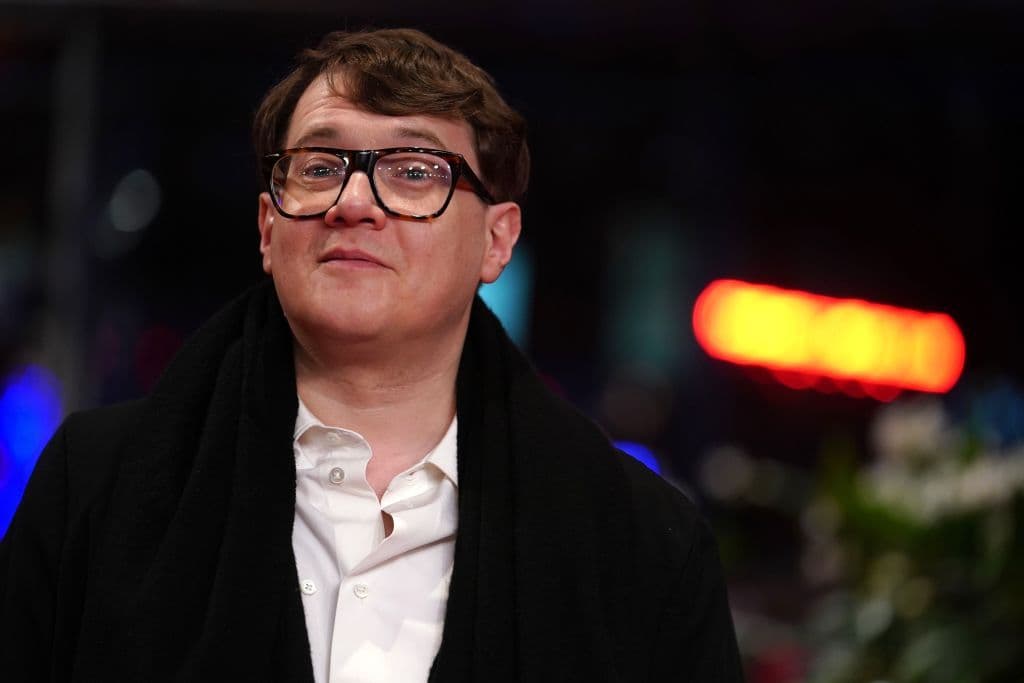
The Foreign Ministry condemned on Aug. 17 the inclusion of Russian filmmaker Illya Khrzhanovsky’s controversial film "Dau" in the upcoming 83rd Venice International Film Festival.
"At a time when Russia continues its war of aggression against Ukraine, systematically destroying our cities, cultural heritage and national identity, granting one of the world’s most prestigious cultural platforms to a project connected to the Russian state and its networks of influence sends an extremely troubling signal," the Foreign Ministry said.
"Dau" is an art and film project which began production in 2006. Khrzhanovsky originally envisioned it as a film about Soviet physicist Lev Landau, but the project expanded into several film offshoots because of the amount of footage it produced.
A massive set resembling a Soviet research institute was built for the film in Ukraine's eastern city of Kharkiv, where hundreds of professional and non-professional actors lived.
The project quickly drew controversy due to allegations that its participants were exploited and subjected to psychologically abusive conditions on set.
The "Dau" film, set to premiere at the Venice Film Festival, is reportedly closer to what Khrzhanovsky originally set out to make. It features footage shot between 2008 and 2011, alongside newly filmed material.
Khrzhanovsky is no stranger to controversy.
In 2020, Khrzhanovsky drew public backlash after being appointed artistic director of the Babyn Yar Holocaust Memorial Center in Kyiv. The project also faced intense scrutiny because of Russian oligarch financial backers.
Khrzhanovsky reportedly envisioned an “immersive” approach to commemorating one of the most tragic events in Ukraine, which sparked outrage across the cultural spheres both in Ukraine and internationally.
Khrzhanovsky's "Dau" project has been financed by Russian businessman Sergei Adoniev, who was sanctioned by the U.S. in 2023 and Ukraine in 2022. According to Ukraine's sanctions database, one of Adoniev's companies provides communication services to the Russian military.
In 2019, Khrzhanovsky himself told the Guardian that Adoniev had given him around 25 million euros but "left him alone" to carry on the project as he wished.
Conductor Teodor Currentzis, one of the lead actors in the "Dau" film, received Russian citizenship by presidential decree in 2014. His orchestra MusicAeterna has received financial support from Russian state-linked entities, including VTB Bank, which is under Western sanctions.
In its public statement, the Foreign Ministry emphasized that speaking out against projects like "Dau" is not a call for censorship but a reminder of how Russia weaponizes culture.
"We are calling on the Venice International Film Festival and the broader cultural community to recognize how Russia turns culture into an instrument of its hybrid warfare and to stop treating Kremlin-backed cultural projects as politically neutral," the Foreign Ministry said.
Earlier this spring, Russia made its highly-protested return to the Venice Art Biennale. The Russian pavilion was overseen by Kremlin-appointed commissioner Anastasia Karneeva, who has close ties to the Russian military-industrial complex. The program she curated included artists known for supporting Russia’s war effort.