Top EU court throws out Orban-era attempt to block funds for Ukraine
 on Google
Editor's Note: This article has been updated with comments from the European Union Spokesperson for Foreign Affairs and Security Policy.
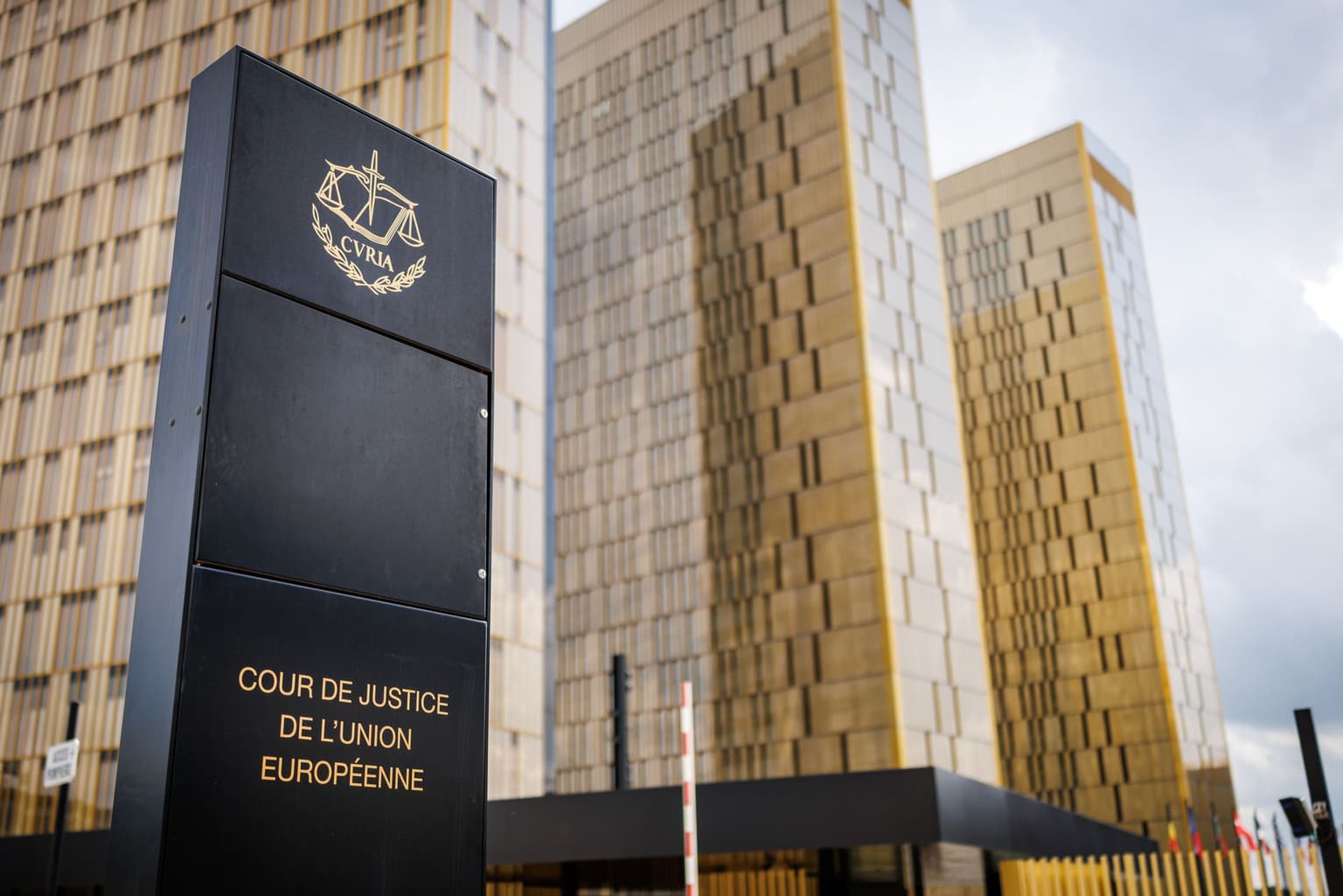
The EU's Court of Justice on Sept. 9 dismissed a legal challenge filed by former Hungarian Prime Minister Viktor Orban intended to prevent money linked to frozen Russian assets from being spent on the EU's military aid to Ukraine.
EU countries agreed in EU 2024 to bankroll some military assistance for Ukraine using the interest generated on Russian government assets that have been "frozen" within the EU since Moscow launched its 2022 full-scale invasion of Ukraine.
Orban's Hungary in August 2025 sought to challenge the legality of the procedure that provided for the European Peace Facility — an EU instrument for providing security assistance to partner countries — to support Ukraine in this way.
However, the Luxembourg-based Court of Justice has thrown out the action as "it does not fall within the jurisdiction of the EU judicature."
"We welcome the judgement of the General Court, which confirmed the limits of judicial review in Common Foreign and Security Policy," Christian Wigand, EU Spokesperson for Foreign Affairs and Security Policy, told the Kyiv Independent.
"The decision of the European Peace Facility Committee concerned the Union's strategic or political choices and therefore fell outside the Court's jurisdiction under its case-law. This judgment means that the support already granted to Ukraine has not been called into question."
Agreements concluded by EU member states under the EU's Common Foreign and Security Policy (CFSP) generally do not fall within the court's remit.
The European Peace Facility is generally funded by direct contributions from EU countries and was established to help prevent conflict and provide non-lethal aid.
Its scope was expanded in light of the full-scale invasion to provide direct lethal aid to Ukraine, and it has provided Kyiv with 11.1 billion euros ($13 billion) of support since 2022.
However, Orban undermined the peace facility's effectiveness not only through legal challenges but also by blocking the reimbursement mechanism for EU countries purchasing equipment for Ukraine.
That issue has remained blocked even after Orban was voted out of office in April 2026, because of differences of opinion over how much to reimburse old contributions versus provide fresh support to Ukraine.
However, the EU's top diplomat, Kaja Kallas, said at a meeting of EU defense ministers on Sept. 1 that agreement was close.
"I think it's very clear that there is a determination to unlock the European Peace Facility, and that's something that we will work on very closely," Kallas said.
The current Hungarian prime minister, Peter Magyar, has not spoken about the European Peace Facility case but has adopted a more constructive approach to relations with the EU since taking office in May.
While Magyar has repeatedly ruled out his country providing direct military assistance to Ukraine, he has affirmed Kyiv's right to defend itself and signaled Budapest would not obstruct assistance from other EU members.