The political calculus of peace in Ukraine
In Ukraine, calls for peace are testing both public opinion and political ambition.
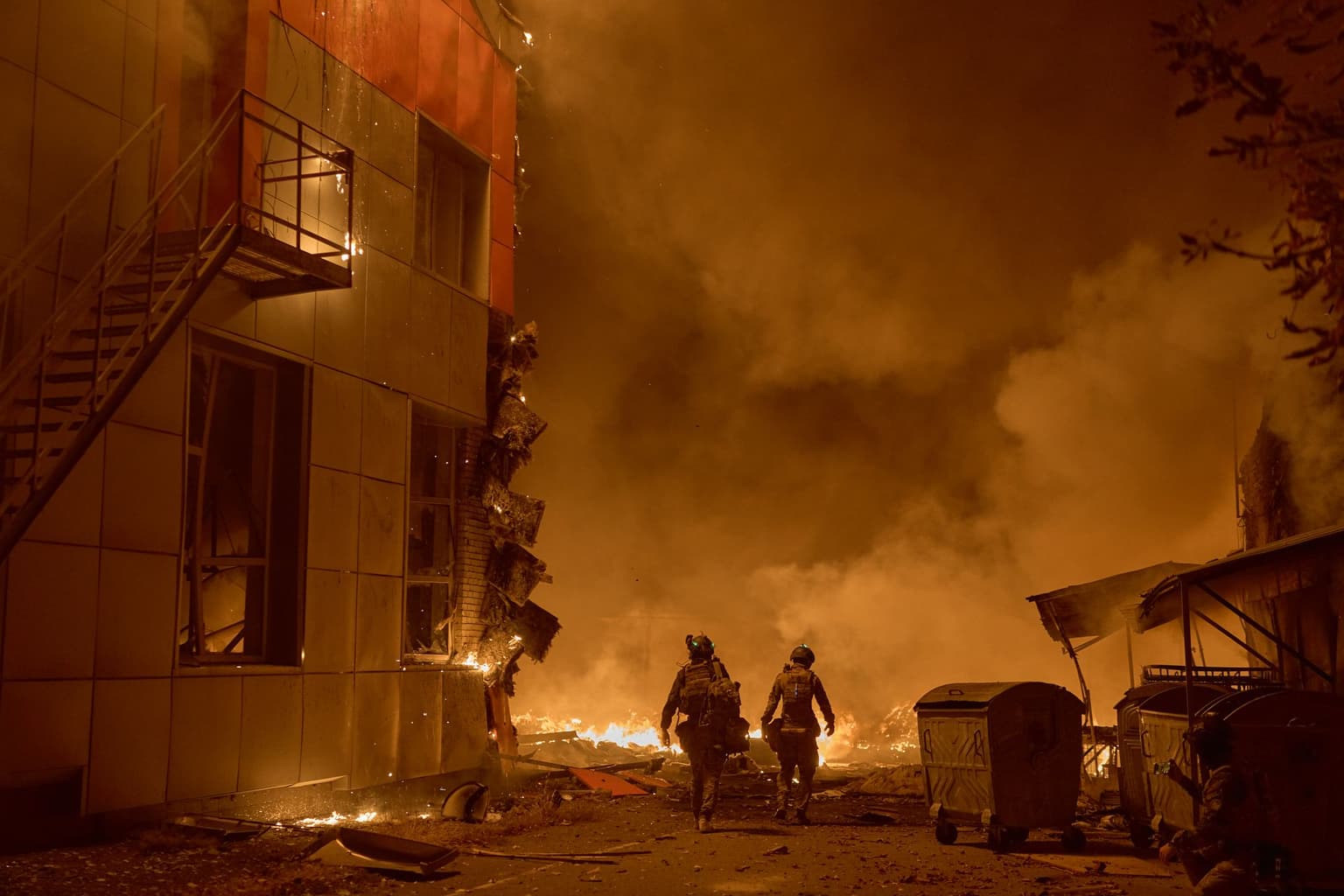
Emergency services deal with the aftermath of a massive Russian missile and drone attack in Kyiv, Ukraine, on Sept. 8, 2026. (Kostiantyn Liberov / Libkos / Getty Images)
 on Google
In Ukraine, few words carry as much weight — or as much political risk — as peace.
In early October, several prominent Ukrainian politicians publicly called for an end to Russia's war on terms many considered to be closer to the Kremlin's desires. Their proposals differed, but the public reaction revealed a deep-seated fear: that calls for peace could be a prelude to concessions to Moscow rather than a path to a just settlement.
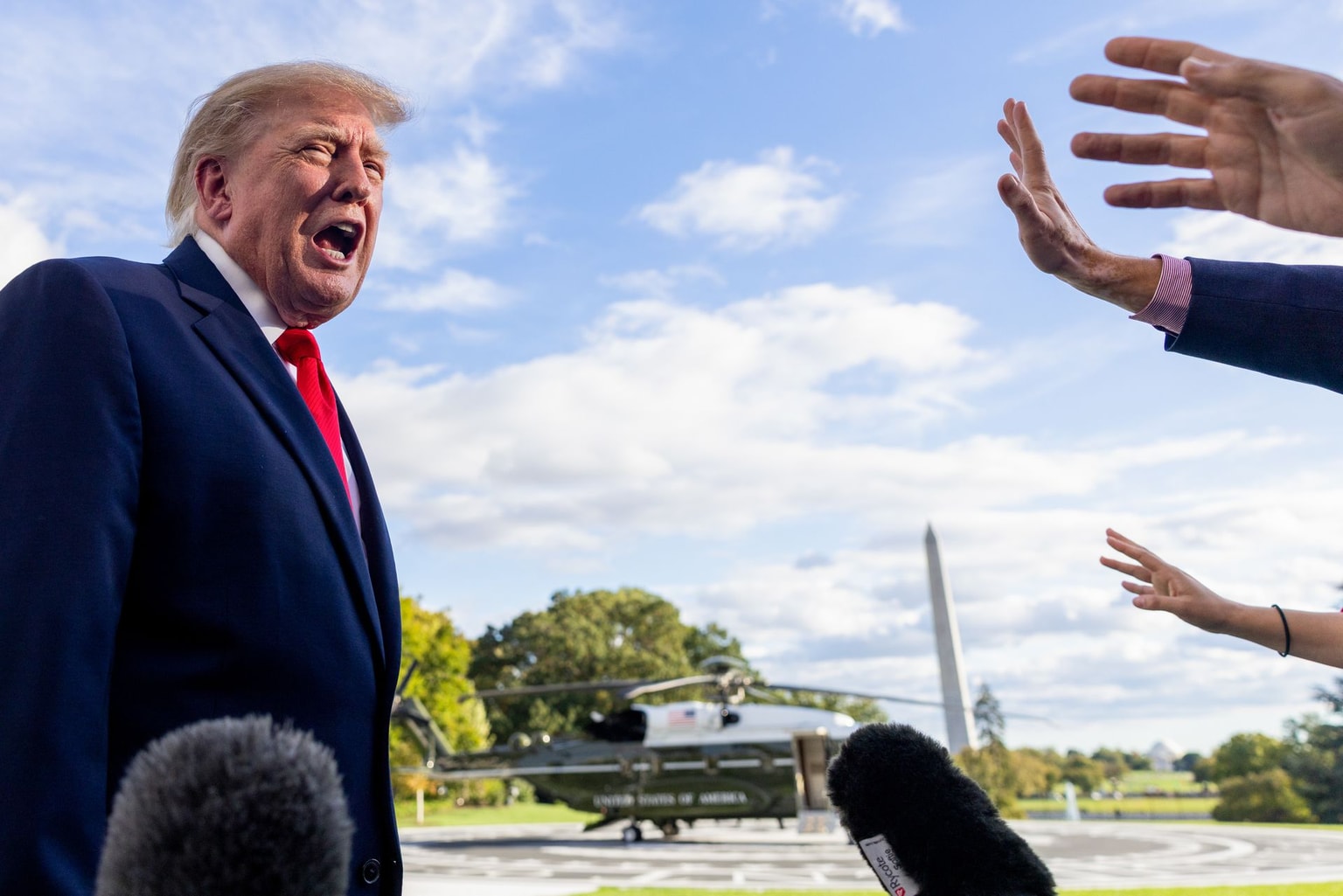
For years, Ukraine's leadership framed victory, not compromise, as the ultimate goal of the war. But Donald Trump's return to the White House last year changed the political landscape, increasing pressure on Kyiv to negotiate an end to the war while insisting that any settlement must not come on Moscow’s terms.
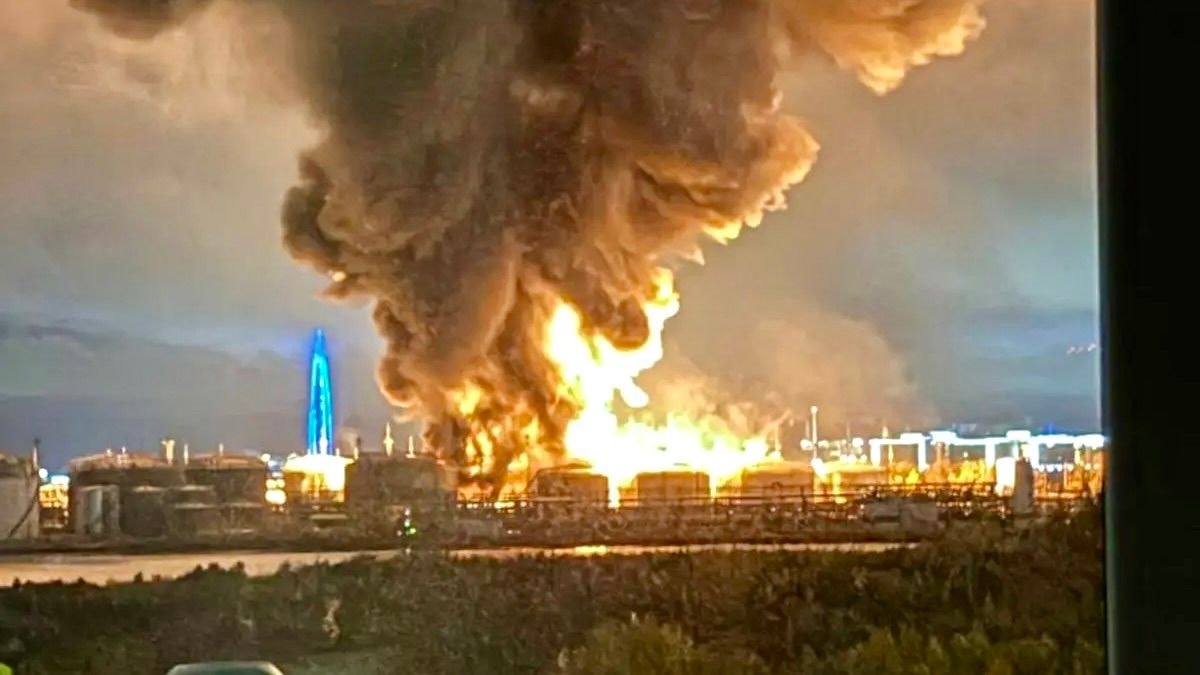
Now, increasing Russian drone attacks on Kyiv, renewed tensions with Washington and stalled negotiations with Moscow have created fresh uncertainty over how — and on what terms — the war might end.
In these recent statements, critics see more than a desire to stop the fighting. They suspect political maneuvering: populist appeals, and politicians' attempts to position themselves for a future contest for power, or efforts to test how much compromise the public might tolerate.
"The main goal of all these statements is to see how society would react to such a scenario," said Olha Vasylevska-Smahliuk, a lawmaker from the ruling party. "The first is a peace deal with Russia, the second is the removal of the president, and the third is holding elections."
"Of course, we need peace," she added. "The question is under what conditions."

A peace plan backfires
As Ukrainian officials prepared for another round of talks with Washington, Oleksiy Goncharenko, then a lawmaker with the opposition European Solidarity, laid out his own plan for ending Russia's war.
In an Oct. 4 op-ed in one of Ukraine's leading publications, Goncharenko called for seeking an agreement with Moscow, arguing that this wouldn't be synonymous with surrender. He proposed a number of agreements mediated by third countries, with both sides making concessions and with the issue of the eastern Donbas region — the main territorial sticking point — addressed last. His plan also called for Russian to receive the same status as other minority languages in Ukraine and for the Moscow-affiliated Ukrainian Orthodox Church to be allowed to operate.
"Can we destroy Russia right now? No, we can’t. If we accept this objective reality, we can't fight until we cease to exist. We must know when to stop and preserve our state," Goncharenko said.

Critics argued that the proposals came too close to capitulation to Russia, a characterisation the lawmaker rejected.
Mykola Kniazhytskyi, a lawmaker from the same European Solidarity party, said peace depended first and foremost on Russian President Vladimir Putin. Russia has shown no willingness to make concessions or abandon its goal of seizing Donbas.
"Any calls for peace directed at Ukraine, and any accusations against the Ukrainian side in this regard, are clearly playing into Putin's hands and those politicians who seek to portray the victim as the guilty party and absolve the aggressor of responsibility," Kniazhytskyi told the Kyiv Independent.
For Kyiv, accepting a freeze along the current front line would already be a "huge concession," argues Olexiy Haran, politics professor at the Kyiv Mohyla Academy and research advisor at the Democratic Initiatives Foundation.
"Putin has no interest in negotiations or compromise. He wants it all."

"Twenty percent of our territory remains under occupation, where every day brings terror and the destruction of everything Ukrainian," he adds. "These are speculations. Putin has no interest in negotiations or compromise. He wants it all."
Goncharenko has long been a conspicuous figure in Ukrainian politics. One of parliament’s most recognisable lawmakers, he has amassed more than 200,000 Telegram followers.
Before joining former President Petro Poroshenko's team in 2014, he was part of the now banned Party of Regions and promoted pro-Russian narratives, including calls to make Russian Ukraine's second official language.
Since 2025, he has distinguished himself by voting against extending the mobilization in Ukraine, the only lawmaker to do so, and regularly criticized the country's draft policies. His positions have repeatedly put him at odds with his party, prompting questions about why he remained a member.
Several European Solidarity lawmakers told the Kyiv Independent that Goncharenko's views had been debated within the faction before, but expulsion had never been considered. The earlier disagreements concerned his rhetoric rather than the substance of his positions, they said. His peace proposal exposed a deeper ideological divide.
On Oct. 5, the party expelled him from its parliamentary faction.
A false divide
For months, lawmaker Danylo Hetmantsev has drawn a line between what he describes as Ukraine's "peace party" and "war party" — a framing critics say risks depicting those who support the country's defense as those who oppose peace itself.
More cautious in his rhetoric, Hetmantsev, a member of President Volodymyr Zelensky's Servant of the People party and chair of the parliament’s finance, tax and customs policy committee, places himself in the "peace party," which he says is "led by Zelensky."

Hetmantsev hasn't named people he considers part of the "war party." According to him, they "benefit from war" and "want to fight to the last Ukrainian."
Lawmaker Oleksandr Merezhko calls this narrative pro-Russian, arguing that it creates the false impression that Kyiv wants the war to continue. He traces the framing to the Kremlin, which used the term "war party" early after the full-scale invasion to describe Russian officials and businessmen advocating escalation.
Multiple lawmakers from Zelensky's party told the Kyiv Independent that they don’t share Hetmantsev's views. The Servant of the People’s 229 lawmakers hold different positions, they said, and Hetmantsev's viewpoint is not a common position within the party.
Another politician who surprisingly entered the debate was Ihor Terekhov, mayor of Kharkiv, Ukraine's second-largest city. Responding to an op-ed by Valerii Zaluzhnyi, Ukraine's ambassador to the U.K. and former commander-in-chief, Terekhov interpreted it as suggesting that war was Ukraine's inevitable future. Zaluzhnyi's article didn't explicitly say that, arguing instead that ending Russia's war couldn't be treated as a business deal.
"Our ability to endure the war should not be seen as consent to living through it. We strive for peace and prosperity," Terekhov wrote on social media in response.
Terekhov is among the handful of regional politicians regularly featured in nationwide polls. Pollsters have grouped Terekhov and Hetmantsev as potential participants in a joint political project. A spring survey conducted by the Socis sociology center suggested that this hypothetical party could outperform the ruling Servant of the People party.
Terekhov, 59, is among the Ukrainian mayors who reinvented themselves after Russia's full-scale invasion. He has faced criticism for his shifting positions on language and culture, though his public image since 2022 has largely revolved around leading the city battered by Moscow's relentless attacks.

One of Ukraine's best-known mayors, Terekhov is seen as loyal to the central government and has become a familiar face in Kyiv's power circles. During the recent government reshuffle, Terekhov was one of the candidates for the prime minister's post, pro-government lawmakers told the Kyiv Independent.
"(The politicians) are playing to certain sentiments in society, saying what part of the electorate wants to hear," Merezhko says. "That's the problem. We need to put populism aside and stop looking at everything through the lens of the next election. We don't know when a ceasefire will come."
Peace at what price?
Some see the recent flurry of peace proposals as an attempt to see how far public opinion has shifted, as they grapple with intensified Russian attacks and brace for another difficult winter.
"I wouldn’t rule out the possibility that the authorities are testing the waters to see how society reacts," Haran says.
Recent polls showed that despite the hardships that Ukrainians face, public views on ending the war and the means of achieving peace have changed little over the past year.
The latest KIIS poll published Oct. 19 showed around 64% of respondents blamed Russia for stalling peace negotiations and rejected the idea that Ukraine’s government should be more willing to compromise.

The same poll found that around 62% of Ukrainians are prepared to endure the war for as long as necessary.
For those who spoke to the Kyiv Independent, calls for peace overlook a basic obstacle — Putin has shown no willingness to compromise. His demand that Ukraine withdraw from Donbas comes with no guarantee that Russian forces would not advance into neighbouring regions.
"Russia's terms are well known," says Mykyta Poturaiev, a lawmaker from Zelensky's party. "Calling for peace on Moscow's terms is tantamount to calling for the destruction of the Ukrainian state. A country has an electorate, Russian-occupied territories don't."
Note from the author:
Hello! I’m Kateryna Denisova, the author of this article.
As Russia’s attacks on Ukraine intensify, the end of the war remains out of sight. My colleagues and I are working around the clock to tell you about the latest developments on the battlefield and behind the scenes of Ukrainian politics.
If you found this article valuable, consider joining our community to support independent journalism from Ukraine.
Thank you for your support.