What's behind Zelensky's surprise government reshuffle?
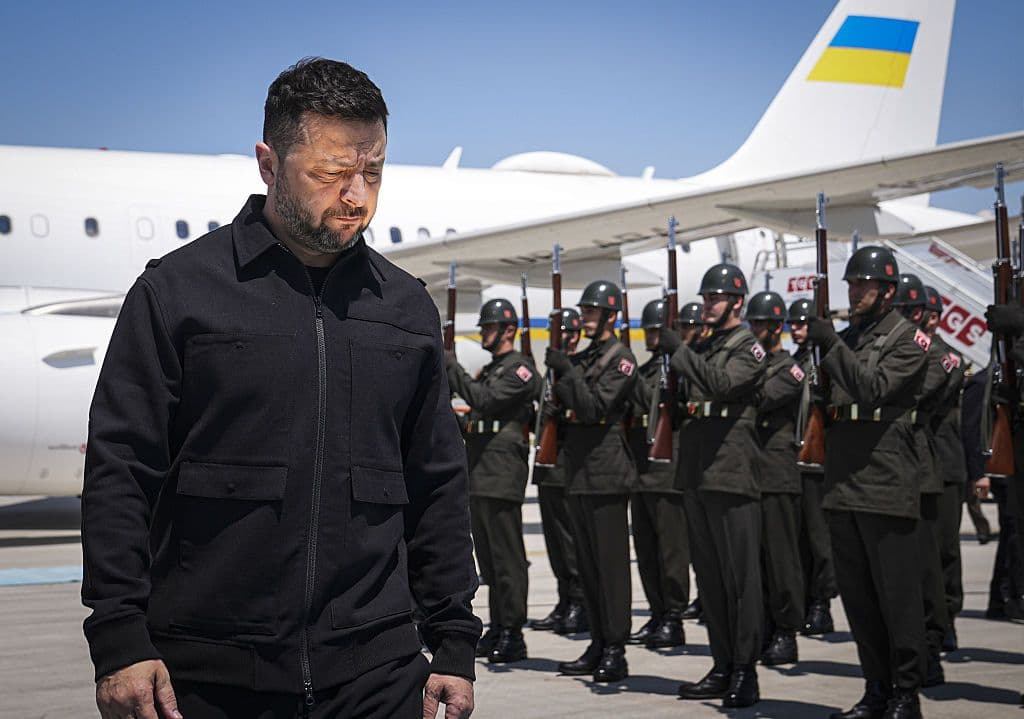
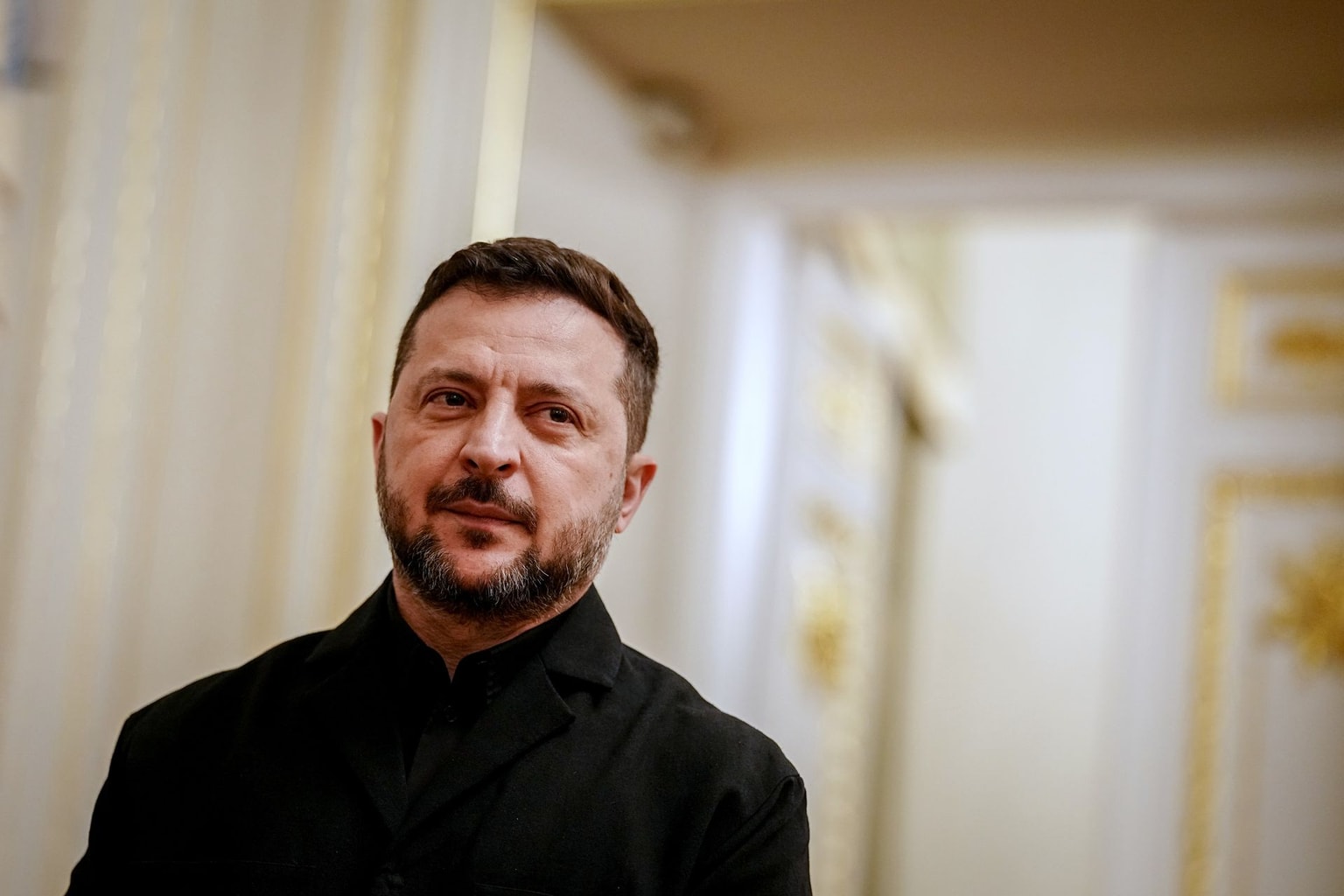
President Volodymyr Zelensky arrives at Esenboga Airport ahead of the NATO Summit in Ankara, Turkey, on July 7, 2026. (Metin Aktas/Anadolu via Getty Images)
 on Google
President Volodymyr Zelensky's decision on July 12 to reshuffle the government came as a surprise to many — both on the streets and in the halls of parliament.
According to the Constitution, the president cannot single-handedly dismiss the prime minister. Yet lawmakers who spoke with the Kyiv Independent appeared largely unfazed by Zelensky's move to replace Prime Minister Yuliia Svyrydenko, which parliament rubber-stamped on July 14.
The reasons behind the reshuffle remain unclear. Many lawmakers, including members of Zelensky's own Servant of the People party, said they knew nothing about the plan before it was announced.
Zelensky said on July 12 that "Ukraine is changing its political strategy."
"Each important foreign policy direction will be overseen by a specific individual with substantial experience who is capable of delivering," he added.
The statement suggested the president intended to appoint Svyrydenko as Ukraine's next ambassador to the U.S — an honorary demotion that would allow him to install a new prime minister ahead of what is expected to be a difficult winter.
A source close to the president also said the reshuffle would give Zelensky an opportunity to remove ministers who had lost his trust. One of them, according to the source, is Defense Minister Mykhailo Fedorov, whose dismissal is likely to prove deeply unpopular with the public.

But a person with direct knowledge of the matter told the Kyiv Independent that Svyrydenko has yet to agree to the ambassadorial post, adding another layer of uncertainty to an already opaque process.
The Kyiv Independent examines what lawmakers, sources, and analysts believe prompted the reshuffle, what Zelensky's abrupt decision reveals about the shrinking circle of people he trusts, and what the second government shake-up in less than a year says about Ukraine's future.
read also
Lack of communication with parliament
The reshuffle highlighted the increasingly top-down nature of decision-making in Kyiv.
Several lawmakers told the Kyiv Independent they had no advance warning that the government would be dismissed, despite parliament formally holding the power to appoint and remove the prime minister.
One theory circulating among lawmakers is that Zelensky had grown dissatisfied with Svyrydenko's ability to manage relations with parliament.
Since last fall, the parliament has repeatedly failed to pass legislation tied to Ukraine's European integration and backed by Western partners. Lawmakers and analysts have attributed the gridlock to the President's Office's waning influence over parliament, as well as poor coordination between lawmakers and Svyrydenko's cabinet.
"In my view, the main reason is that Svyrydenko never managed to build a good working relationship with parliament," political analyst Volodymyr Fesenko told the Kyiv Independent. "She struggled to establish good relations even within the ruling faction, where there were tensions with some of its influential members."

A source familiar with the discussions around the reshuffle said frustrations had also accumulated over several ministers, contributing to the decision to replace the entire government.
The source stressed that dissatisfaction had built gradually rather than being triggered by a single event.
A senior official familiar with the matter, however, said back in June that the lawmakers were struggling to find volunteers to take on government roles.
The official, who spoke on condition of anonymity, said even opposition lawmakers who criticize the government for reshuffling the same officials over and over have shown little appetite for recommending appointees.
The country's Justice Ministry has been leaderless for over eight months, while the education and regional development ministers have remained in their seats despite months of speculation about their dismissal.
Letting off steam?
Others see the reshuffle less as a response to specific policy failures than as a familiar political tactic.
Over the past year, Zelensky's administration has weathered a series of crises, including the largest corruption investigation of his presidency involving state nuclear monopoly Energoatom. Herman Halushchenko, who served as justice minister in Svyrydenko's government, was charged in the case in February.
The government has also struggled with mounting public frustration over mobilization, continued Russian attacks on civilian infrastructure, and another difficult energy season.
"The president likes signaling that he is renewing his team," Fesenko said. "Earlier this year, he saw that replacing the President's Office Head Andriy Yermak with Military Intelligence Chief Kyrylo Budanov was well received by the public and had a positive effect on his approval ratings, so he decided to continue that process."
According to Fesenko, replacing the government was intended to demonstrate that the renewal of Zelensky's team was continuing.
Volodymyr Ariev, a lawmaker from the opposition European Solidarity party, offered a more cynical interpretation.
"There have simply been so many developments lately, many of them highly damaging for the authorities, that they evidently need to shift public attention," he said.
"Dismissing the government has always been a classic way of deflecting attention under those circumstances."
Need for a stronger prime minister?
Others argue the reshuffle cannot be separated from the political vacuum created by the downfall of Zelensky's longtime second-in-command, Yermak.
Svyrydenko was widely regarded as a Yermak protege. She served as his deputy in the President's Office before joining the government and was viewed as one of the officials most closely associated with him.
After Yermak resigned following the anti-corruption investigation into the Energoatom case, Svyrydenko quickly sought to distance herself from her former patron.
"As soon as Yermak was dismissed, Svyrydenko re-positioned herself politically," Fesenko said. "But the public also needs to see that the process of 'de-Yermakization' is continuing, including through the replacement of the prime minister."
Some lawmakers argue the change also reflects a shift in what Zelensky now needs from his government.
"After Yermak's dismissal, what the government needs is a prime minister who is willing to take responsibility rather than wait to be told what to do," Holos lawmaker Yaroslav Yurchyshyn told the Kyiv Independent.

"Whatever one's assessment of Svyrydenko, she was appointed under Yermak's system and, by and large, operated strictly within the instructions she was given."
Without Yermak acting as the government's political coordinator, Zelensky now needs "a technocrat with management experience who is prepared to take responsibility for the government's decisions instead of simply waiting for guidance," Yurchyshyn said.
Several lawmakers pointed to Naftogaz CEO Serhii Koretskyi as someone who fits that profile, citing his reputation as an effective manager capable of operating more independently from the President's Office.
According to people familiar with the matter, Koretskyi has accepted the president's offer to lead the country's next government.
Need to replace the ambassador?
Another widely discussed explanation centers on Washington rather than Kyiv.
Zelensky's July 12 statement that each key foreign policy direction would now be overseen by an experienced official fueled speculation that Svyrydenko would become Ukraine's next ambassador to the U.S.
One person close to current ambassador Olha Stefanishyna told the Kyiv Independent that she had decided to leave the post "at her own request."
Another source familiar with the reshuffle said, however, that plans to overhaul the government predated Stefanishyna's decision.
Stefanyshina’s departure also comes amid speculation that she could face criminal charges.
She has been investigated by the National Anti-Corruption Bureau in connection with alleged irregularities involving the Asset Recovery and Management Agency, although she has not been formally charged.
Ukrainian media previously reported that companies linked to her former husband had received contracts to manage seized assets. She was also charged in a separate embezzlement case in 2019.
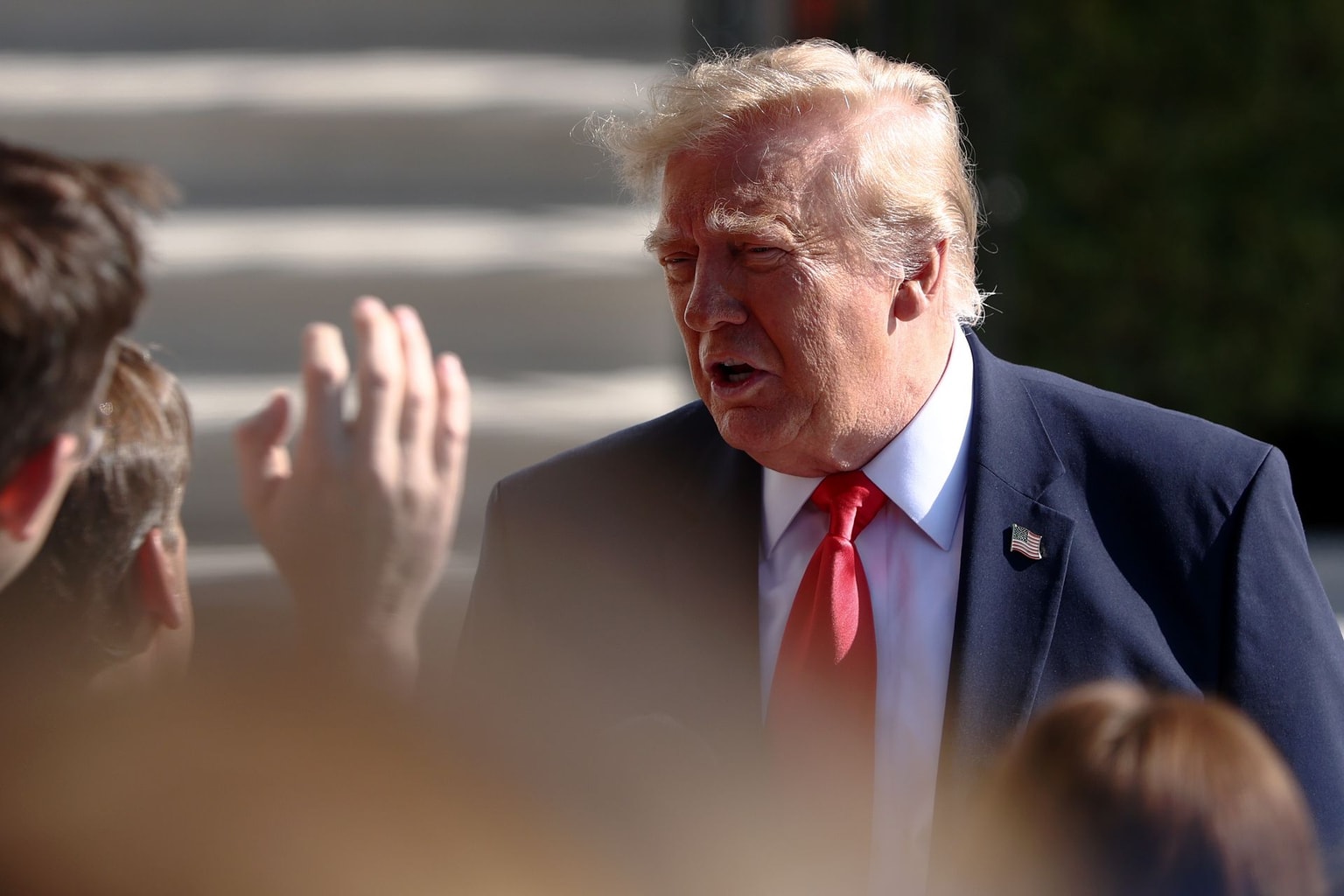
Fesenko argued that appointing Svyrydenko to Washington would strengthen Kyiv's relationship with U.S. President Donald Trump’s administration.
"The recent meeting between Zelensky and Donald Trump demonstrated that Ukraine urgently needs a heavyweight ambassador capable of actively advancing the country's interests in Washington," he said.
Svyrydenko had developed close working relations with U.S. Treasury Secretary Scott Bessent during negotiations over the bilateral minerals agreement, making her a natural candidate for the post, he added.
A source familiar with the discussions likewise said Zelensky wants a more influential representative in Washington.
Yet even that plan remains uncertain.
Svyrydenko has not yet agreed to become ambassador.
The uncertainty surrounding her future only reinforces the broader mystery behind the reshuffle itself: despite the competing theories offered by lawmakers, officials, and analysts, Zelensky has yet to explain why he decided that Ukraine needed another government reset less than a year after the last one.